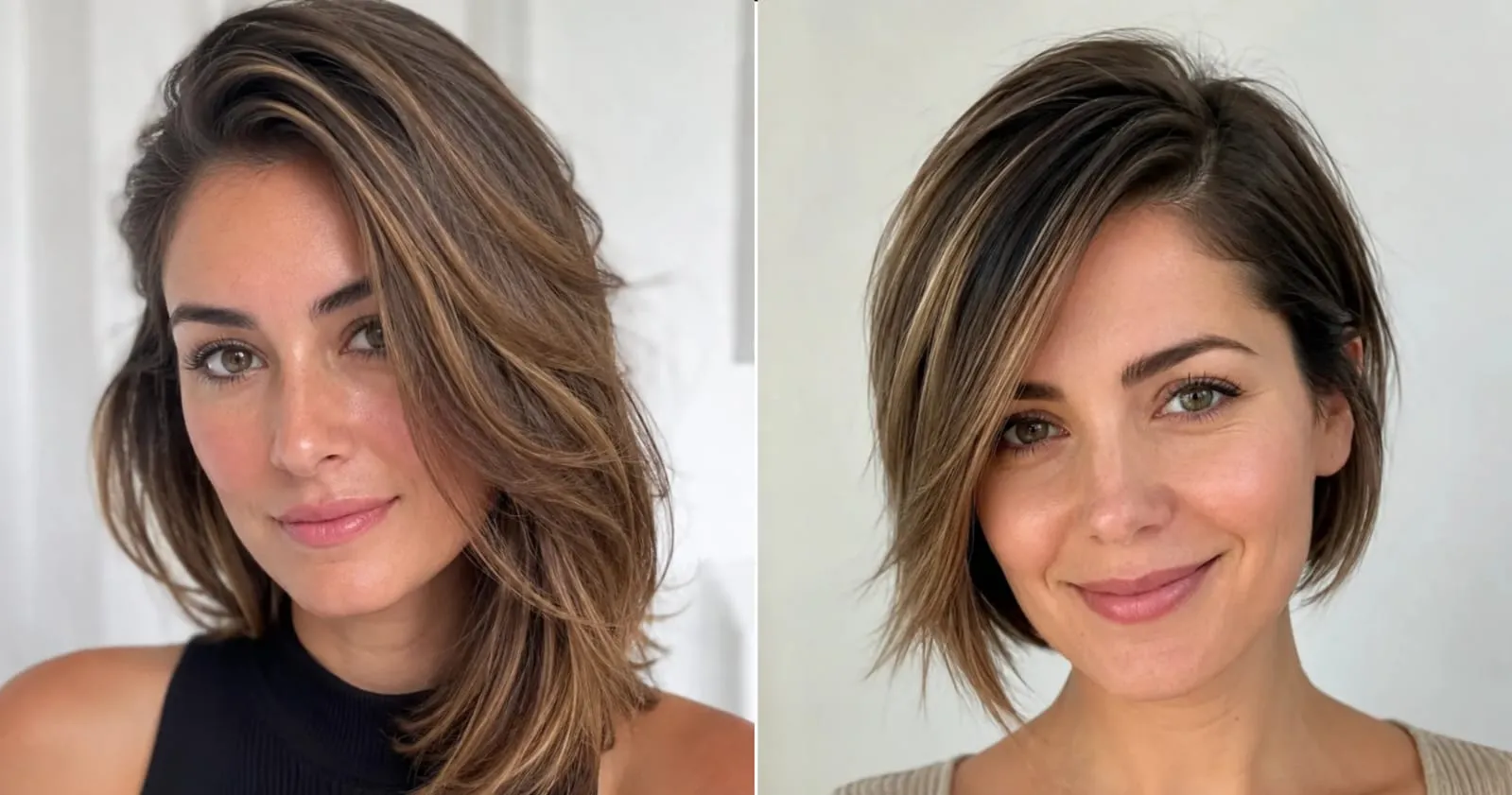
Side part hairstyles work best when the part sits opposite a person’s natural cowlick direction. A deep 70/30 part adds volume and drama and suits round or heart shaped faces, while a soft 60/40 part is easier to wear daily and suits long or oval faces. Fine hair benefits from a deeper part because it lifts the roots, while thick hair usually looks best with a moderate part that redistributes weight evenly.
The side part has quietly become one of the most requested hairstyling terms of 2026, showing up everywhere from New York Fashion Week street style to everyday Pinterest boards. It is not a new trend so much as a returning one, and it earns its comeback honestly: a well placed side part can add volume, soften angles, and completely change the mood of a haircut without a single snip of the scissors. This guide breaks down 15 side part hairstyles for every face shape and hair type, along with the styling science that most hair blogs skip, including how to find a natural part, how to make it last all day, and how to fix a flat or uneven part fast.
Table of Contents
What Is a Side Part, Exactly?
Not every side part looks the same, and the terminology often gets used loosely. Here is a quick breakdown of the four most common types.
- Deep side part (also called a 70/30 part): The hair is divided so roughly 70 percent falls on one side and 30 percent on the other. This creates the most dramatic volume and diagonal line.
- Soft or subtle side part (60/40 part): A gentler shift from center, usually one to two inches off the middle. It adds softness without looking styled.
- Off center part: Any part that sits noticeably away from the center but is not as extreme as a deep part. This is the most common everyday version.
- Natural part: The place hair falls on its own when washed and left to dry, determined by the direction of the scalp’s hair whorl rather than by styling choice.
How to Find a Flattering Side Part
The Cowlick and Natural Fall Test
Every part starts at the scalp, not the comb. The direction hair naturally falls is determined by the hair whorl, sometimes called a cowlick, which is the spiral growth pattern that forms on the scalp before birth. According to a genetics based breakdown of cowlick direction, hair with a clockwise whorl tends to lie flatter when parted on the left, while a counterclockwise whorl usually settles better with a right side part. The simplest way to find this is to wash hair, towel dry it without brushing, and let it fall naturally while looking in the mirror. Wherever it splits on its own is the path of least resistance, and working with that direction instead of against it is the difference between a part that lasts all day and one that flips back to center by lunchtime. A widow’s peak, the V-shaped point of hair at the center of the forehead, can also nudge which side a part settles on most naturally, much like a cowlick does further back on the scalp.
Matching Part Depth to Face Shape
Face shape is the single biggest factor in how flattering a side part looks. The table below is a quick reference, and it is worth testing in natural light before committing, since the most flattering side is not always the natural one.
| Face Shape | Best Part Depth | Why It Works |
|---|---|---|
| Round | Deep (70/30) | Creates a diagonal line that visually lengthens the face and breaks up width |
| Square | Soft (60/40) | Softens a strong jaw and angular forehead without adding harsh new lines |
| Oval | Any depth | Balanced proportions mean oval faces wear subtle or deep parts equally well |
| Heart-shaped | Deep (70/30) | Draws focus away from a narrower chin and balances a wider forehead |
| Long or rectangular | Subtle (55/45) | A deep part adds length the face does not need, so a soft shift works better |
| Diamond | Soft to medium | Softens prominent cheekbones while balancing a narrow forehead and chin |
For a deeper dive into matching a cut to bone structure, see this site’s guides to short hairstyles for oval faces and haircuts for round faces, both of which pair well with the part depths above.
Matching Part Depth to Hair Type
- Fine or thin hair: A deeper part lifts the roots and creates the illusion of thickness. Pair with a volumizing mousse, as covered in this site’s guide to volumizing haircuts for thin hair.
- Thick hair: A moderate part redistributes weight evenly on both sides and prevents one side from looking heavier than the other.
- Wavy hair: A finger drawn, slightly imperfect part looks more natural than a razor sharp line and works with the wave pattern instead of against it.
- Curly or coily hair: A deep side part can help avoid the triangle shape that sometimes forms on middle length curls, since it redirects volume to one side.
- Straight hair: The part line shows the most on straight strands, so a rat tail comb and a light shine serum keep the line looking clean rather than scalpy.
15 Side Part Hairstyles to Try
These 15 looks cover every hair length, texture, and occasion, from a five minute everyday option to a full evening updo.
1. Sleek Side Part Blowout

A smoothing serum applied to damp hair, followed by a round brush blowout directed away from a deep side part, creates the polished, glass like finish that has become a signature look for 2026. This style works best on medium to long hair and suits oval and round face shapes especially well, since the sleek fall of hair elongates the face. A flat iron can be run lightly over the ends afterward for extra shine.
2. Deep Side Part with Curtain Bangs

Curtain bangs traditionally fall from a center part, but shifting the part to the side and letting the fringe fall unevenly, with one side longer than the other, creates a softer, more romantic frame around the eyes. This pairing works on nearly every face shape and is especially flattering for square faces, since the diagonal fringe line softens a strong jaw.
3. Side Parted Long Bob (Lob)

The long bob remains one of the most requested cuts of the year, and a deep side part gives it instant asymmetry and movement. The style works particularly well for fine to medium hair, since the uniform length combined with a side part creates the appearance of extra thickness. Readers who want the full range of lob variations can browse this site’s best short bob haircuts collection for more length and layer ideas.
4. Soft Side Part on Natural Curls

Curly hair often defaults to a middle part, but a soft side shift, even just an inch off center, adds volume and prevents the triangle shaped silhouette that can form on shoulder length curls. Apply a curl defining cream at the root along the part line to keep frizz down without disturbing the curl pattern.
5. Side Part Half Up Half Down

Starting with a deep side part before gathering the top section back gives this classic style a more editorial feel than a centered version. It works for medium to long hair and is a reliable choice for both casual days and semi formal occasions. Securing the half up section with a small twist rather than a plain elastic keeps the part visible and intentional.
6. Side Part Low Bun

A smooth side part that transitions into a low, neatly wrapped bun creates an asymmetrical, elegant finish that reads as more polished than a centered bun. This is a strong option for medium to thick hair and holds up especially well through long days at the office or through formal events.
7. Voluminous Retro Side Part

Inspired by the soft, lifted volume of vintage Hollywood waves, this style uses a deep side part combined with a round brush blowout directed upward at the roots. The result is height and drama without looking dated or overly teased, and it flatters round and heart shaped faces by elongating the upper face.
8. Side Part Ponytail

A clean side part that flows into a smooth, mid height ponytail feels more considered than a straight back style, since the asymmetry at the front contrasts with the simplicity of the tail. This works best on long, straight to slightly wavy hair and is quick enough for an everyday look.
9. Textured Side Part Pixie

Short hair and side parts are natural partners, since even a slight shift in the part gives a pixie cut more shape and personality than a straight back style. A light matte pomade worked through the top defines pieces without stiffness. Readers considering a shorter cut can browse the full range of pixie cut hairstyles for more side swept and textured options.
10. Side Part with Face Framing Layers

Long, blended face framing layers fall more naturally from a side part than a center part, since the diagonal line lets the layers cascade across the cheekbones rather than splitting evenly. This is one of the most requested combinations for 2026 and suits fine to medium hair especially well.
11. Side Part Beach Waves

Loose, undone waves paired with a deep side part create an effortless, warm weather look that still photographs beautifully. A large barrel curling iron alternated in direction, followed by a light texturizing spray, gives the waves movement without looking uniform or overly curled.
12. Deep Side Part Braided Updo

For weddings, proms, or other formal events, a deep side part sectioned into a braid before being pinned into a low bun or crown shape creates an intricate, photograph ready style. Readers planning for a big event can find more formal inspiration in this site’s guide to hairstyles for prom.
13. Side Part Straight and Glossy

A crisp, straight finish with a defined side part is the cleanest interpretation of the trend. Flat ironing in small sections and finishing with a lightweight glossing serum gives this look its shine, and it pairs especially well with the site’s guide to straight hair hairstyles.
14. Side Part for Fine or Thinning Hair

For hair that struggles to hold volume, a deep side part combined with a root lifting spray and a round brush blowout is one of the most effective non surgical tricks for instant fullness. Directing the blow dryer against the direction of the part, rather than with it, maximizes lift. This technique is a staple in this site’s roundup of haircuts for fine hair.
15. Everyday Low Maintenance Side Shift

Not every side part needs a full styling routine. A gentle one to two inch shift off center, left to air dry or lightly finger styled, is the most sustainable everyday version and works with almost any face shape or hair type without requiring heat tools.
How to Style a Perfect Side Part, Step by Step
- Start with damp, product free hair and section it using a fine tooth or rat tail comb for a crisp line, or fingers for a softer, more natural edge.
- Decide on depth first. A 70/30 split gives a deep, dramatic part, while a 60/40 split is easier to maintain throughout the day.
- Apply a volumizing mousse at the root on the fuller side and a light smoothing cream on the flatter side to balance texture.
- Blow dry with a round brush, directing airflow against the part line at the roots to lift, then smoothing down and outward through the lengths.
- Finish with a flexible hold hairspray focused only along the part line, since heavy product elsewhere can flatten the rest of the style.
Product choice should match hair type: sea salt spray adds grit and hold for beachy, textured parts, styling cream smooths flyaways on sleek looks, texture clay defines short or pixie length parts without shine, and a blow dryer with a concentrator nozzle gives far more directional control over the part line than a diffuser or open nozzle.
How to Make a Side Part Last All Day
A side part that looks perfect at 8 a.m. and flat by noon usually comes down to two things: fighting the natural growth direction, or skipping the root lift step. A few practical fixes:
- Pin the top layer of hair flat against the scalp along the part line with a small bobby pin for the first hour after styling, then remove it once the shape has set.
- Keep a travel size dry shampoo or root powder on hand to refresh volume at the part midday without a full restyle.
- Reapply root lifting spray only at the roots, never through the lengths, to avoid weighing the style back down.
- Avoid touching or repeatedly running fingers through the part, since natural oils redistribute faster with contact and can make the part look greasy sooner.
Fixing a Flat, Greasy, or Uneven Side Part
Flat roots along the part: This is almost always a product or blow dry issue. Apply mousse or root spray before drying, and always dry the roots first with the dryer angled against the direction of the part, not straight down.
Greasy looking part line: The scalp naturally produces more oil where hair is parted, since that strip of skin is more exposed. A small amount of dry shampoo brushed directly along the part, not all over the head, solves this without restyling.
Uneven or crooked part: Use a rat tail comb rather than fingers for precision, and part hair while looking straight ahead in a mirror rather than looking down, since tilting the head changes the angle of the line.
Cowlick fighting the part: Rather than working against a stubborn cowlick, part hair on the side the cowlick naturally flows toward. Fighting it daily with heat and product almost never holds past a few hours.
Part looks too harsh or scalpy: A perfectly straight line can look severe on some face shapes. Combing a small zig-zag or diagonal part instead of one straight line softens the edge and blends more naturally into the hairline, a trick often used to disguise a receding hairline or thinning along the part.
Side Part vs. Middle Part: Which Should You Wear?
The debate between side parts and middle parts resurfaces every few years, and both have a place depending on face shape, hair type, and the mood being styled for.
| Side Part | Middle Part | |
|---|---|---|
| Best for face shape | Round, heart, square, diamond | Oval, long, heart with soft waves |
| Volume | Adds lift and asymmetry | Reads flatter unless layered |
| Styling effort | Slightly more setup for a crisp line | Faster and lower maintenance |
| Mood | Polished, structured, directional | Symmetrical, natural, casual |
Neither option is objectively better. Face shape, natural hair fall, and the occasion should drive the decision more than whichever style is trending that season.
Pro Tip: Why Stylists Recommend Switching Sides
Wearing the same tight part or pulled back style every single day, without ever giving the scalp a break, can contribute to gradual thinning along that line over time. The American Academy of Dermatology notes that hairstyles which repeatedly pull on the same section of hair can lead to a type of hair loss called traction alopecia, and recommends varying tight styles and giving the hairline regular breaks. A side part on its own is not a tight style and is not a major risk factor, but occasionally switching the part side, or alternating between a side part and a middle part, gives the scalp along that line a rest and can help maintain density at the hairline over the long term.
Side Part Trends Worth Knowing
The side part shows up differently depending on the mood being styled for, and knowing the vocabulary makes it easier to describe a look to a stylist or search for the right inspiration photo.
- Old money and red carpet styling favors a sleek, deep side part with a glassy finish, the kind seen on Hailey Bieber and Zendaya at recent award shows.
- The clean girl aesthetic, popular across TikTok among Gen Z, tends to pull toward a slicked back or middle part, which is part of why the side part’s return has been framed as a shift back toward the polish of Taylor Swift and Scarlett Johansson style old Hollywood glamour.
- A tousled, messy part reads more casual and lived in, and works well with second day hair or natural texture rather than a fresh blowout.
- Professional or office appropriate styling usually favors a moderate, soft side part rather than an extreme deep part, since it reads as more polished for daytime settings.
New York stylist Chloe Pasi, speaking to Parade, has noted that a side part can be worn several ways, from a full volume roller set to soft, natural waves left to air dry, and recommends working with the hair’s own texture rather than forcing a style against it.
Do Men Wear Side Parts Too?
Side parts are not exclusive to women’s styling. On men, a side part is often paired with a taper or undercut on the sides, sometimes finished with a quiff swept up and back at the front for height, or styled close to the scalp for a classic comb over look. A two block cut, a shorter, more structured variation popular in Korean style men’s haircuts, also frequently uses a defined side part on top. The core styling principle stays the same across genders: work with the natural growth direction rather than against it.
Frequently Asked Questions
Is a side part still in style in 2026?
Yes. Side parts have made a well documented comeback across runway and street style coverage in 2026, with stylists describing the look as more refined and less severe than the dramatic side parts of the early 2000s. It now sits alongside middle parts as an equally current option rather than replacing it.
What percentage should a side part be, 60/40 or 70/30?
A 60/40 part is a soft, everyday shift that is easy to maintain and works for most face shapes. A 70/30 part is deeper and more dramatic, and tends to suit round or heart shaped faces best since it creates a stronger diagonal line.
Does a side part make a face look older or younger?
Neither, on its own. What matters more is whether the part depth matches the face shape. A part that fights a face’s natural proportions, such as a very deep part on an already long face, can look severe, while a well matched depth simply looks polished at any age.
Can a side part cause hair thinning?
A side part by itself is not a significant cause of hair loss. However, the American Academy of Dermatology notes that any hairstyle involving repeated, tight pulling on the same section of hair can contribute to traction alopecia over time, so occasionally switching part sides is a reasonable precaution rather than a strict necessity.
How do I find my natural hair part?
Wash hair, towel dry without brushing, and let it air dry without touching it. Wherever it splits on its own is the natural part, which is determined by the direction of the hair whorl at the scalp.
Can curly hair have a side part?
Yes. A side part on curly hair helps avoid the triangle silhouette that can form on middle length curls and adds volume on one side. A finger drawn part usually looks more natural on curls than one made with a comb.
How often should I switch my part?
There is no strict schedule, but occasionally alternating between a side part and a middle part, or switching which side the part falls on, gives the scalp a break from repeated tension in one spot and can help maintain hairline density over time.
Final Thoughts
The side part has earned its place back in regular rotation, not because it is trendy for the sake of it, but because it genuinely works, adding volume where hair falls flat, softening angles that a middle part leaves untouched, and adapting to nearly any face shape, hair type, or occasion. The real secret is not picking a random depth off a photo, but matching the part to natural growth direction, face shape, and the look being aimed for that day. Whether it is a sleek blowout for the office, a deep dramatic part for a night out, or a soft everyday shift, there is a version of this style for every hair type covered above. The best next step is simple: pick one or two options from this list, try them out, and note which side and depth actually holds best, since that is the closest thing to a permanent answer in a debate that keeps resurfacing every few years.

