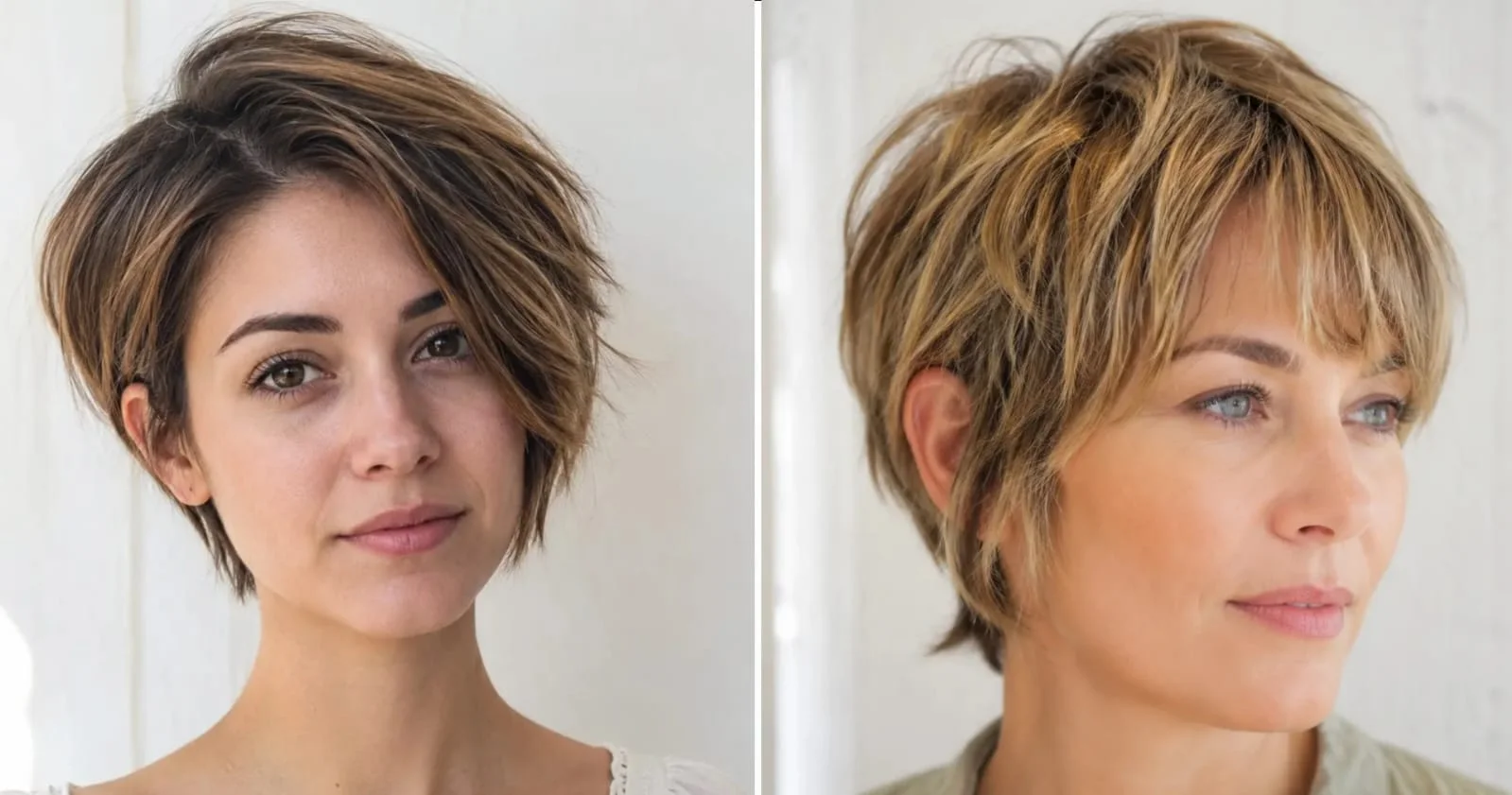
An oval face has a quiet advantage most people don’t clock until they’re already in the stylist’s chair: the forehead and jaw are close enough in width that almost nothing looks “off.” That balance is exactly why short hair reads so well on this shape — there’s no wide jaw to soften or narrow forehead to disguise, so the cut gets to do decorative work instead of corrective work. It can sit close to the head, flare out, or fall in soft pieces, and the face underneath still looks proportioned.
That freedom is also why oval-face guides tend to be long ones. When almost every short style “works,” the real question shifts from what’s flattering to what’s practical — which cuts hold their shape through a humid commute, which need a diffuser every morning, and which ones grow out gracefully instead of turning into an awkward triangle at week six. If you haven’t already, it’s worth browsing short haircuts for women more broadly first, since a lot of the fit principles carry over regardless of face shape.
Below are 18 short styles worth considering, starting with the ones that tend to get requested most.
1. Classic Pixie Cut

This is the style most people picture first, and for good reason — short layers left longer on top, cropped close at the sides and back. On an oval face, it works because there’s no jawline to hide, so the cut can go as short as you want without making the face look boxier. Fine hair holds this shape especially well since there’s less weight fighting the layers.
The tradeoff is upkeep: pixies grow out fast and usually need a trim every four to five weeks to keep their line. A side-swept fringe softens it further if you want more movement near the forehead. If you’re weighing your options, it’s worth flipping through pixie cut hairstyles to see how much this one shape can vary just from the parting alone.
2. Grown-Out Pixie

This is the in-between stage — longer on top, with enough length at the sides to tuck behind the ears. It actually suits an oval face better than a classic pixie in some ways, since the added length near the cheekbones gives a bit more shape without covering anything up. Best match for anyone who liked their pixie but isn’t ready to keep chasing a razor every month.
The catch is the “growing out” phase can look uneven for a couple of weeks; a good stylist will texturize the edges so it reads intentional rather than accidental. It photographs well from most angles, which matters more than people admit. For the specific stages this cut moves through, grown-out pixie cut breaks it down by hair type.
3. Chin-Length French Bob

A blunt line at the chin holds its shape through humidity better than layered cuts do, because there’s less loose hair at the ends to frizz or separate. This bob sits right at the jaw, and on an oval face it draws a horizontal line that balances the face’s natural length. Thick, straight hair is the ideal match — the weight keeps the blunt edge crisp.
Wavy hair can wear it too, just expect a slightly softer line by midday. One downside: because it’s so precise, growing it out unevenly shows fast, so plan on tighter trim cycles than you’d need with a layered cut. See more variations at short French bobs if the blunt look appeals but you want options on length.
4. Inverted Bob

Stacked shorter at the back and gradually longer toward the front, this bob adds visual weight near the jaw while keeping the crown light — a combination that plays well with oval faces because it doesn’t need to correct anything, just add interest. It’s a stronger choice than a straight bob for anyone with fine hair, since the stacking creates the illusion of density at the back where hair often looks thinnest.
The angle needs regular maintenance to stay sharp, roughly every six weeks. Styled straight it looks polished; roughed up with texture spray it leans editorial, which makes it one of the more adaptable cuts here for switching between office and weekend. More styling directions live at inverted bob hairstyles.
5. Wavy Bixie Cut

Part pixie, part bob — the bixie keeps some length through the crown while the sides stay cropped, and waves make it look intentionally undone rather than just short. This is one of the more forgiving cuts on this list for second- or third-day hair, since the texture hides roots and regrowth better than a sleek style would.
On an oval face it adds width at the temples, which keeps the overall shape from reading too narrow. It needs a texturizing product to hold the wave pattern, and diffusing rather than air-drying gives more consistent results. The full range of takes on this hybrid is at the bixie cut.
6. Slicked-Back Pixie

Pulling a pixie straight back with gel does something a lot of other short cuts can’t: it puts the cheekbones and forehead fully on display, no fringe or side-swept piece in the way. It’s a striking choice for an oval face specifically, since there’s enough natural symmetry to carry the exposure without looking severe.
It needs strong hold product and reapplication if you’re out for more than a few hours, since fine hair especially tends to separate by evening. Great for office settings or anything semi-formal where a fringe would feel too casual — just keep a travel-size gel on hand for touch-ups.
7. Textured Crop with Side Part

A slightly grown-out crop, parted deep to one side rather than centered. The asymmetry breaks up the evenness of an oval face just enough to add character without disrupting the balance. Best on thicker hair that can hold a defined part without flopping back to center by midday.
A light matte paste worked through the ends keeps it looking piecemeal rather than flat. Compared to a classic pixie, this one asks less of your morning routine — finger-styling usually gets the job done, which makes it a solid pick for anyone who wants low effort without going fully undone.
8. Blunt Micro Bob

Cropped just below the ear with a completely straight, unlayered line. It’s a bold length, closer to a bob-pixie hybrid, and it works surprisingly well on oval faces because the shortness draws attention up toward the eyes and cheekbones rather than down toward the jaw.
Fine, straight hair suits it best — anything with heavy natural curl will fight the blunt shape and lose definition fast. One realistic downside: at this length, even a centimeter of growth changes how it sits, so trims every three to four weeks keep it from drifting out of shape.
9. Shaggy Pixie with Bangs

Choppy layers throughout, paired with wispy, textured bangs. The shag technique — cutting layers unevenly rather than in one clean line — is why this style holds its shape through movement better than a smooth pixie does; there’s no single sharp edge to fall out of place.
On an oval face, the bangs shorten the visual length of the forehead slightly, which some people find more flattering than a fully open hairline. Needs a texturizing spray, not a smoothing one, to keep the piecey look intact, and it tends to look better a day or two after washing than fresh out of the shower.
10. Curly Pixie Cut

Natural curls cut short rely on the curl pattern itself for shape, which is actually an advantage — there’s less styling required day to day, and curls tend to shrink up rather than fall flat, so the cut holds its volume longer than straight styles do.
On oval faces, the width curls add near the temples balances the face nicely. The main adjustment is getting a curl-specific cut done dry, not wet, so the stylist can see exactly how each curl falls before trimming. A leave-in cream defines curls without weighing them down.
11. Asymmetrical Bob

One side noticeably longer than the other, usually with the shorter side sitting near the chin. It’s a strong pick if you want a bob that reads as more fashion-forward than classic. The asymmetry adds a diagonal line across an oval face, which some people prefer to the straight horizontal line of a blunt bob.
Works on straight or loosely wavy hair; tight curls tend to obscure the intentional imbalance and can make the cut look uneven rather than styled. If you’re torn between this and a straight bob, think about whether you want the cut to feel classic or a little more editorial.
12. Choppy Bob with Curtain Bangs

Layered, textured bob paired with bangs parted down the middle and swept to either side. Curtain bangs are having a long moment because they suit nearly every face shape, and on an oval face they soften the forehead without covering it entirely.
The choppy layers underneath mean less precision is needed at the ends, which makes this a lower-maintenance bob than a blunt one. Humidity can puff the bangs slightly; a light-hold cream keeps them in place without stiffness, and a quick round-brush pass in the morning is usually all it needs.
13. Undercut Pixie

Shaved or closely clipped underneath, with longer hair left on top to style forward, back, or to the side. This is one of the more versatile cuts here because the top length can be restyled daily for a completely different look depending on your mood or the occasion.
On an oval face it works especially well since the shaved sides expose the jaw and cheekbones cleanly. Thick hair on top balances the shaved sides better than very fine hair, which can look sparse by comparison — if your hair is fine, ask your stylist about keeping slightly more length up top.
14. Side-Swept Bob

A classic bob with all the length directed to one side rather than parted evenly. The visual effect is a diagonal sweep across the face that adds a bit of asymmetry to an otherwise very symmetrical face shape, which some people find more interesting than a centered part.
Straight hair holds the sweep most reliably; wavy hair needs a flat iron touch-up to keep the direction consistent throughout the day. A lightweight serum, not a heavy oil, keeps the swept side from looking greasy by afternoon.
15. Wolf-Inspired Cropped Cut

A shorter take on the shaggy wolf cut trend — heavy layering throughout with a slightly messy, undone finish. The layering distributes hair weight more evenly across the head than a single-length bob does, which is part of why shag-family cuts tend to hold volume through the day better than smooth styles.
On an oval face, the varied lengths add texture without needing length to do it. Works best on hair with at least some natural wave or texture to lean into — on very straight, fine hair, the layers can look a little thin rather than intentionally choppy.
16. Sleek Chin Bob

A polished, glass-like bob styled pin-straight at chin length. This is the most formal option on the list — the kind of cut that photographs cleanly for professional headshots or events where you want everything to look deliberate rather than casual.
On an oval face, the straight line at the chin creates a soft frame without adding bulk anywhere. It needs a flat iron and heat protectant to achieve the sleekness, and it’s the style most affected by humidity on this entire list, since any frizz immediately breaks the polished look.
17. Textured Bixie with Fringe

A bixie cut with a fuller, textured fringe added at the front. The fringe shortens the forehead slightly while the bixie’s crown length keeps the overall shape from feeling too cropped, giving it a softer profile than a straight pixie-bixie without bangs.
Good for medium to thick hair that can support both the fringe and the layered crown without looking flat. Regular trims matter here more than most cuts on the list, since fringe grows into the eyes faster than people expect — usually within three weeks.
18. Cropped Shag

The shortest version of the shag family, with heavy layering and a slightly disheveled finish throughout. It’s a low-maintenance option for anyone who wants texture without a lot of daily styling — the choppy layers are designed to look a little undone even fresh out of the shower.
On an oval face, it adds informality to a shape that can otherwise look almost too tidy. Works on nearly all hair types, though very fine hair may need a volumizing mousse to keep the layers from falling flat by midday.
Why Some of These Last Longer Than Others
The styles above don’t perform equally, and it isn’t random. A few structural factors decide whether a short cut holds up through a full day or needs constant fixing.
Layering distributes weight. Shag-family cuts (9, 15, 18) spread hair weight across many shorter layers instead of concentrating it at one length. That’s why they tend to keep volume through movement — there’s no single heavy section pulling everything flat, the way a one-length bob can.
Blunt lines resist frizz better than layered ones, up to a point. A blunt edge (3, 8, 16) has fewer loose, separated ends exposed to humidity, so it holds a clean shape longer — but once humidity does get in, blunt styles show it more obviously than a shag would, because there’s no existing texture to disguise the change. Layered and curly cuts (5, 9, 10) already look a little undone, so humidity reads as “textured” instead of “frizzy.”
Density changes which cut looks intentional. Fine hair reads best in cuts that don’t rely on visible weight — pixies, crops, curtain bangs. Thick hair can carry more structure and asymmetry (inverted bobs, undercuts, side-sweeps) because there’s enough hair to hold the shape without extra product.
The practical rule: if your week involves a lot of movement — commuting, workouts, being outside — lean toward layered, textured cuts. If your priority is a polished, camera-ready line for the office or events, blunt cuts win, but budget for touch-up product or a quick flat-iron pass partway through the day.
FAQ
Will short hair make my oval face look too long?
No — length concerns are mostly a round or square face issue. Oval faces are already balanced in proportion, so short hair doesn’t stretch or shrink the face the way it might on other shapes. The main thing to watch is volume at the crown; too much height can slightly exaggerate length, so a flatter crown with side volume usually looks more balanced.
What’s the lowest-maintenance short cut for oval faces?
Curly pixies and cropped shags tend to need the least daily styling, since both rely on natural texture instead of precise blow-drying. Blunt bobs and sleek chin cuts sit at the other end — they need consistent heat styling to keep their line.
How often do I need trims to keep the shape?
Pixies and micro bobs usually need trims every 3–5 weeks. Bobs and bixies can often stretch to 6–8 weeks since the longer length hides regrowth better. Shag cuts are the most forgiving, sometimes going 8–10 weeks before the layers look noticeably grown out.
Can I still wear bangs with short hair on an oval face?
Yes, and it’s one of the few face shapes where nearly every bang style works — curtain, side-swept, or blunt. The main consideration isn’t face shape but hair texture: fine hair suits softer, wispy bangs, while thicker hair can carry a fuller, blunt fringe.
Does hair density actually change which style I should pick?
Yes, more than most people expect. Fine hair looks fuller in cuts with less layering (blunt bobs, classic pixies), since fewer layers means less thinning-out at the ends. Thick hair benefits from heavier layering or texturizing to prevent the cut from looking bulky or triangular.
Will a short cut work if I have a lot of natural wave or curl?
Generally yes, but the cut needs to be done dry or with the texture accounted for, since curls shrink up after cutting. Bixies, shags, and curly pixies are built around texture rather than fighting it, which makes them more reliable choices than blunt, straight-line cuts if your hair has natural movement.
Final Thoughts
The honest answer to “what’s the best short hairstyle for an oval face” is that the face shape rules out almost nothing — the real filter is your hair’s natural texture, how much time you actually want to spend styling, and how often you’re willing to sit in a salon chair. Match the cut to those three things first, and the flattering part takes care of itself.

