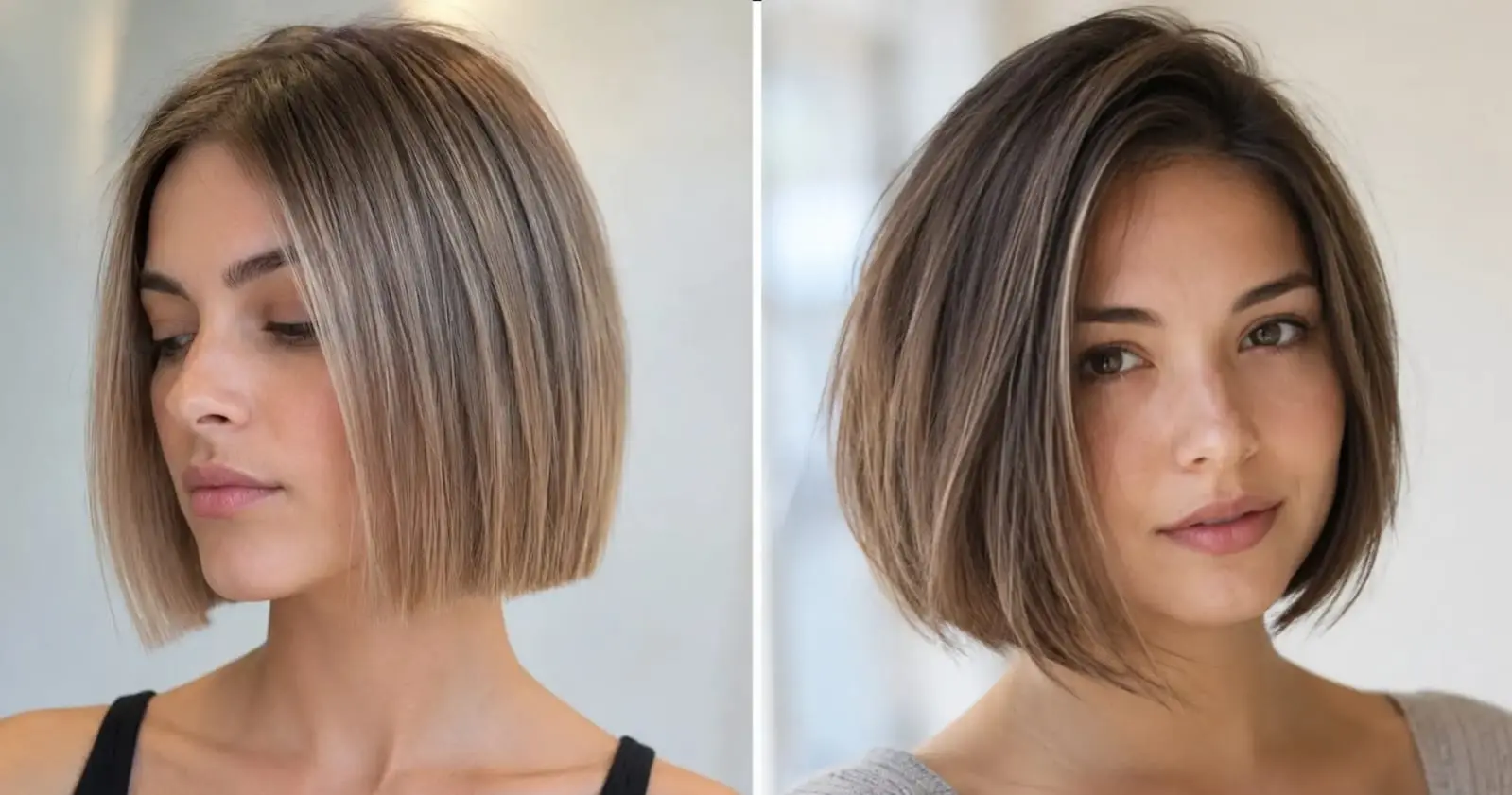
A short bob sounds simple until you’re the one sitting in the chair, watching four inches of hair land on the floor. What most people don’t realize is that “short bob” isn’t one haircut — it’s a category, and the difference between a bob that flatters you and one that doesn’t often comes down to jaw angle, hair density, and how much time you’re realistically willing to spend with a round brush.
This guide breaks down fifteen short bob variations that go beyond the basic blunt cut, including why some grow out gracefully while others need a trim every four weeks, and why the same length can look completely different depending on your face shape and hair texture. If you’ve been burned by a bob that looked nothing like the inspiration photo, the explanations here should help you avoid a repeat.
Before you book anything, it helps to understand what’s actually driving the look of a bob — not just the length, but the weight distribution, the perimeter shape, and whether your hair has the density to hold that shape without extra styling. For readers who want a slightly longer option with similar low-maintenance appeal, a layered bob is worth comparing against the classic blunt version below.
Quick Guide
| Haircut | Best For | Maintenance |
|---|---|---|
| Classic Blunt Bob | Straight, thick hair | Trim every 6-8 weeks |
| French Bob | Round or oval faces | Trim every 4-6 weeks |
| Textured Lob-Bob Hybrid | Fine, thin hair | Trim every 8-10 weeks |
| Graduated Bob | Square jawlines | Trim every 6-8 weeks |
| Asymmetrical Bob | Wavy or curly hair | Trim every 6 weeks |
| A-Line Bob | Heart-shaped faces | Trim every 8 weeks |
| Chin-Length Bob | Fine hair needing volume | Trim every 6 weeks |
| Bob with Curtain Bangs | Long foreheads | Trim every 4-5 weeks |
| Choppy Bob | Thick, coarse hair | Trim every 8-10 weeks |
| Inverted Bob | Round faces | Trim every 6-7 weeks |
| Wavy Bob | Natural texture | Trim every 8-10 weeks |
| Blunt Bob with Bangs | Oval faces | Trim every 4 weeks (bangs) |
| Micro Bob | Confident, low-maintenance types | Trim every 4-5 weeks |
| Stacked Bob | Fine hair, thin ends | Trim every 6 weeks |
| Side-Part Bob | Uneven hairlines | Trim every 8 weeks |
1. Classic Blunt Bob

The classic blunt bob is cut in one clean, uniform line, with every strand ending at the exact same length. It’s the version most people picture first, and it works because it relies on precision rather than layering to create shape.
A one-length perimeter concentrates all your hair’s weight at the bottom, which is exactly why this cut looks so dense and glossy on straight or slightly wavy hair. Fine hair tends to look thicker here than in almost any other bob, since there’s no thinning out of the ends to dilute the visual weight.
The trade-off is precision maintenance — a single uneven inch throws off the whole line, so this isn’t the cut to stretch past eight weeks between trims if you want it to keep looking sharp. If your hair is on the finer side, it’s worth comparing this against bob styles built specifically for fine hair before committing to the fully blunt version.
2. French Bob

The French bob sits at chin length with soft, wispy bangs and a slightly undone finish, borrowing its reputation from that effortless Parisian look everyone talks about but few actually explain. It’s one of the most searched variations in the short French bob family, and for good reason — few cuts balance low effort with high visual impact this well.
What makes this cut low-effort day to day is that it’s built to look intentionally imperfect — flyaways and slightly uneven pieces read as style rather than a bad hair day. That said, the bangs are the part people underestimate; they need a trim roughly every four weeks or they start hitting your eyes and losing the shape that makes the whole cut work.
If you have a rounder face, the soft fringe breaks up width at the forehead in a way a full, straight-across bang can’t.
3. Textured Lob-Bob Hybrid

Sitting between a lob and a true bob, this hybrid uses soft internal layers rather than sharp graduation, giving it more movement than a classic bob without losing the shorter length’s shape.
Internal layering removes weight from the mid-lengths while leaving the perimeter intact, which is why this version works so well on fine hair that goes limp in a solid blunt cut — the layers create the illusion of volume without physically thinning the ends. I switched to this after years of a blunt bob that fell flat by noon, and the difference in how long it holds shape was bigger than I expected. It’s worth browsing a broader list of haircuts for fine hair if density is your main concern before committing to this hybrid.
The downside is subtle: on very thick hair, the same layering can look messier than intended, so it favors fine-to-medium density more than coarse hair.
4. Graduated Bob

A graduated bob is stacked shorter in the back and gradually longer toward the front, building a rounded, structured shape rather than a flat line.
The graduation adds visual weight and roundness at the back of the head, which softens angular jawlines in a way a one-length bob simply can’t. This is one reason two people with the “same” bob length can look so different — the graduation is doing structural work most people never notice, and it’s part of why inverted bob styles get recommended so often for square face shapes..
The catch is regrowth: as the graduated layers grow out, the stacked shape loosens fast, so this cut needs more frequent trims than a blunt style if you want to keep the silhouette.
5. Asymmetrical Bob

This bob keeps one side noticeably longer than the other, often with a diagonal line running from short at the nape to longer at the chin or jaw.
The biggest mistake with an asymmetrical bob is styling both sides identically, which erases the entire point of the cut. It should be styled to emphasize the diagonal — tucking the shorter side back while letting the longer side fall forward creates the asymmetry the cut was designed around.
On wavy or curly textures, the diagonal line reads less crisply since curl pattern softens sharp angles, so this cut delivers its boldest effect on straighter hair.
6. A-Line Bob

An A-line bob is shorter in the back and angles down to a longer point at the front, creating a triangular silhouette when viewed from the side.
The forward-angled length draws the eye down and inward toward the chin, which is precisely why this cut is recommended so often for heart-shaped and round faces — it counterbalances a wider forehead by adding visual weight lower on the face.
Because the shortest point sits right at the nape, this cut shows regrowth quickly at the back, even if the front holds its shape longer.
7. Chin-Length Bob

Landing right at the jawline, the chin-length bob is one of the more universally wearable short bobs because it hits at a spot that flatters most bone structures.
Chin-length hair sits at a natural density sweet spot — long enough to have some weight and swing, but short enough that fine hair doesn’t thin out and separate the way it does past the shoulders. A light bend from a round brush is usually enough to add fullness, without needing a full blowout.
The maintenance reality is that this length grows out into an awkward in-between stage faster than a shorter bob, so expect a slightly tighter trim schedule if you want to keep it precisely at the jaw.
8. Bob with Curtain Bangs

This version pairs a standard bob length with soft, face-framing curtain bangs that part down the middle and sweep to either side.
Curtain bangs add real styling time compared to a bang-free bob — expect five to ten extra minutes with a round brush to get that swept-back curve, since they don’t fall that way naturally for most hair types. Once you learn the angle of your brush, though, it becomes muscle memory fairly quickly. For long foreheads, this style shortens visual face length noticeably, which is part of why it’s such a popular pairing across other cuts, including many long bob hairstyles.
For long foreheads, this style shortens visual face length noticeably, which is part of why it’s such a popular pairing across other cuts, including many long bob variations.
9. Choppy Bob

A choppy bob uses heavy, textured layers cut with a razor or deep point-cutting to create a deliberately undone, piecey finish rather than a smooth perimeter — a technique that’s become one of the defining looks among choppy bob haircuts trending this year.
Thick, coarse hair tends to look bulky in a smooth blunt bob, but choppy layering removes internal weight and breaks the hair into sections that fall more naturally. The razor work also reduces the bulk that often makes thick hair feel heavy and hot to wear short.
On fine hair, the same choppy technique can look sparse rather than textured, since there’s less hair volume for the layers to work with — so this one really is density-dependent.
10. Inverted Bob

The inverted bob is essentially a more dramatic graduated bob, with a steep angle from very short at the back to noticeably longer at the front.
This cut isn’t ideal for anyone who wants low-maintenance hair, since the sharp graduation needs regular trims to keep its defined shape — skip it if you can’t commit to a six-to-seven-week schedule. It’s also a stronger choice for round faces than long ones, since the added length and angle at the front elongates a rounder jaw rather than a face that’s already long.
When it’s maintained well, though, it’s one of the most structured, sculptural bobs available.
11. Wavy Bob

Rather than fighting natural texture, the wavy bob is cut specifically to work with waves — usually with layers that let the wave pattern show rather than getting weighed down.
Texture changes how a bob reads because wave patterns naturally shorten the visible length and add width, so the same haircut can look shorter and fuller on wavy hair than on straight hair cut to the identical measurement. This is why a stylist should always cut wet-to-dry with texture in mind rather than cutting to a length on straight, blow-dried hair.
The trade-off is that wave pattern isn’t always consistent day to day, so this bob can look slightly different depending on humidity and how the hair was washed.
12. Blunt Bob with Bangs

Pairing a full, blunt fringe with a blunt-cut bob creates one of the more graphic, high-contrast looks in the bob family.
A lightweight, alcohol-free hairspray helps keep bangs in place through humidity without weighing down fine hair, which matters more here than in almost any other cut since the bangs sit directly on the skin and pick up oil fast. A dry shampoo at the roots of the bangs between washes also stretches the style another day or two.
This combination is best on oval faces since the full fringe shortens a longer face shape, but it can feel heavy on already-round faces.
13. Micro Bob

The micro bob is the shortest version in this list, typically landing above the jaw or even at ear length, with minimal room for layering.
This is the boldest commitment on the list — there’s no ponytail backup plan if you don’t like it, and it grows out into an awkward stage faster than any longer bob. It’s worth genuinely sitting with the decision for a few days rather than booking it on impulse, since regret here means waiting months rather than weeks.
On the upside, for the right density and face shape, few cuts read as confidently modern as a well-cut micro bob.
14. Stacked Bob

A stacked bob uses horizontal layering at the back to build height and fullness, similar to graduation but focused specifically on lifting the crown and nape area.
Because the stacking relies on shorter layers underneath longer ones, this cut needs trims roughly every six weeks to preserve the lift — once those under-layers grow past a certain point, the stack collapses and the back goes flat. My own stack always seemed to hold for exactly five weeks before I noticed the back losing its shape.
It’s an especially good option for fine hair at the nape, since it’s one of the few bob styles that adds real physical height rather than just the appearance of it.
15. Side-Part Bob

Rather than a center part, this bob is cut and styled with a deep side part, which shifts more length and weight to one side of the face.
A deep side part is genuinely useful for anyone with an uneven hairline, since it can hide a cowlick or thinning patch that a center part would expose directly. It also naturally creates asymmetry without needing an asymmetrical cutting technique underneath.
The one thing to know before committing is that switching back to a center part later can look noticeably different, since the hair has been trained to fall a certain way and may need a few washes to adjust.
Why Some Bobs Work Better Than Others
The truth about bobs is that length is the least important variable in the equation. Face shape determines how a straight perimeter line interacts with your jaw and cheekbones — a line that hits right at the widest part of a round face will emphasize width, while the same line an inch lower or higher can slim it.
Hair density changes almost everything else. Thick hair can carry a blunt, one-length cut because there’s enough hair to create visual weight on its own; thin hair often needs the illusion of density through layering, texturizing, or a slightly shorter length that concentrates what hair is there. Texture works alongside density — wavy and curly hair shortens visually and needs extra length built in to land where you actually want it, while straight hair shows every millimeter of the cut line.
Maintenance is the variable people plan around least, and it’s often the deciding factor in whether someone loves or regrets a bob. A graduated or stacked shape needs consistent trims to hold its structure, while a blunt or wavy bob can stretch longer between visits without losing its core shape. And grow-out matters more with shorter, more structured cuts — a micro bob or sharply inverted bob moves through more awkward stages on its way to longer hair than a softer, textured version does.
Before choosing a bob, it’s worth being honest about which of these four factors — face shape, density, texture, or maintenance tolerance — matters most to you, since almost no single cut optimizes for all four equally.
FAQ
Which short bob is easiest to maintain?
A wavy bob or textured lob-bob hybrid typically stretches the longest between trims, since neither relies on a sharp, structured line that shows growth quickly.
Which bob makes fine hair look thicker?
A classic blunt bob or a stacked bob both add the appearance of density — the blunt version through concentrated weight at the ends, the stacked version through physical lift at the crown.
How often do I need to trim a graduated or inverted bob?
Every six to seven weeks is standard, since the structured shape loosens noticeably once the graduated layers grow out.
Will a bob work with naturally curly hair?
Yes, but it should be cut specifically for curls — usually a bit longer than the intended finished length to account for shrinkage, with layering that follows the curl pattern rather than fighting it.
Can I wear a bob without daily heat styling?
Blunt bobs, French bobs, and wavy bobs are the most heat-independent options, since they’re designed to look intentional even slightly undone or air-dried.
Do bobs work on thick, coarse hair?
Yes — choppy bobs and graduated bobs are specifically built to remove bulk from thick hair through layering and razor work, which a smooth one-length cut can’t do as effectively.
Final Thoughts
The right short bob isn’t the one that looked best on someone else — it’s the one that accounts for your actual hair density, your natural texture, and how much time you’re willing to spend styling it before it starts to feel like a chore. If you’re someone who wants to wash and go, lean toward the wavy bob or French bob; if you love a sharp, structured look and don’t mind regular trims, the graduated or inverted bob will reward that maintenance with a shape few other cuts can match. Bring reference photos to your appointment, but talk through your density and texture with your stylist before the scissors come out — that conversation matters more than the photo ever will.

