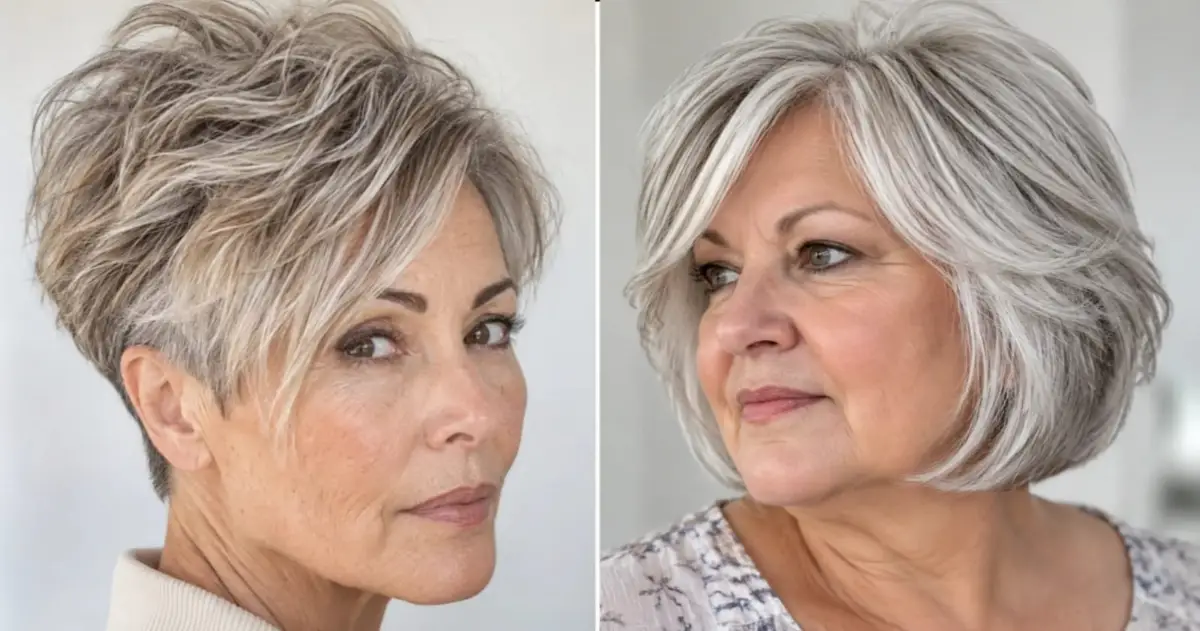
A short summary for anyone in a hurry. Full detail, including face shape and hair type matching, styling routines, and the stylist conversation script, follows below.
| Question | Quick Answer |
| Best overall pick | A layered bob or bixie (pixie-bob hybrid). It builds lift at the crown and softens the face without demanding much daily styling time. |
| Best for fine or thinning hair | Short layers with a slightly blunt perimeter. Heavy, choppy layering can make fine hair look sparse instead of full. |
| Best for thick or curly hair | A shag or a diffused, layered crop. This removes bulk and lets natural texture do the work. |
| Best for round faces | Layers with height at the crown, plus a side part to add visual length. |
| Best for square faces | Soft, wispy layers around the jawline to soften strong angles. |
| How often to trim | Every 6 to 8 weeks keeps the shape and the layering crisp. |
| Daily styling time | 5 to 15 minutes for most short layered cuts once the right products are in place. |
Turning 60 does not mean saying goodbye to great hair. If anything, this is the stage of life when the right haircut can work the hardest, taking years off a look while asking almost nothing of the morning routine. Short layered haircuts have become the go-to choice for women over 60 because they solve two problems at the same time. They add movement and lift to hair that may be thinning or changing texture, and they keep daily styling short and simple. This guide walks through how to choose the right layered cut for a specific face shape and hair type, how to talk to a stylist, how to care for the cut at home, and answers to the questions women ask most often about layering short hair later in life.
Table of Contents
Why Layers Work So Well After 60
Understanding what is actually happening to hair at this stage of life helps explain why layering is the technique stylists reach for again and again.
Hair density starts to decline earlier than most people expect, and the process speeds up with age. UCLA Health explains that hair follicles gradually produce less hair over time, a shift driven by hormonal changes, scalp changes, and years of sun exposure and styling. Many women notice this pattern become more noticeable around menopause, when the hair growth cycle itself shortens. The active growing phase becomes shorter, more strands sit in the resting phase before shedding, and overall volume can look and feel reduced as a result.
It also helps to know that some daily hair shedding is completely normal at any age. The American Academy of Dermatology notes that losing 50 to 100 hairs a day is typical and is not, by itself, a sign of a problem. None of this means a woman is doing anything wrong with her hair. It simply means her hair is behaving the way hair behaves after 60, and a haircut aware of these changes will always look better than one that ignores them.
This is exactly where layering earns its reputation. Removing weight from the ends lifts hair at the roots, which visually increases density even though the strand count has not changed. Layers also let each section move independently instead of falling in one heavy sheet, which reads as fuller and healthier from a distance. For women dealing with a finer or slower-growing texture, layering is often the single most effective styling decision available, and it tends to matter more than color choice alone.
Readers who want a closer look at what counts as normal shedding at this age, and when it is worth mentioning to a doctor, can see this breakdown of how many hairs women typically lose each day.
Finding the Best Layered Cut by Face Shape
Face shape is the single biggest factor in how flattering a layered haircut will look, and it matters more than the specific style name.
Round Face
Layers with lift at the crown paired with a side part tend to work best here, since they add visual length and break up the roundness of the cheeks. A rounded, chin-skimming bob without any height on top can make a round face look fuller than intended.
Oval Face
Oval faces are considered the most versatile shape, since nearly every layered style, from a blunt bixie to a soft shag, tends to suit the proportions. Readers with an oval face shape may also enjoy this dedicated guide to short hairstyles for oval faces for more targeted ideas.
Square Face
Soft, wispy layers around the jawline soften strong, angular features far better than a blunt, one-length cut. A style with movement at the jaw, rather than a hard, straight edge, is usually the more flattering choice.
Heart-Shaped Face
Chin-length layers or side-swept bangs help balance a narrower jawline against a wider forehead. Fullness at the jaw level, rather than at the crown, keeps proportions even.
Long Face
Fringe or bangs, along with layers that add width at cheekbone level, help shorten the visual length of the face. Readers who like the idea of bangs but are unsure which style suits them can check this guide to bangs for round faces for styling comparisons that apply to several face shapes.
Finding the Best Layered Cut by Hair Type
Fine or Thinning Hair
For fine or thinning hair, restraint matters more than volume of layers. A stylist working with finer hair usually keeps the perimeter close to blunt and concentrates the layering through the crown and top sections, since overly choppy layering can make fine hair look sparse rather than full. A full breakdown of options is available in this guide to hairstyles for thin and fine hair over 60, along with this collection of volumizing haircuts for thin hair.
Thick or Dense Hair
Thick hair benefits from layering that removes bulk without removing shape. A shag or a diffused, layered crop handles density well because the internal layers reduce weight while the outer shape stays controlled. For anyone considering this route, this guide to growing out a shag haircut gracefully is worth a look before committing to the cut.
Curly or Wavy Hair
Curly and wavy hair often responds especially well to layering, since layers let each curl or wave move on its own instead of forming one heavy shape. Cutting curly hair dry, so the stylist can see the natural pattern in real time, tends to give more reliable results than cutting it wet.
Straight Hair
Straight hair shows off face-framing layers clearly, since there is no natural texture to soften sharp lines. A soft, graduated layer pattern reads as more polished than a single blunt line for most straight-haired women over 60.
Gray, Silver, or Salt-and-Pepper Hair
Layers add dimension to gray and silver hair in a way a flat, one-length cut cannot, since the movement catches light differently across each layer. Women transitioning their color or wanting a fresh look alongside a new cut may also enjoy this collection of blonde and dark-root color ideas for inspiration.
20 Short Layered Haircut Ideas for Women Over 60
Each of the styles below notes the hair type or face shape it tends to suit best, so it is easier to find the right starting point before a salon visit.
1. Soft Rounded Layered Bob

Gentle, rounded layers add fullness to fine hair while helping soften a round face, especially when styled with a side part.
2. Stacked Graduated Bob

A stacked back with soft graduation removes excess bulk from thick hair while maintaining a polished and structured shape.
3. Face-Framing Curtain Bob

Longer layers around the cheeks and jaw create soft face-framing movement, making this style especially flattering for oval and heart-shaped faces.
4. Silver Layered Bob

Soft, flowing layers allow natural gray or silver hair to catch the light beautifully, making this an elegant choice for women embracing their natural color.
5. Asymmetrical Layered Bob

Slightly longer on one side gives this layered bob a modern edge. It works particularly well with medium-density, straight, or gently wavy hair.
6. Classic Bixie with Crown Volume

This pixie-bob hybrid combines the softness of a bob with the shorter shape of a pixie. Added lift through the crown makes it a versatile choice for many face shapes.
7. Textured Bixie for Thick Hair

Heavier internal layers remove excess weight from dense hair while keeping the outer shape neat, controlled, and polished.
8. Side-Parted Bixie with Soft Fringe

A deep side part combined with a wispy fringe helps soften the forehead and works especially well for square or long face shapes.
9. Curly Bixie

Layers follow the natural curl pattern, creating shape and movement without fighting the hair’s natural texture.
10. Tapered Bixie with Undercut Nape

A closely tapered nape keeps the neckline clean and neat, while the longer, layered top maintains softness and volume.
11. Short Shag with Wispy Fringe

Piecey layers throughout the haircut create natural movement, while a soft wispy fringe adds a relaxed finish. It is a low-maintenance option for wavy or straight hair.
12. Cropped Wolf Cut

Shorter layers around the top combined with a slightly longer nape create a modern wolf-cut shape that works well for thick or medium-density hair.
13. Curly Shag

Heavy internal layering allows natural curls to bounce and separate instead of falling into one heavy shape, making this a great option for naturally curly hair.
14. Razor-Cut Shag

Razored ends create a softer, textured perimeter. This style is particularly useful for thick hair that needs movement and reduced bulk without losing too much length.
15. Feathered Pixie

Soft, feathered layers throughout the haircut create a gentle, rounded finish that can complement a wide range of face shapes.
16. Textured Pixie for Fine Hair

Shorter layers concentrated around the crown create lift and movement while preserving as much density as possible in fine hair.
17. Curly Pixie with Defined Layers

These layers are shaped around the natural curl pattern to enhance definition without creating unnecessary bulk. For best results, curly hair is often shaped while dry.
18. Long Pixie with Side-Swept Top

Extra length through the top allows the hair to be swept to one side, creating a flattering shape for square or long face shapes.
19. Undercut Pixie with Choppy Layers

A closely cropped or shaved undercut at the sides and nape contrasts with choppy layers on top, creating a bold and modern low-maintenance look.
20. Layered Bob with Wispy Curtain Bangs

Soft, parted curtain bangs blend into face-framing layers around the cheeks and jaw, making this a flattering option for long or narrow face shapes.
How to Style a Short Layered Cut at Home
The Everyday Routine
- Prep damp hair with a lightweight volumizing mousse or root-lift spray, focusing on the roots rather than the ends.
- Blow-dry with a round brush, lifting each section away from the scalp to encourage volume at the crown.
- Direct the layers where they are meant to sit, rather than letting them fall flat, using the brush to shape as the hair dries.
- Finish with a small amount of texturizing cream or a light-hold spray worked only through the ends to define individual layers without weighing hair down.
Product Stack by Hair Type
- Fine hair: volumizing mousse at the root, a lightweight texture spray, and a very small amount of shine serum on the ends only.
- Thick hair: a smoothing cream to control bulk, followed by a flexible-hold spray rather than a stiff one.
- Curly hair: a leave-in conditioner followed by a curl cream, applied to soaking wet hair before any drying begins.
Refreshing Day Two and Three Hair
Dry shampoo at the roots, followed by a quick pass with a round brush or fingers, usually revives a short layered cut without a full rewash. Anyone struggling with flyaways or frizz between washes may find this guide to fixing frizzy hair useful, and curly-haired readers can also check this guide on how to brush curly hair properly to avoid disrupting the curl pattern between wash days.
How to Talk to a Stylist About This Cut
Miscommunication is the most common reason a haircut does not turn out as expected, and it usually comes down to word choice rather than skill.
The Words That Actually Work
Instead of simply asking for “layers,” which can mean very different things to different stylists, it helps to be specific: “soft layers concentrated at the crown” for volume, “internal layers with a blunt perimeter” for fine hair, or “heavier layering through the ends” for a shaggier finish.
What to Bring
Two or three reference photos, rather than ten, tend to give a stylist the clearest picture. It helps to choose photos of women with a similar hair density and texture, since the same haircut name can look completely different on fine versus thick hair.
Questions Worth Asking Before the Scissors Come Out
- How much length will actually come off, in inches, not just a general description?
- Will this cut require a round brush and blow-dryer every day, or can it air-dry acceptably?
- How will the style change as it grows out over the following six to eight weeks?
Maintenance: Trim Schedule, Grow-Out, and What to Expect
Short layered cuts rely on precise shaping, which means they lose structure faster than a longer, one-length style once the layers start to grow out.
Trim Frequency
Most stylists recommend a trim every 6 to 8 weeks for short layered cuts, compared with 10 to 12 weeks for longer, less structured styles. Readers who want to stretch time between salon visits may prefer a cut designed with this in mind, such as the options in this guide to low-maintenance haircuts for fine hair.
Surviving the Grow-Out Stage
The awkward stage between cuts is usually shortest for layered styles, since the layering itself gives the stylist something to blend into as new length comes in. A light trim at the six-week mark, even if a full cut is not needed, keeps the shape from looking overgrown.
What a Salon Visit Typically Involves
Costs vary widely by salon, city, and stylist experience level, so it is worth asking for a price range when booking rather than assuming. A short layered cut usually takes 45 minutes to an hour, and color services, if added, are typically booked as a separate appointment or built into a longer visit.
Color Pairings That Work Well With Short Layers
Color is not required to make a short layered cut look finished, but the right shade can add another layer of dimension on top of the haircut itself.
- Embracing natural gray or silver, which reads as especially modern paired with soft, piecey layers.
- Warm tones such as auburn, honey, or copper, which bring life to fair or medium skin tones.
- Low-maintenance balayage or babylights, which grow out gently and require fewer touch-up visits than an all-over color.
A Few Honest Notes
Styling Around Glasses
Glasses and short layered hair generally pair very well, often better than long hair, which can catch on frames throughout the day. A side part or side-swept layers tend to sit more comfortably with glasses than a full, straight-across fringe.
Why Shorter Does Not Mean Less Feminine
A common misconception is that short hair reads as severe or less feminine. In practice, softness comes from the layering technique and the styling choices, not from length. A well-layered short cut can look just as soft and romantic as a longer style, and often looks more polished with far less daily effort.
Frequently Asked Questions
What is the best short layered haircut for women over 60?
There is no single best cut for every woman, but a layered bob or a bixie (a pixie-bob hybrid) tends to be the most flattering starting point. Both styles add lift at the crown, frame the face gently, and stay easy to manage on a daily basis. The right pick still depends on face shape, hair type, and how much styling time feels realistic.
Do layers make thin or fine hair look thicker or thinner?
Done correctly, layers make fine hair look fuller because they remove weight and let the ends move instead of falling flat. The key is restraint. Very heavy, choppy layering can thin out an already fine head of hair, so a stylist working on fine hair usually keeps the perimeter slightly blunt and layers mainly through the top and crown.
How short should hair be at 60?
There is no required length. Hair length after 60 should be based on face shape, hair density, and lifestyle rather than age alone. Many women choose shorter cuts because they are quicker to style and can visually lift thinning areas, but a longer, lightly layered bob works just as well for someone who prefers more length.
How often should short layered hair be trimmed?
Most stylists recommend a trim every 6 to 8 weeks. Short layered cuts rely on precise shaping, so the style can start to lose its structure and lift faster than a longer, one-length cut once the layers grow out.
Can layers work with curly or wavy hair?
Yes. In fact, curly and wavy hair often responds especially well to layering, since layers let each curl or wave move independently instead of forming one heavy shape. A stylist experienced with textured hair will usually cut curly hair dry so the natural pattern and bounce can be seen in real time.
What haircut takes years off a woman’s appearance after 60?
Face-framing layers around the cheekbones and jaw tend to have the biggest visual effect, since they soften the lower face and draw attention up toward the eyes. A cut with some crown volume also helps counter the natural flattening that can happen with finer, aging hair.
Do short layered haircuts work well with glasses?
Yes, and many women find them easier to manage with glasses than longer styles, which can get caught on frames. Side-swept layers or a side part generally pair better with glasses than a full, straight-across fringe, since they avoid competing with the top of the frame.
Final Thoughts
The best short layered haircut for a woman over 60 is the one that fits her face shape, her hair type, and how much time she actually wants to spend styling it each morning, not the one that photographs best on someone else. For more inspiration, readers can also explore this collection of short haircuts for older women or, for those planning further ahead, this guide to haircuts for women over 70.

