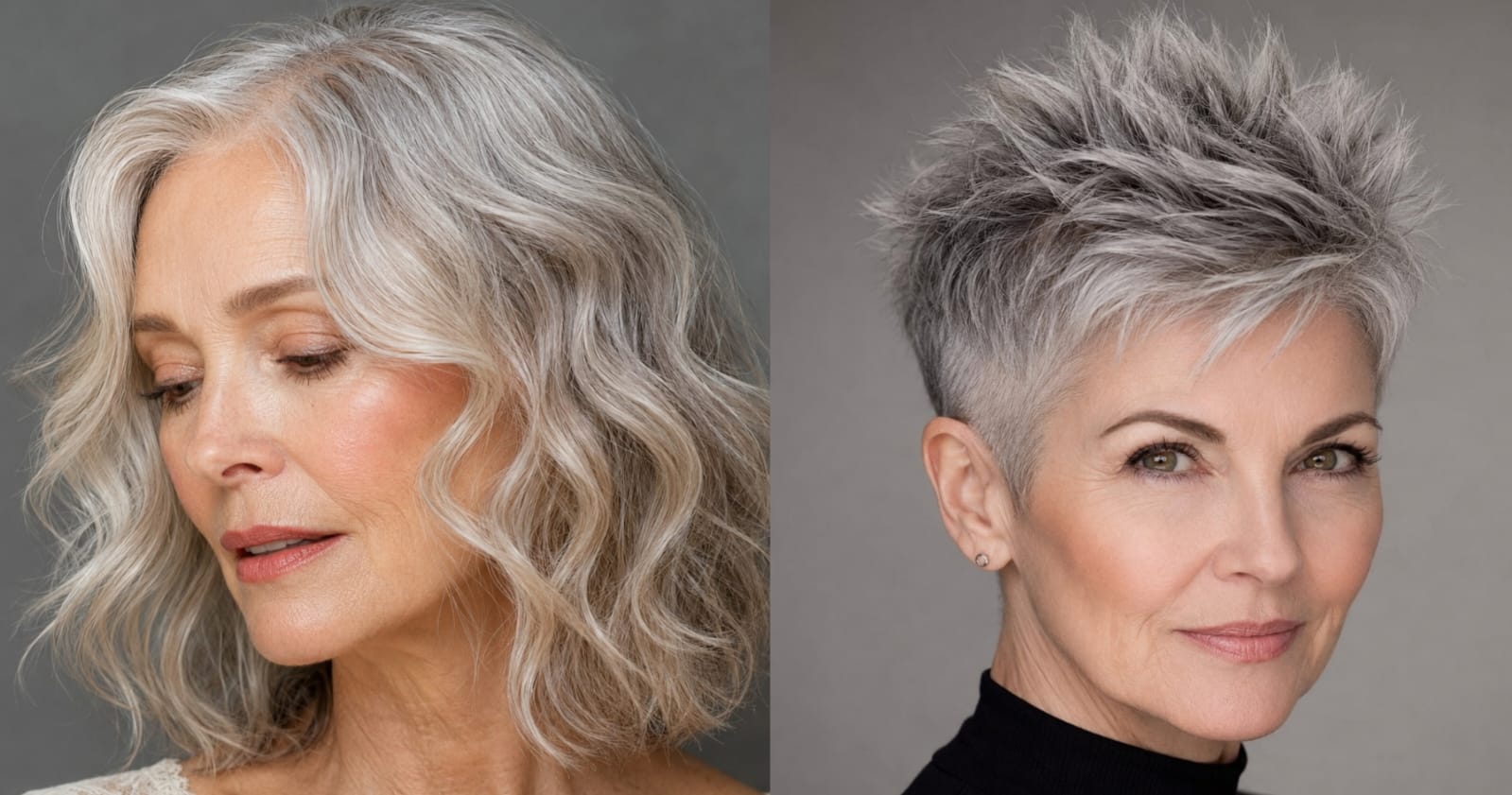
Thin, fine hair changes texture as it ages — strands lose density, color, and often shine, which means a style that worked at 40 rarely works the same way at 60. The good news is that thin fine hair actually responds really well to the right haircut. Length, layering, and even the angle of your part can create the appearance of thickness without a single extra strand.
The styles below aren’t about hiding fine hair — they’re built around it, using cut and shape to do the work that volume products can’t always deliver on their own. Whether you’re after something low-maintenance for daily wear or a bit more polish for special occasions, you’ll find an option here that suits your texture, your face shape, and your lifestyle.
Here are 15 hairstyles worth bringing to your next salon appointment.
Why Everything Changed After 60 (And What To Do About It)
Here’s what actually happens. After 60 your hair follicles shrink. The individual strands get finer. Your scalp produces less oil so the hair doesn’t move as naturally. Growth slows down. And the styles that used to give you body just… don’t anymore.
The worst thing you can do — and I watched my own mother do this for a decade — is keep long heavy hair because you think it’s covering the thinness. It is doing the exact opposite. Heavy hair pulls straight down. Straight down means completely flat against your scalp. And flat means every thin spot is fully visible.
Shorter cuts with layers and texture are not a consolation prize. They are genuinely better for this hair type. Once women actually try them, almost nobody goes back.
15 Hairstyles Worth Knowing About
1. The Textured Pixie

Okay so the pixie gets recommended constantly and I know some women roll their eyes at that. But there’s a reason it keeps coming up. When you remove all that length that’s been dragging your hair flat, suddenly everything lifts. The roots get air. The crown gets height. The whole head looks fuller almost immediately.
The one thing that matters is asking for texture. A blunt pixie just replaces one flat situation with another. You want the stylist to use a razor or do point-cutting so the ends are choppy and broken up. That’s what catches light and creates the illusion of real thickness. Gloria’s cut was a textured pixie and the difference was honestly kind of shocking to see in person.
- Best for: Round, oval, and heart-shaped faces
- Maintenance tip: Trim it every four to five weeks or the shape disappears fast. Work a small amount of volumizing mousse into the roots before blow-drying — not the ends, just the roots — and the lift lasts the whole day.
2. Layered Bob

The layered bob has been working for women with thin fine hair for decades and it still works because the logic behind it is just solid. When hair is cut in layers, different sections sit at different lengths. Light hits each layer from a different angle. That variation is what makes hair look thicker — it’s depth, and fine flat hair has zero depth without it.
Chin length tends to be the sweet spot. Shorter in the back, a little longer toward the front where it frames your face. Most women who try this after years of avoiding it say they should have done it much sooner.
- Best for: All face shapes, works especially well on square and oval
- Maintenance tip: Six weeks between trims is about right. Use a round brush when blow-drying and roll the ends slightly under as you finish each section — it gives a clean, full look that holds well.
3. Bob With Wispy Bangs

A lot of women over 60 avoid bangs entirely because they picture something heavy and blunt that plasters itself to the forehead. That kind of bang is a problem. Wispy bangs are a completely different thing. They’re light, feathery, slightly separated — they sit on the forehead rather than sticking to it.
What they do for the face is significant. They soften the forehead, they draw attention upward toward the eyes, and they add a really nice youthful quality to the overall look without looking like you’re trying to look younger. My mom got curtain bangs with her bob last spring and she genuinely gets compliments on them constantly.
- Best for: Oval, heart, and longer face shapes
- Maintenance tip: These need trimming every three weeks or they start covering your eyes and looking unkempt. Blow-dry them with a small round brush — it keeps them soft and shaped rather than flat and heavy.
4. The Shaggy Lob

For women who genuinely are not ready to go short — and that’s a completely valid position — the shaggy lob is the best option I know of. It sits at collarbone length, uses heavy layering throughout, and the ends are razored so they’re feathery and light rather than blunt and heavy.
What makes it work is that it fights fine hair’s biggest enemy which is flatness. All those layers break up the surface of the hair so it moves and catches light in different ways. Air-dry it with a little product and it looks like you have substantially more hair than you do. Karen — a friend of mine who’d had the same long flat style for years — tried this cut and said she felt like a different person.
- Best for: Women who want length but need texture; oval and long face shapes
- Maintenance tip: Ask for the ends to be re-razored at every appointment, roughly every eight weeks. A sea salt spray scrunched into damp hair before air-drying brings out the texture beautifully without weighing anything down.
5. Pixie That Works With Natural Curl or Wave

If your hair has any kind of natural movement to it — even just a gentle wave — you are sitting on something genuinely useful and most women with fine hair don’t realize it. Natural curl makes each strand take up more physical space. More space means more volume. A pixie cut that’s shaped around your natural texture rather than fighting it can look remarkably full even on very fine hair.
I’ve watched women spend years blow-drying and straightening hair that was actually trying to give them volume this whole time. Working with your natural texture instead of against it changes everything. The hair behaves better, looks better, and takes about half the effort.
- Best for: Women with natural wave or curl; all face shapes
- Maintenance tip: Put a curl cream on when hair is wet and then genuinely leave it alone. No scrunching, no touching, no brushing while it dries. Dry brushing destroys curl pattern. Let it do its thing and just finger-separate when it’s fully dry.
6. Side-Parted Bob

This one sounds almost too simple and that’s exactly why people underestimate it. A deep side part — really deep, not just slightly off-center — physically moves most of your hair to one side of your head. That creates immediate, visible volume on that side. It also shifts the eye away from any areas where thinning is most noticeable, usually along the part line or at the crown.
Paired with a good round brush blowout it genuinely looks like you have more hair. It costs nothing extra, requires no new products, and you can try it tomorrow morning.
- Best for: Women with visible thinning at the crown or part; all face shapes
- Maintenance tip: Alternate sides every couple of days. Parting in the identical spot every single day puts consistent tension on the same follicles and can actually worsen thinning over time. Switch it up.
7. Textured Crop With Height at the Crown

This is a shorter style where the stylist deliberately leaves the top section longer and trains it to sit upward, creating height right at the crown where most women over 60 need it most. The sides are cut shorter which makes the top volume look even more dramatic by contrast. Razoring throughout keeps the ends light so nothing looks stiff or helmet-like.
Women who get this cut often describe feeling more confident about their hair than they have in years. It’s structured without being stiff, short without being severe, and the crown volume does something genuinely flattering for the face shape.
- Best for: Women with crown thinning; oval and heart-shaped faces
- Maintenance tip: Volumizing powder is your friend here — work a tiny amount into the roots and the lift stays for hours. Trim every four to five weeks because the contrast between top and sides is the whole point and it softens fast as hair grows out.
8. The Silver Pixie

Grey and silver hair has a slightly different texture than pigmented hair — a little coarser, a little more grip. That actually works in your favor with fine hair because it means the hair holds styles better. A silver pixie with choppy textured ends takes advantage of both the texture and the beautiful color to create something that looks genuinely striking.
There’s also something about women who fully own their silver that just reads as incredibly confident. The ones still fighting it with constant color often look more tired than the ones who leaned in. It’s worth thinking about honestly.
- Best for: Women embracing natural grey or silver; all face shapes
- Maintenance tip: Purple toning shampoo once a week keeps silver from going yellow or brassy — even hair that went grey naturally benefits from this. A tiny bit of shine serum on the ends stops it looking dull or wiry.
9. Feathered Layers

Yes these have a strong association with a particular decade but a modern version of feathered layers looks nothing like the original. Done with a contemporary hand, feathered layers around the face create movement and lift that fine hair cannot produce on its own. The technique physically turns the hair away from the face and outward, which adds visual width and softness.
It also happens to be one of the more forgiving styles on this list in terms of growing out. It still looks decent between appointments, which matters if you’re someone who hates being in a salon every five weeks.
- Best for: Oval and heart-shaped faces; medium length hair
- Maintenance tip: When blow-drying direct the brush away from your face and roll outward slightly to enhance the movement. A flexible light-hold spray keeps the shape without making everything crunchy and stiff.
10. The French Bob

The French bob sits at jaw level or just above it and uses a blunt or slightly curved cut at the ends. That bluntness is actually doing something really useful for fine hair — it creates a visual density at the bottom of the cut that makes the hair look thicker than it really is. It’s a simple optical trick but it works every single time.
It’s also extremely easy to maintain because the shape is so clean and defined. Even on a day when you haven’t done anything to it, a well-cut French bob still looks like you tried.
- Best for: Oval, round, and heart-shaped faces
- Maintenance tip: Trim every five to six weeks and don’t let this one go longer than that — a blunt cut growing out unevenly is immediately obvious and the whole effect collapses. Thirty seconds with a flat iron on the ends gives a polished finish with minimal effort.
11. The Blowout Bob

This is a medium length bob combined with a specific blow-drying technique that together create volume that looks almost unreal on fine hair. Round brush, concentrator nozzle, drying in sections, lifting at the roots while curling the ends — the finished result genuinely looks like you have twice as much hair as you went in with.
The good news is you learn this once and then you can do it yourself at home in about fifteen minutes. A decent round brush and a blow dryer with a concentrator attachment are the only things you need. My sister-in-law learned this technique about two years ago and hasn’t had a flat hair day since.
- Best for: All face shapes; women who enjoy having a styling routine
- Maintenance tip: Volumizing mousse worked into the roots on damp hair before you start is what makes the lift last all day. Always finish with a cool shot from the dryer — it seals the shape before you put the brush down.
12. Soft Waves on a Lob

Straight fine hair shows everything — every thin spot, every bit of scalp, every place where volume should be and isn’t. Soft waves completely change that. They add texture and movement and suddenly the hair looks alive in a way that straight fine hair rarely does.
The key is keeping the waves genuinely soft and natural-looking rather than tight or stiff. Large barrel wand, hold eight seconds, release, and then — this is the part people skip — let each wave cool completely before touching. Fingers through warm curls drops everything immediately. Patience here pays off.
- Best for: Oval and long face shapes; women wanting a versatile look
- Maintenance tip: Use a barrel that’s at least an inch and a half wide. Smaller creates tight curls rather than soft waves and tight curls on fine hair can look a bit overdone. Light flexible hairspray after the waves have cooled keeps them going all day.
13. The Choppy Asymmetrical Bob

One side longer than the other sounds like a small change but the visual effect is significant. The asymmetry creates movement and visual interest that makes fine hair look more dynamic than it really is. The choppy ends catch light at different angles and give the impression of actual texture and thickness. It’s edgier than a classic bob but not extreme — more interesting than severe.
Women who’ve played it safe with their hair for years often find this cut surprisingly liberating. It’s also genuinely good in photos which is worth something.
- Best for: Oval and heart-shaped faces; women wanting something modern
- Maintenance tip: Trim every five weeks without fail — asymmetry looks intentional when it’s sharp and looks like a mistake when it’s not. Point-cutting the ends every single trim keeps that choppy quality alive.
14. The Tousled Bedhead Bob

This sounds like the opposite of a hairstyle but it’s actually one of the smartest approaches for fine hair. Smooth flat fine hair shows thinning immediately because there’s no visual noise to break it up. Tousled texture creates that visual noise. The eye reads it as full and lively rather than thin and flat.
It’s also probably the laziest style on this whole list which is genuinely a selling point. Texturizing cream scrunched into damp hair and air-dried. Done. No blow dryer, no round brush, no thirty-step process.
- Best for: All face shapes; women who want minimum effort
- Maintenance tip: Product choice genuinely makes or breaks this style. Lightweight texturizing cream is perfect. Heavy serum or rich oil will flatten fine hair within an hour of drying. Start with less product than you think you need and add more if necessary.
15. The Grown-Out Pixie

Most women growing out a pixie treat it like a phase to survive rather than a style in its own right. That’s a mistake. At that in-between length the original layers are still doing something, the natural texture of the hair comes through more, and the whole thing has this effortlessly undone quality that actually looks really good.
The thing that makes the difference between looking intentional and looking neglected at this length is getting a shape-up every five to six weeks even while growing it out. Just cleaning up the edges and maintaining the overall shape keeps it looking deliberate. A diffuser on low heat is your best friend at this length.
- Best for: Women transitioning between cuts; oval and heart-shaped faces
- Maintenance tip: Don’t try to force it into clips and pins every day out of frustration with the length — that actually makes it look more awkward. Let it sit with some product and diffuser time and you’ll likely end up wanting to stay at this length longer than you planned.
The Stuff Nobody Really Tells You
Conditioner on your scalp is silently flattening your hair every single wash. The roots need to be free of product buildup to have any lift at all. Keep conditioner from mid-length to ends only.
Dry shampoo used on clean hair at the roots — not just for dirty hair days — adds grip and texture that makes fine hair hold a style hours longer. It’s one of the most underused tools out there.
More products is not more volume. Fine hair gets weighed down fast. One lightweight product on damp hair works better than three heavy ones layered on top of each other almost every time.
And genuinely — find a stylist who has worked extensively with fine hair. Not every stylist has. You can ask directly. The difference between someone who really gets fine hair and someone who doesn’t is bigger than any product or technique on this list.
FAQ
What cut actually makes fine hair look thicker after 60?
Any cut with layers and texture. Layered bobs, textured pixies, choppy cuts — the consistent thing is that they all create movement and catch light at multiple angles, which reads as thickness and fullness.
Does keeping hair long help hide thinning?
It genuinely doesn’t. The weight of long fine hair pulls everything flat and flat hair shows every thin spot clearly. A collarbone-length lob is usually as long as you can go while still getting real volume.
What products actually help fine thin hair?
Volumizing mousse at the roots, lightweight texturizing spray, and dry shampoo for grip. Avoid anything heavy or oil-based near the scalp.
Can hair color make thin hair look fuller?
Yes significantly. Highlights and lowlights create dimension that mimics thickness. Babylights or face-framing pieces work especially well. Ask your colorist specifically about adding dimension for fine hair.
How often should fine hair over 60 be trimmed?
Short styles every four to five weeks. Longer styles every six to eight. Fine hair loses its shape visibly faster than thick hair so regular trims are genuinely not optional.
One Last Thing
Gloria still has that pixie. It’s been three years and she’s tried going slightly longer once and came back to it within two months. She says it’s the first time in her adult life that she actually likes her hair.
That’s really what this whole thing is about. Not finding the trendiest cut or following rules about what women over 60 should look like. Just finding something that works with the hair you actually have now — not the hair you had at 35.
The right cut for fine thin hair after 60 exists. For most women it involves going shorter than feels comfortable and adding more texture than feels familiar. And almost every woman who takes that leap says the same thing afterward.
They wish they’d done it sooner.

