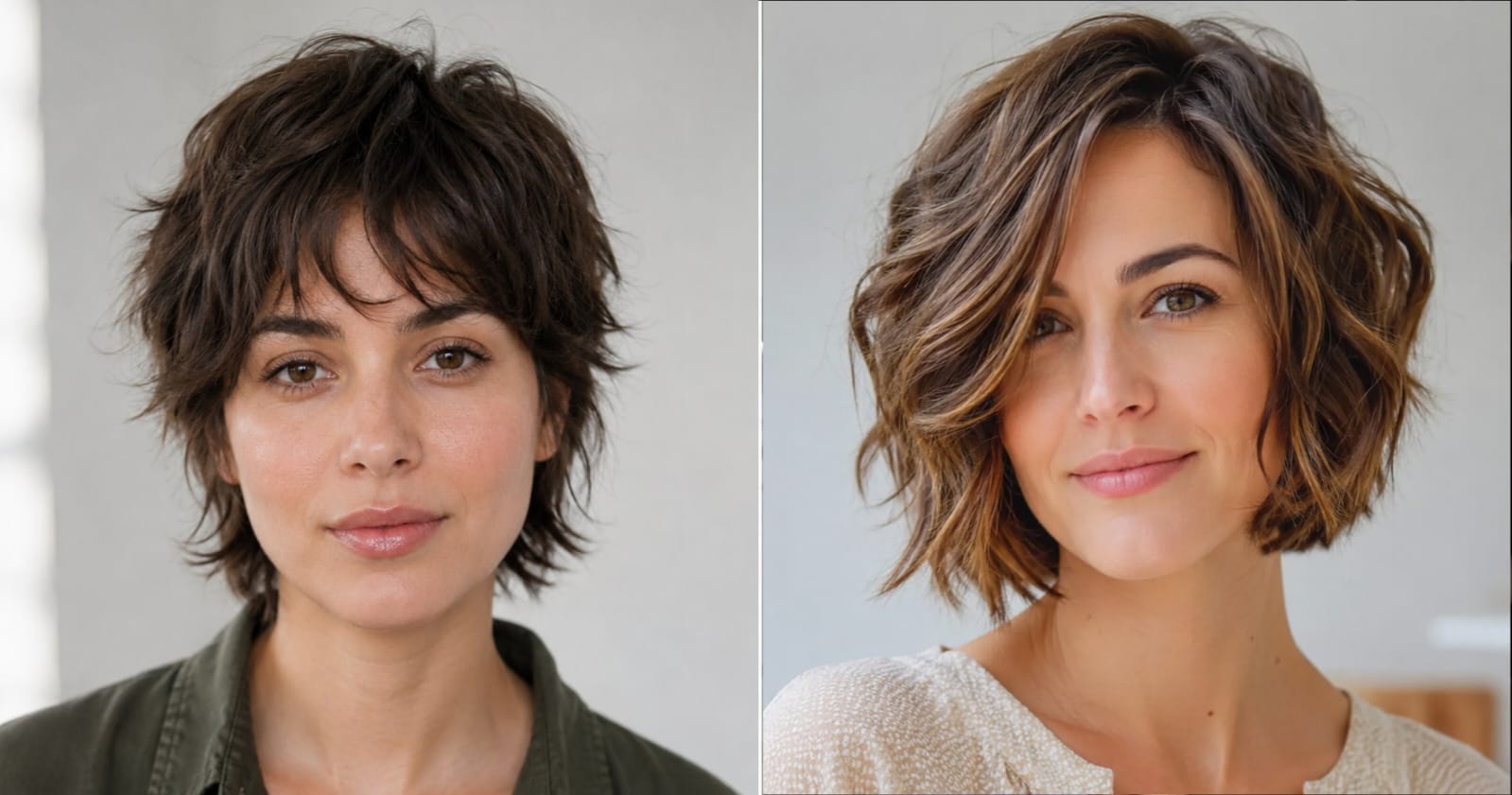
Most “best short haircuts” lists show you twenty photos and call it a day. What they skip is the part that actually matters: why two cuts that look nearly identical in a picture can behave completely differently once you’re the one blow-drying it at 7 a.m. The real difference almost always comes down to weight distribution — how much hair is left at the ends versus removed underneath — and that single factor decides whether a cut falls flat by noon, holds its shape all day, or needs a flat iron just to look intentional.
That’s the angle we’re going to keep coming back to here. Length gets all the attention in these lists, but two women with the same length and the same face shape can walk out of the same salon with cuts that live completely different lives, purely because of how the stylist handled internal layering and weight. If you’ve ever loved a haircut in a magazine and been disappointed by your own version of it, this is usually why.
Before we get into the cuts themselves, a few of these pair naturally with related decisions — if you’re also weighing color at the same time, this rundown of hair color ideas is worth a look, and if fine hair is your specific issue, you may want to bookmark this guide to haircuts for fine hair alongside this one.
Quick Takeaways
| If you want… | Look at |
|---|---|
| Maximum volume with minimal styling | Pixie, textured crop |
| Something low-maintenance that still looks styled | Blunt bob, French bob |
| Movement without heat tools | Wolf cut, shag |
| A cut that photographs well on curls | Curly pixie, layered curly bob |
| The lowest grow-out stress | Long pixie, bixie |
1. The Classic Textured Pixie

At first glance, a textured pixie looks like it’s all about the short length up top, but the real work happens at the crown. A skilled cut removes bulk low at the nape while leaving enough length at the crown to create lift, so the shape doesn’t collapse sideways by afternoon. This is why two pixies with the same overall length can look completely different in volume.
It suits rounder or longer face shapes especially well because the height it builds vertically balances width. The trade-off is upkeep: because there’s so little length to fall back on, regrowth shows within two to three weeks, especially around the neckline.
Salon Tip: Ask your stylist to point-cut rather than blunt-cut the crown section. Point-cutting keeps the ends from looking like a solid, heavy block.
2. The Grown-Out Pixie

One detail many people overlook about pixies is that the awkward grow-out phase doesn’t have to be awkward if it’s cut correctly from the start. A grown-out pixie works because the sides are cut with enough length to sweep back or tuck behind the ears instead of sticking out horizontally, which is the actual cause of that “in-between” look most people blame on hair growth itself.
This one is genuinely useful for anyone transitioning out of a pixie without wanting to look unfinished for six months. It rewards patience over precision — you’re not chasing a sharp shape, you’re managing proportion as it shifts.
Grow-Out Notes: Trim the sides every four to five weeks even if you’re not touching the length elsewhere. Uneven side growth is what causes the “helmet” stage, not the length itself.
3. The Bixie

Unlike softer layered cuts, the bixie sits deliberately between a bob and a pixie, and the reason it’s held on as a trend rather than fading like most hybrid cuts is that it solves a real problem: it gives fine hair the illusion of thickness without the commitment of going fully short. The length grazes the jaw or chin, which keeps enough weight to control frizz while short layers on top still create lift.
Best hair density for this one is actually medium-fine — very thick hair tends to push the shorter layers outward rather than letting them sit close to the head.
If Your Hair Is Fine: This is one of the few short cuts that adds visual density instead of just removing length, because the shorter top layers create the appearance of more strands per section.
4. The 90s Bixie

For thicker hair specifically, the 90s bixie reworks the same concept with heavier, more piece-y layering and a deliberately undone finish rather than the sleeker modern bixie. The choppier layering actually works in your favor here — thick hair holds separation well, so you get texture without needing a texturizing spray every morning.
Where this differs from the standard bixie isn’t length, it’s direction: layers are cut to fall forward and framing rather than swept back, which changes how it sits around the face entirely.
Comparison Note: If the modern bixie above felt too polished for your taste, this version trades sleekness for movement — same base shape, different personality.
5. Curly Pixie

Curl expansion is the single biggest reason curly pixies get botched. Curls shrink upward as they dry — sometimes by 30 to 50 percent — so a curly pixie has to be cut noticeably longer while wet than the desired dry length, or you end up with something far shorter than intended.
This is a cut where a stylist’s experience with curl patterns matters more than almost anywhere else on this list. It suits looser curls slightly better than tight coils, simply because tight coils shrink more dramatically and are harder to predict precisely.
Before You Ask Your Stylist: Bring a photo of your hair fully dried and shrunk, not just wet or stretched — that’s the length your stylist actually needs to see.
6. Edgy Pixie with Undercut

If your hair tends to feel heavy at the nape even after a regular pixie, an edgy pixie with an undercut solves that by shaving the lower section entirely rather than just thinning it. This removes weight at the source instead of relying on thinning shears, which is a longer-lasting fix.
The trade-off most people don’t anticipate is sleeping on it — an undercut section grows in fast and visibly, so it needs touch-ups more often than the rest of the cut, even if you’re not trimming the top.
Maintenance Schedule: Plan on undercut touch-ups every three weeks, separate from your regular cut schedule.
7. Pixie for Older Women

Density removal matters more here than almost any styling choice. As hair naturally thins with age, a pixie cut designed for older women is built to preserve rather than remove density — softer layering around the crown, less thinning shears, and a rounder overall shape that reads as fuller.
This is one of the few entries on this list where the goal isn’t movement or texture, it’s the appearance of thickness. Working with what’s actually there beats over-layering into a shape that looks sparse under salon lighting but thin in daylight.
One Thing Most People Miss: Ask your stylist to skip thinning shears at the crown specifically — that’s the area most affected by natural thinning, and removing more hair there works against you.
8. Short Shag

The biggest strength of this haircut is that it’s built entirely around movement rather than a clean silhouette. A short shag relies on heavy internal layering cut close to the head, so the ends look separated and slightly messy by design rather than by accident.
It performs particularly well on straight hair that usually falls flat, since the layers create the texture that straight strands don’t produce on their own. On naturally textured hair, the same cut can look overly voluminous unless the layers are cut with a lighter hand.
Styling Challenge: Getting the “just woke up” look to actually look intentional takes practice — a texturizing spray on damp hair before diffusing usually gets there faster than trying to fix it dry.
9. Modern Mullet

Although the silhouette looks simple in photos, the modern mullet is one of the more technically demanding cuts on this list because it depends on a sharp contrast between short layers up front and longer pieces in back, connected through careful graduation rather than a hard line.
The neckline effect is what makes or breaks it — too abrupt a transition looks unfinished, while a gradual one reads as intentional and current rather than dated.
Common Mistake: Cutting the front layers too short relative to the back creates an unbalanced silhouette that’s difficult to correct without losing length everywhere.
10. Wolf Cut

The shape changes dramatically when you compare a wolf cut to a shag directly, which is worth doing since they’re constantly confused. Both rely on heavy layering, but a wolf cut is layered even more aggressively at the crown, creating a distinct spiky, voluminous top that a shag doesn’t have.
Wolf cuts genuinely need thick to medium-thick hair to read correctly — on fine hair, the aggressive layering can remove too much weight and leave ends looking wispy rather than textured.
Works Best When: Your hair naturally holds some wave or texture, since straight fine hair needs significant styling effort to recreate the shape shown in most photos.
11. Short French Bob

Most inspiration photos don’t show how much a blunt perimeter actually depends on healthy, undamaged ends. A short French bob is cut with almost no layering — a straight, blunt line just below the chin — which means any split ends or breakage show immediately rather than blending into layers.
This is arguably the lowest-styling-effort cut on the entire list, since the blunt weight naturally falls into shape with minimal effort. The trade-off is that it shows every irregularity in your natural hair texture, so waves or slight curl patterns need to be fairly consistent for the line to look clean.
Air-Dry Advice: This cut air-dries better than almost anything else here — the weight of the blunt line does most of the styling work for you.
12. Inverted Bob

For thicker hair especially, an inverted bob solves a problem the French bob can’t: it removes bulk specifically at the back through graduated layering while keeping the front sections longer, creating a stacked shape that narrows toward the nape.
The jawline balance this creates is a big part of its popularity — the longer front pieces draw the eye downward and slightly inward, which softens angular jawlines more effectively than a one-length cut.
Heat Styling Tip: Round-brush the back section under, toward your neck, rather than out — that’s what creates the stacked look rather than just a rounded bottom edge.
13. Choppy Bob

One reason this style stays popular each year is that it hides the imperfections other bobs expose. A choppy bob uses razor-cut or heavily point-cut ends instead of a blunt line, which disguises unevenness in thickness or natural texture that a French bob would reveal instantly.
It’s a genuinely forgiving cut for hair that doesn’t behave predictably day to day, which makes it a strong option if your hair changes texture with humidity or season.
Humidity Tip: Because the ends are already textured rather than sleek, humidity actually helps this cut rather than working against it — frizz blends into the intended texture instead of standing out.
14. Bob for Fine Hair

Root lift behavior is the deciding factor here, not length. A bob cut for fine hair is typically cut just above or at the shoulder specifically because that length is short enough that hair doesn’t have the weight to pull itself flat at the root, which is the main complaint with fine hair grown any longer.
Going shorter than this can occasionally backfire — an overly short blunt bob on very fine hair can look thin rather than full, since there’s less surface area to catch light and create the illusion of density.
Quick Product Picks: A lightweight root-lifting mousse applied before blow-drying upside down does more for this cut than any amount of teasing afterward.
15. Shoulder-Length Bob (Lob)

Unlike shorter bobs, a shoulder-length lob sits at a length where you get meaningful versatility — it’s long enough to half-up or loosely tie back on bad hair days, which none of the shorter cuts on this list allow for.
Ponytail compatibility might sound like a minor detail, but it’s genuinely one of the top reasons this length outperforms shorter cuts in real-world convenience, even if it photographs slightly less dramatically.
Styling Shortcut: A rough blow-dry with a paddle brush, no round brush needed, gets this length looking finished in under ten minutes.
16. Long Pixie / Cropped Cut

For finer textures, a long pixie (grown slightly past a classic crop but still short overall) offers something the ultra-short pixie doesn’t: enough length at the crown to create a soft side-part without exposing scalp, which shorter pixies often struggle with as density thins.
It’s a quieter, less dramatic option than most cuts on this list, but it tends to age better across seasons of regrowth since there’s more length to work with between trims.
Keep in Mind: This length hides regrowth noticeably better than a classic pixie, which makes it a practical choice if you can’t get to the salon every three weeks.
17. Natural Short Cut for Textured Hair

Shrinkage plays the same role here that curl expansion does for curly pixies, but the cutting approach differs. Short natural hairstyles built around coily or tightly curled textures are usually shaped dry, or on stretched hair, specifically because shrinkage makes wet-cutting unreliable for predicting final shape.
The natural growth pattern also plays a bigger role in the final silhouette than in straighter hair types, since curl direction from the scalp affects how the shape sits rather than just how it falls.
Salon Tip: Look specifically for a stylist experienced in cutting textured hair dry — a wet cut on tightly coiled hair is one of the most common causes of an uneven-looking result once it dries.
18. Low-Cut Style for Black Women

The biggest strength of an ultra-short, close-cropped style for textured hair is how little daily styling it demands once it’s shaped correctly. A low-cut hairstyle relies almost entirely on the precision of the initial cut and regular edge maintenance rather than ongoing styling effort.
This is a cut where maintenance frequency genuinely matters more than most people expect going in — the shape holds its definition well, but the hairline and edges need attention every one to two weeks to keep the overall look sharp.
Maintenance Reminder: Schedule edge touch-ups separately from full cuts — this keeps the shape looking fresh without needing a full appointment every couple of weeks.
19. Low-Maintenance Cut for Fine Hair

If your biggest complaint isn’t shape but sheer time spent styling, a low-maintenance cut built for fine hair prioritizes a cut that air-dries into shape over one that photographs perfectly in a salon blowout. That distinction matters more than it sounds — plenty of trendy cuts look incredible fresh from the salon and require daily heat styling to look that way again.
This style typically avoids heavy layering altogether, since layers on fine hair usually mean more sections to individually style rather than less effort overall.
One Thing Most People Miss: More layers doesn’t automatically mean less styling time on fine hair — often, the opposite is true.
20. Short Wavy Cut

For hair with natural wave rather than tight curl, a short wavy cut is shaped to work with the wave’s natural direction instead of cutting straight across it, which is why the same length can look intentional on one head and messy on another.
Styling direction here isn’t cosmetic — cutting against a natural wave pattern is one of the more common reasons a cut looks “off” without anyone being able to pinpoint why.
Quick Styling Tip: Scrunch a light curl cream into damp hair and let it air-dry at least halfway before touching it again — disturbing the wave pattern too early is what causes frizz, not the humidity itself.
The Bigger Lesson
If there’s one thing worth taking away from all twenty of these, it’s that face shape is rarely the deciding factor people assume it is. Density, natural growth pattern, and how much weight a stylist leaves or removes underneath the visible shape matter far more than whether your face is round or oval. Two people with identical face shapes and hair length can get completely different results from the same haircut, simply because their hair density and texture responded differently to the same layering technique.
This is also why copying a photo exactly rarely works the way people expect. The photo shows a finished result, not the structural decisions — weight distribution, internal layering, cutting angle — that got it there. A good stylist consultation should spend more time talking about your hair’s actual behavior than about which celebrity photo you brought in.
FAQ
Which short haircut adds the most volume for fine hair?
A bixie or a bob cut just above shoulder length tends to outperform a full pixie for fine hair, since the added weight from slightly longer length actually creates more visual density than removing length entirely.
How often do layered short cuts need trimming?
Heavily layered styles like the wolf cut or shag usually need a trim every four to six weeks to maintain their shape, while blunt cuts like the French bob can often stretch to eight weeks.
Do curly short cuts air-dry well?
Yes, in most cases better than straight short cuts, since curls hold their own shape without heat tools — the main risk is under-cutting length due to shrinkage, not the drying process itself.
Which cut works best for thick, coarse hair?
Cuts that rely on aggressive layering to remove bulk, like the wolf cut or 90s bixie, tend to work better on thick hair than blunt, single-length cuts, which can look heavy without enough layering to break up the density.
Are short haircuts actually lower maintenance than long hair?
Not always. Precision cuts like pixies and blunt bobs often need more frequent trims to hold their shape than long hair does, even though daily styling time is usually shorter.
Can I go from a bob straight to a pixie? Yes, but expect an intermediate awkward stage is avoidable if your stylist gradually removes weight over two or three appointments rather than cutting it all at once.
Final Thoughts
The right short haircut has less to do with trends and more to do with how your specific hair actually behaves day to day. Bring your hair’s real texture and density into the conversation with your stylist, not just a screenshot, and the result will hold up a lot better than the photo ever could.

