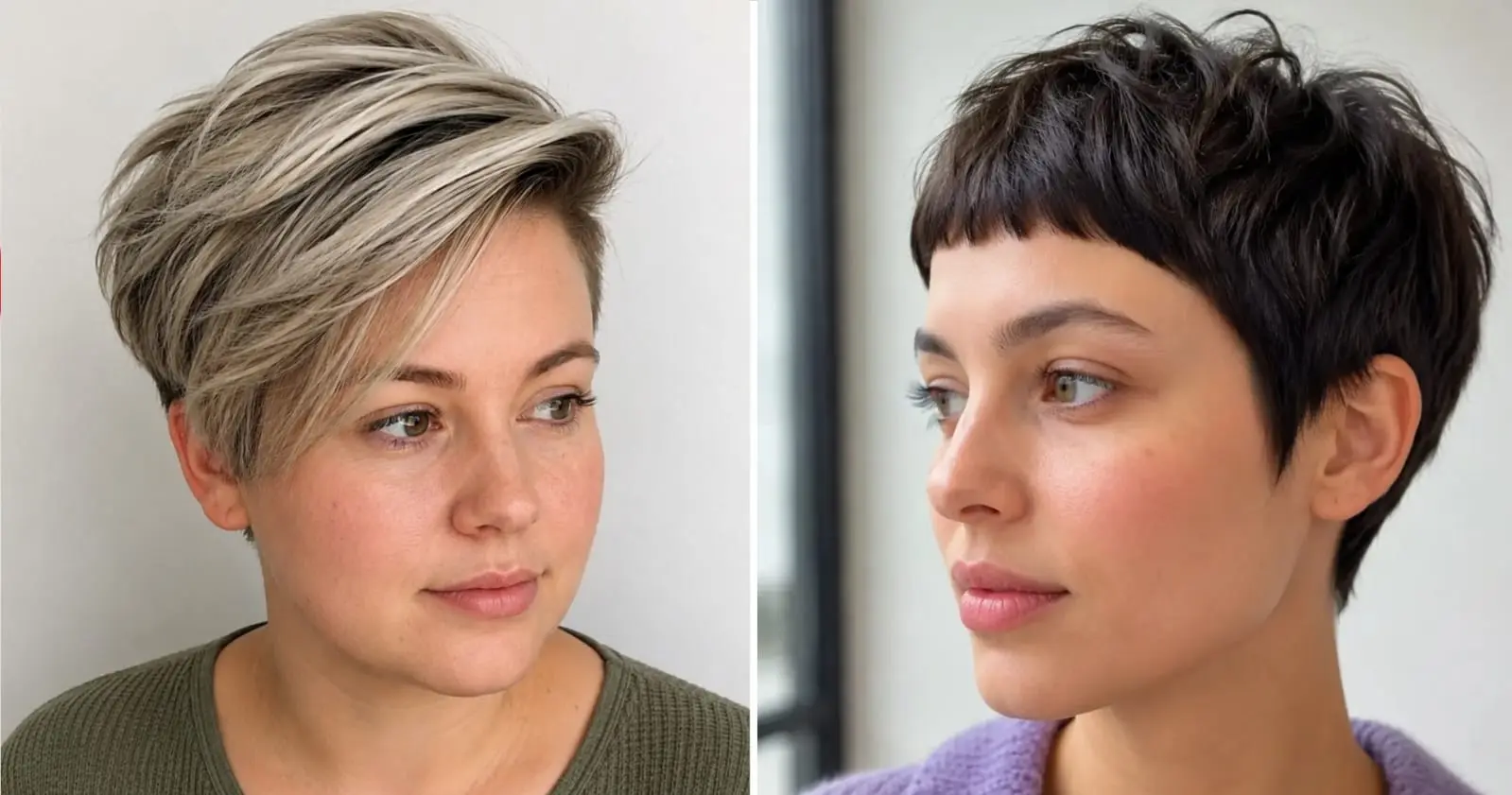
Simple hairstyles for short hair have one clear advantage over longer lengths: the styling routine is measured in minutes, not half-hours. A pixie that needs five minutes and some texturizing cream beats a long layered cut that demands a round brush, a dryer, and twenty minutes nobody has on a workday morning.
The catch is that not every short cut stays equally simple after leaving the salon. Some grow out gracefully and air-dry beautifully. Others need daily heat styling just to look intentional. The fifteen cuts below were picked for how easy they stay on day three, day ten, and day thirty, with honest notes on what each one asks in return.
For anyone who already has the cut and just wants fresh ideas, these different ways to style a pixie show how much range a few inches can really offer. Most people pick a short cut from a photo and skip the lifestyle questions. I always ask how much time someone honestly spends on their hair each morning, because that answer chooses the cut more than the photo does.
Table of Contents
1. Classic Textured Pixie

At first glance this looks like the safest, most predictable short cut on the list, and in a way it is. What makes it work isn’t the length though — it’s how the layers are cut to remove weight specifically at the crown, which lets the hair sit up instead of lying flat against your scalp. Fine hair tends to look fuller in this cut than in almost any other short style, simply because there’s less hair weighing itself down. Thicker hair needs more aggressive thinning here or the shape can start to look bulky rather than sculpted.
Salon Tip: Ask specifically for “point cutting” at the crown rather than just “thinning shears everywhere.” Point cutting removes bulk while keeping the ends soft, which matters a lot once you start styling with your fingers instead of a brush.
For a version with a bit more edge, an edgy pixie uses the same base shape but with sharper, more disconnected pieces around the crown.
2. Textured Crop with Fringe

One detail many people overlook with cropped fringe styles is that the fringe isn’t really the star — it’s a tool for hiding forehead length and balancing a rounder crown shape. The crop itself stays short and piecey all over, usually cut with a razor rather than shears so the ends taper naturally instead of ending in a blunt line. That razor work is why this style photographs so texturally even without product.
Trade-off: razor-cut ends fray faster than blunt ends, so you’re looking at a trim every four to five weeks if you want to keep the shape crisp. If your hair is naturally straight and fine, this is one of the lower-effort options on the list because the cut does most of the work for you.
3. Blunt French Bob

Unlike softer layered cuts, the French bob relies on a completely blunt perimeter with almost no internal layering. That’s the whole trick — a clean, weighty line that swings back into place after you touch it. It’s a completely different mechanic from something like a shag, and it’s worth understanding the difference before you pick one over the other, since they photograph similarly but behave nothing alike day to day.
If you have thick or coarse hair, this cut can look heavy and almost helmet-like unless your stylist removes some internal weight without touching the visible perimeter line. Fine hair, on the other hand, benefits from the blunt edge because it creates the illusion of thickness the strands don’t actually have. For more bob variations that keep this same clean-edge philosophy, a short French bob is worth comparing against a slightly longer version before you decide on length.
What to Avoid: Heavy layering throughout. It defeats the entire purpose of the blunt line and just leaves you with a shorter, choppier version of a shag.
4. Short Shag

The shag solves a specific problem the blunt bob doesn’t: movement without needing a curling iron every single day. Layers are cut throughout, including short face-framing pieces, so the hair has built-in texture even when it air-dries. Where the French bob relies on weight, the shag relies on the absence of it — internal layers are cut shorter and shorter toward the crown to create that shaggy, undone silhouette.
This is a strong choice if your hair is naturally wavy, since the layers exaggerate texture you already have. Pin-straight hair can still wear a shag, but you’ll likely need a texturizing spray and some finger-styling to keep it from looking flat rather than tousled. Compare this directly against a short shag with heavier bangs if you want more coverage around the forehead.
Styling Shortcut: Apply a sea salt or texturizing spray to damp hair, scrunch lightly while diffusing, then twist only the ends around your fingers once it’s about eighty percent dry. Skip the round brush entirely — it works against the shape.
5. Curly Pixie

For thicker, coilier textures, a pixie behaves in a way that surprises a lot of people the first time they try it — curls shrink upward, not down, so the cut needs to be left noticeably longer than a straight-hair pixie to land at the same visual length once it dries. This is the single biggest mistake stylists make with curly pixies: cutting it dry-length short and ending up with something far shorter than intended once the curl pattern springs back.
The upside is that a well-cut curly pixie needs almost no daily styling. Wash, apply a curl cream, scrunch once, and let it air dry. The trade-off is precision — because curl shrinkage varies so much between individuals, this is not a cut to get from someone unfamiliar with curly hair specifically. If you want to browse other curl-specific short options first, curly pixie haircuts shows a range of shrinkage-adjusted lengths side by side.
6. Choppy Layered Bob

If your hair tends to look stringy rather than textured by afternoon, a choppy layered bob usually solves that better than a smooth one-length bob ever will. Short internal layers are cut throughout to break up the hair’s natural fall pattern, so instead of separating into thin pieces, it clumps into thicker, more deliberate-looking sections. It’s a completely different approach from the French bob’s single blunt line, and it tends to suit fine, thin hair especially well because the choppiness disguises thin ends.
Common Mistake: Over-styling it with a flat iron until it’s silky smooth. That erases the whole point of the cut. A texturizing paste worked through damp hair, then left to air dry, will actually show off the layering better than heat styling will.
7. Undercut Pixie

Although the silhouette looks simple from the front, an undercut pixie is really two haircuts working together — a longer, styleable top section and a closely shaved or clippered underside. The shaved portion doesn’t need styling at all, which is the entire appeal for people who want short hair without a lengthy morning routine. What most listicles skip is that the shaved section needs its own maintenance schedule, separate from the top.
Maintenance Schedule: Plan on a clipper touch-up every two to three weeks for the undercut portion, even if you’re stretching trims on the top to six or eight weeks. The two grow out at completely different visible rates, and an overgrown undercut looks noticeably messier than overgrown length on top.
8. Side-Swept Pixie

One reason this style stays popular with people transitioning out of longer hair is that it doesn’t commit fully to short — there’s enough length on top to sweep to one side and soften a square or angular jawline. Structurally, it relies on longer top layers cut on a diagonal, graduating shorter toward the back and sides.
Worth Knowing: this cut has decent ponytail compatibility once it grows out slightly, which makes it a reasonable middle step if you’re not sure you’re ready to commit to a fully cropped style yet.
9. Wash-and-Go Coily Crop

For very tight, coily textures, a cropped cut cut close to the head can be genuinely wash-and-go in a way few other short styles manage, but only if the stylist cuts with the hair’s natural growth pattern rather than against it. Cutting against the grain creates uneven, boxy sections that are hard to style regardless of product used.
Quick Product Picks: a lightweight curl butter applied to soaking wet hair, then allowed to air dry or diffused on low heat, keeps definition without buildup. Heavier creams tend to weigh down a crop this short and can make coils look separated rather than full.
10. Slicked-Back Crop

Humidity is usually the enemy of styled short hair, but this is one of the few cuts where humidity barely matters, because the finished look depends on gel and water rather than dry texture. Hair is cut short and even, then combed back and set with a strong-hold gel while damp. It reads polished and intentional rather than undone, which makes it a solid option for anyone who’s tired of fighting frizz every morning.
Air-Dry Advice: this style genuinely cannot air-dry into the finished look — you’ll always need at least a comb and some gel. If a true no-effort option matters more to you than the polished finish, this probably isn’t the right pick.
11. Grown-Out Pixie / Bixie

Bixie hybrids sit between a pixie and a bob, and the confusion between the two is understandable since they can look nearly identical in photos. The real difference is in the nape — a bixie keeps length through the back and sides while the top stays pixie-short, whereas a true pixie is short all around. That back length is what gives a bixie better clip and headband compatibility than a classic pixie, since there’s more surface area to actually pin.
If your hair is thick, the added length at the back helps balance out volume that would otherwise look top-heavy in a true pixie. Finer hair can wear this shape too, though the nape section will need a slightly heavier cut to avoid looking sparse.
12. Textured Crop with Undercut Sides

Salt-and-pepper or graying hair styles particularly well in a short, textured crop, since a slightly rougher, matte finish reads as intentional rather than unkempt. This one leans into styling direction more than most cuts on this list — the same haircut can look completely different depending on whether it’s styled forward, back, or to one side, which gives it more versatility than styles locked into a single silhouette.
Styling Challenge: because direction changes the whole look, this cut takes a bit of practice to style consistently. Most people find their preferred direction within the first couple of weeks and then it becomes second nature.
13. Asymmetrical Pixie Bob

The shape changes dramatically when one side is left longer than the other, which is exactly the point of this style — the longer side sweeps across and softens a strong jawline in a way a symmetrical cut simply can’t. Structurally, it’s built on a diagonal line that runs from short at the nape to noticeably longer near the chin on one side, then mirrored (but not matched) on the other.
Trade-off: because the two sides grow at the same rate but started at different lengths, the asymmetry becomes more obvious after about five weeks. You’ll want tighter trim intervals than a symmetrical pixie if you want the imbalance to stay intentional rather than accidental.
If Your Hair Is Thick: ask for the longer side to be thinned slightly more than the shorter side. Left untouched, thick hair on the longer panel tends to swing forward and cover more of the face than intended, which defeats the jaw-softening effect the cut is meant to create.
14. Micro Fringe Pixie

Most inspiration photos don’t show what a micro fringe actually requires behind the scenes — a good amount of root lift right at the hairline, or the fringe sits flat and reads more like a mistake than a style choice. This is a very short, blunt fringe cut well above the eyebrows, paired with a closely cropped pixie underneath.
The unique thing about this pairing is how much the fringe depends on how the crown is cut. If the crown is left too heavy, the weight pulls the fringe down as it grows through the day, even if it was cut and styled perfectly that morning. Stylists who cut the crown light and the fringe blunt get a fringe that holds its lift far longer without any touch-ups.
Root Lift Behavior: a small amount of volumizing mousse applied only at the root of the fringe, blow-dried upward with a small round brush for a few seconds before letting it fall into place, keeps the lift without making the rest of the cut look overdone.
15. Ear-Length Bob with Curtain Bangs

For finer textures especially, this one earns its spot on the list for a reason most articles skip entirely — sleeping impact. Because the length sits right at the ear, this bob is short enough to avoid the tangled, flattened mess longer hair gets overnight, but long enough that it doesn’t need full restyling every morning the way a pixie does. A quick finger-comb and it’s usually back in shape.
The curtain bangs are cut with a center part and layered to blend into the sides rather than being a separate blunt piece, which is what makes this different from a straight-across fringe. That blending is what lets the bangs be pushed to either side without looking oddly disconnected from the rest of the cut.
Color Placement Interaction: if you’re planning to add highlights or face-framing color, ask for it to be placed after the cut rather than before. Curtain bangs move throughout the day, and color painted on hair in its natural fall pattern often ends up in the wrong spot once the bangs are styled to frame the face.
Simple Hairstyles for Short Hair: At a Glance
| Hairstyle | Best For | Maintenance Level |
|---|---|---|
| Classic Textured Pixie | Fine, thin hair | Medium |
| Textured Crop with Fringe | Straight, low-effort styling | Medium-High |
| Blunt French Bob | Fine hair needing fuller look | Medium |
| Short Shag | Naturally wavy hair | Low |
| Curly Pixie | Thick, curly/coily hair | Low |
| Choppy Layered Bob | Fine, stringy-prone hair | Medium |
| Undercut Pixie | Low-maintenance mornings | High (shaved side) |
| Side-Swept Pixie | Square/angular jawline | Medium |
| Wash-and-Go Coily Crop | Tight coily texture | Low |
| Slicked-Back Crop | Frizz-prone hair | Medium |
| Grown-Out Pixie / Bixie | Thick hair, more versatility | Medium |
| Textured Crop (Undercut Sides) | Graying/salt-pepper hair | Medium |
| Asymmetrical Pixie Bob | Strong jawline | High |
| Micro Fringe Pixie | Bold, editorial look | High |
| Ear-Length Bob w/ Curtain Bangs | Fine hair, easy overnight care | Low-Medium |
Which Style Suits Your Face Shape and Hair Type
A great short cut is not about what looks good on someone else. It is about what works with the face and texture you woke up with this morning. Here is how to match this list to yourself before booking the appointment.
If your face is round
Height on top is your best friend. The classic textured pixie and the undercut pixie both add lift at the crown, which visually lengthens the face. The side-swept pixie works well too because the diagonal line breaks up the roundness. Be careful with chin-length blunt cuts. They tend to mirror the face shape instead of balancing it.
If your jawline is square or angular
Softness beats structure here. The side-swept pixie and the ear-length bob with curtain bangs both drape across the jaw instead of ending right at it, which takes the edge off strong angles. The asymmetrical pixie bob is another strong pick because the longer panel draws the eye diagonally, not straight across.
If your face is oval
Honestly, most of this list will work. Oval faces can carry both extremes, from the micro fringe pixie to the blunt French bob, without much risk. If you want a safe first short cut, the bixie is the most forgiving starting point.
If your forehead is high or your face is heart-shaped
Curtain bangs and textured fringes earn their place here. The ear-length bob with curtain bangs and the textured crop with fringe both cover forehead length without looking like they are hiding something.
If your hair is fine or thin
Blunt perimeters create the illusion of density, so the French bob and the classic textured pixie are the top picks. The choppy layered bob also works because the choppiness disguises thin ends. Go easy on thinning shears. Removing too much weight from already fine hair just makes it look thinner.
If your hair is thick
Weight removal is the whole game. The short shag, the bixie and the undercut pixie all take bulk out in different ways. A thick blunt bob with no internal weight removed is the one combination to avoid. It will sit like a helmet.
If your hair is curly or coily
The curly pixie and the wash-and-go coily crop were designed for this texture. The single rule that matters: the cut has to account for shrinkage. A stylist who cuts curls wet and short will always deliver something shorter than you asked for once it dries.
FAQ
Which short haircut works best for very fine hair?
Blunt cuts with minimal internal layering, like a French bob or a classic pixie without heavy thinning, tend to look fuller on fine hair than heavily layered styles do. The uniform weight creates an illusion of density.
How often do short haircuts need trims?
Most short styles need a trim every four to six weeks to hold their shape, though undercuts and shaved sections often need touch-ups every two to three weeks separately from the rest of the cut.
Can curly or coily short hair really air-dry without extra product?
Yes, but only if the cut was done specifically accounting for shrinkage. A crop cut dry-length short without factoring in curl pattern will look uneven once it dries and styled hair often needs at least a light cream to define curls properly.
Is a shag more or less maintenance than a bob?
A shag is generally lower maintenance day to day since the built-in layers hide regrowth and require less precise styling, while a blunt bob shows growing-out lines more obviously and needs more frequent trims to stay sharp.
Which cut transitions best if I’m not ready to commit to very short hair?
A side-swept or grown-out pixie style gives you shorter hair without fully losing length, and it grows out into a bob shape more gracefully than a tightly cropped pixie does.
Final Thoughts
None of these cuts is objectively “the best” — they solve different problems depending on how much time you want to spend styling and how your hair naturally behaves. Bring a stylist real information about your routine, not just a photo, and you’ll end up with a cut that actually works for your mornings.

