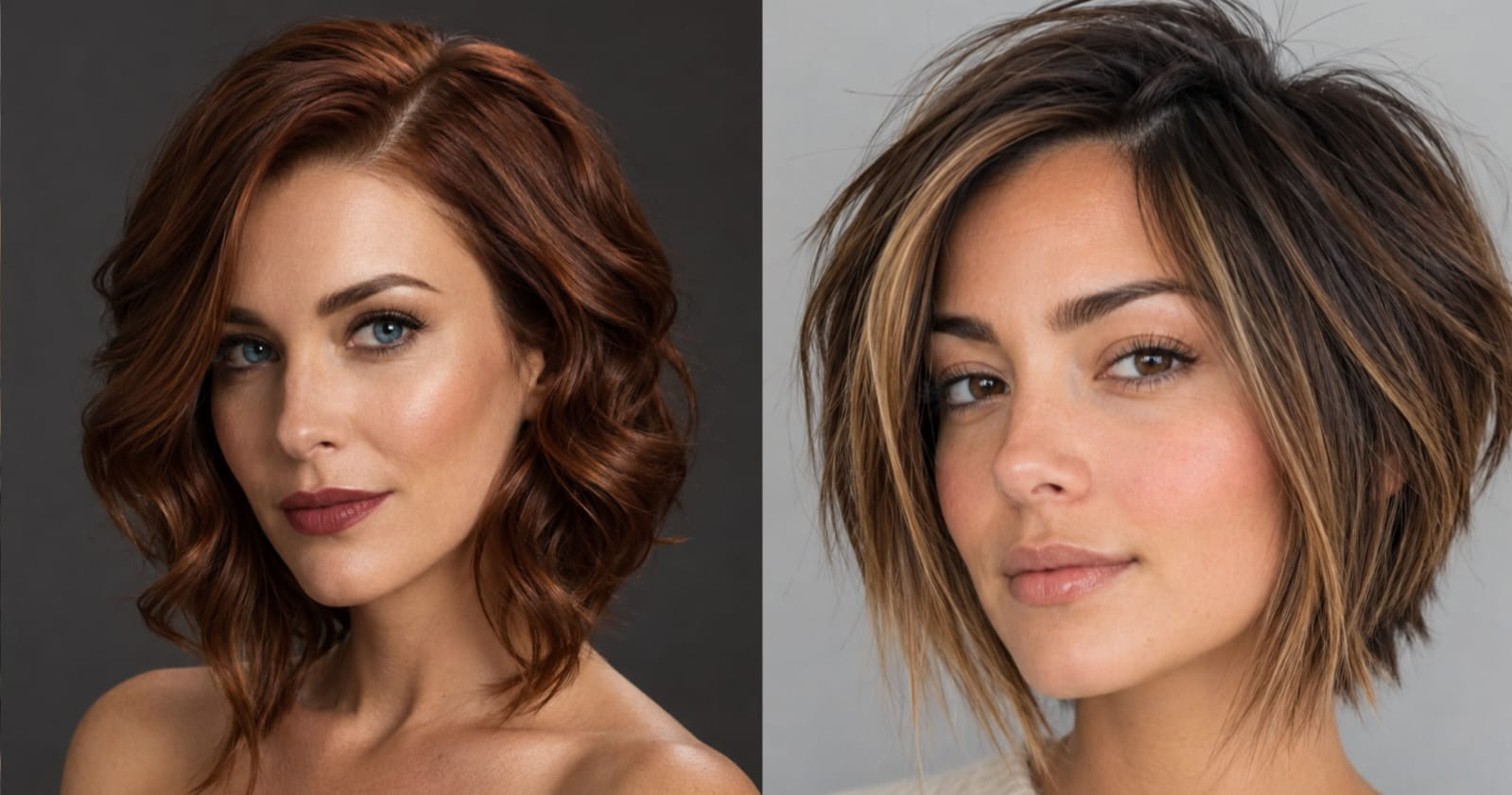
My friend Sana showed up to brunch last spring with her hair completely chopped off and I genuinely could not stop staring. Not in a rude way — in a what is that and how do I get it way. It was short but not too short. Layered but not overdone. She looked like she’d walked out of a 1994 music video and somehow also looked completely current.
She called it a bixie. I called my stylist the next morning.
That was fourteen months ago and I have not gone back to long hair since. The bixie — that perfect in-between length that sits somewhere between a pixie and a bob — does something to your face that longer hair just doesn’t. It frames everything. It moves well. And the 90s version specifically has this choppy, grunge-y texture that feels lived-in from the moment you leave the salon.
Here are 15 versions worth knowing about.
1. The Classic Choppy Bixie

There’s a reason this one started the whole conversation. Jaw-length pieces in the front, tapered and choppy toward the back, with layers that look like they weren’t blended on purpose — because they weren’t. Think Winona Ryder in her absolute prime and you’re in the right neighborhood.
The choppy texture isn’t just aesthetic, it actually creates volume without any product. If your hair is fine and you’ve spent years fighting flatness, this cut is genuinely one of the better solutions out there. The disconnected layers fake fullness in a way that no dry shampoo ever could.
- Why it works: The intentional choppiness builds volume and movement without relying on product
- Ask your stylist for: “Disconnected layers with a choppy finish, jaw-length framing pieces, tapered back”
2. The Curtain Bang Bixie

I was scared of bangs for years. Truly convinced they would not work on my face. Then I saw this combination — curtain bangs paired with a bixie — and changed my mind completely within about forty seconds of scrolling.
The curtain bang softens the whole thing. It takes what could feel like a bold, intimidating cut and makes it warm and approachable. And unlike a blunt fringe that looks terrible the second you skip a trim, curtain bangs grow out in a way that keeps working for you. That alone makes them worth trying.
- Why it works: The wispy center-parted fringe frames the face gently and balances the boldness of the short length
- Ask your stylist for: “Bixie with curtain bangs — wispy, center-parted, feathered to blend naturally into the layers”
3. The Shaggy Bixie

This is the one for anyone who has a leather jacket and knows how to use it. Heavy layers from the crown all the way down, wispy ends that barely exist, movement that happens with zero effort. It’s full 90s rock energy and it is deeply, deeply cool.
The practical sell here is that it’s genuinely low maintenance. Scrunch in some texturizing spray while your hair is still damp, let it air dry completely, and you’re done. The messier it looks the better it looks, which is the best possible situation to be in on a rushed morning.
- Why it works: All those layers create constant movement and that perfectly undone texture without touching a single hot tool
- Ask your stylist for: “Shaggy bixie with heavy layering from the crown down, wispy ends, maximum texture”
4. The Blunt-Edge Bixie

Not everyone wants undone. Some people want precise. The blunt bixie is cut clean and straight across — usually at cheekbone or jaw level — with minimal layering and a very deliberate, sharp finish. It’s the editorial version of the style.
What I find interesting about this cut is how it makes even casual outfits look intentional. There’s something about a clean line at that length that just pulls everything together. Works best on thick, straight hair that can hold the edge without going boxy — wavy or very fine hair tends to fight it a little.
- Why it works: That clean, graphic line creates a strong silhouette that reads modern and put-together
- Ask your stylist for: “Blunt bixie, straight across at jaw level, minimal layering, clean sharp finish”
5. The Curly Bixie

Curly hair people — this length was made for you. At longer lengths, curls get weighed down and lose their spring. At bixie length they finally get to do what they’re meant to do: bounce, coil, and take up space in the best possible way.
The one thing I cannot stress enough is finding a stylist who cuts curly hair dry. I’ve heard too many stories from friends who got wet cuts on their curly hair and ended up with something completely different from what they asked for. A curl specialist changes everything. It’s worth the extra research to find one.
- Why it works: Removing length lets curls spring up fully instead of being dragged down — the volume and definition at this length is unmatched
- Ask your stylist for: “Dry-cut bixie shaped around my natural curl pattern, layers placed to encourage curl formation”
6. The Asymmetrical Bixie

One side longer than the other sounds like it should be polarizing but it’s actually one of the most universally flattering cuts on this list. Usually the longer side sits at chin level while the shorter side grazes the cheekbone. The diagonal line it creates across the face is lengthening in a way that works on almost everyone.
This was a big 90s thing — the whole “I make my own rules about hair” energy — and it’s back in a real way. Just commit to regular trims. The asymmetry needs to stay sharp to keep doing its job. Let it get fuzzy and it just looks like a grow-out rather than a choice.
- Why it works: The diagonal asymmetry creates a lengthening visual effect while giving the cut a genuinely distinct personality
- Ask your stylist for: “Asymmetrical bixie — chin length on one side, cheekbone length on the other”
7. The Undercut Bixie

From the outside this looks completely normal. Soft layers, nothing unusual, pretty bixie. But lift up the top layers and there’s a shaved or closely cropped undercut hiding underneath the whole thing. That hidden detail is very much the vibe of 90s grunge — something cool that not everyone gets to see.
People who get this cut tend to become slightly obsessed with it because of how versatile it is. Hair down and nobody knows. Hair pinned up and the whole story changes. It also keeps the back of your neck cool in summer, which becomes a genuinely meaningful benefit around July.
- Why it works: You get the edge of a shaved section without it being visible all the time — best of both aesthetics
- Ask your stylist for: “Bixie with a hidden undercut at the nape, top layers long enough to cover it completely”
8. The Wispy Bixie

If the blunt bixie is a statement made through precision, the wispy bixie makes its statement through softness. The ends are feathered down to almost nothing, giving the whole cut a delicate, barely-there quality. It moves like it weighs nothing because it practically does.
Fine-haired women especially tend to gravitate toward this one because it removes bulk from the ends while somehow making the hair look fuller overall — all through movement rather than mass. A small amount of lightweight mousse, air-dried or diffused, and that’s genuinely the whole routine.
- Why it works: Feathered ends create movement and the illusion of fullness without any actual bulk
- Ask your stylist for: “Bixie with heavily feathered wispy ends, soft layering throughout, nothing blunt”
9. The Grown-Out Pixie Bixie

Stylists figured something out at some point: the grow-out phase between a pixie and a bob — that awkward middle length everyone dreads — actually looks incredible when it’s deliberately designed to look that way. Longer face-framing pieces, shorter layers at the crown, an overall feeling of “I haven’t trimmed this in a while” that is somehow completely intentional.
If you’re currently in pixie purgatory and hating every morning, this is the answer. Bring it up at your next appointment instead of just waiting it out. A good stylist can shape what you already have into this and you’ll go from dreading your reflection to actually liking it again.
- Why it works: Captures that effortlessly in-between quality that makes short hair look relaxed and cool rather than neglected
- Ask your stylist for: “Shape my grow-out into a bixie — longer face-framing pieces, shorter crown layers, keep the texture”
10. The Piecey Bixie

This one is about visible texture. Deliberately separated sections of hair styled into distinct pieces using a tiny amount of wax or paste — very 90s, very tactile, completely the opposite of a smooth blowout. It looks like someone with genuinely great hair ran their fingers through it once and that was the entire effort.
The technique is simpler than it looks but there’s one rule: use less product than you think you need. A pea-sized amount of pomade worked through just the ends with your fingertips is the whole move. Go heavier and it crosses from “effortlessly piecey” into “hasn’t washed their hair since Thursday.”
- Why it works: Creates visual interest and that distinctly retro tactile texture that reads as intentionally styled without looking overdone
- Ask your stylist for: “Bixie with heavy internal layering to support a piecey separated texture when I style it”
11. The Color-Blocked Bixie

The 90s had absolutely no interest in highlights looking natural. Thick, chunky, obvious sections of lighter color placed in deliberate spots — and it looked incredible rather than accidental. The color-blocked bixie brings that energy back, usually a darker base with bold lighter pieces framing the face.
The practical side of this is that it requires less upkeep than allover color. Chunky sections don’t need touching up every six weeks the way a full highlight does. Right now the most popular combinations are chocolate brown with caramel face-framing pieces, black with auburn chunks, and dark blonde with platinum sections. All three photograph extremely well.
- Why it works: Chunky deliberate color adds dimension that makes the cut itself look even more dynamic and interesting
- Ask your stylist for: “Color-blocked highlights — thick face-framing sections that are meant to be noticed, not blended away”
12. The Slicked-Back Bixie

This is more of a styling approach than a distinct cut, but what it does to a regular bixie is so dramatic it deserves its own entry. Apply a strong gel or pomade and slick everything back away from the face and suddenly the same haircut looks like a completely different person got it. Polished, sharp, very off-duty 90s supermodel.
It’s also the most useful trick for mornings when your hair is being difficult or when humidity has other plans. Instead of fighting it, slick it back, let the product be the whole look, and accept whatever compliments come at you throughout the day.
- Why it works: Completely transforms the bixie silhouette using only product — no heat, no extra effort, genuinely different result
- Ask your stylist for: “A bixie with enough length and internal layering that it works well slicked back — I want that option”
13. The Volume Bixie

Specifically designed for hair that goes completely flat by mid-morning no matter what you do. Layers concentrated at the crown and mid-lengths create lift that actually survives the day. The back is cut slightly shorter than the sides to prevent that boxy helmet effect that can sneak up on thicker hair at this particular length.
The trick that works better than anything else for this cut is flipping your head upside down while blow-drying. It sounds too simple to actually work and yet here we are. Do it while the hair is still slightly damp, use a round brush at the roots, and the volume you build will last most of the day.
- Why it works: Strategic crown layering creates lasting lift without needing to be refreshed or teased throughout the day
- Ask your stylist for: “A bixie focused on crown volume, heavy layers at the top, back cut slightly shorter than the sides”
14. The Natural Texture Bixie

Zero heat. No product performance. No spending twenty minutes convincing your hair to be something it isn’t. This version works entirely with whatever your natural texture already does — slight wave, a little body, that confusing half-straight half-wavy situation that can’t commit to either direction.
What makes this cut work is that a good stylist will watch your hair move before touching it with scissors. They’ll see where it wants to go and put layers exactly where your texture needs support. The only thing you need to do is be honest about your actual morning routine. Not your aspirational routine. Your real one. Because the cut only works for your life if your stylist knows what your life actually looks like.
- Why it works: Removes the daily fight between you and your hair by designing the cut around what your texture already wants to do
- Ask your stylist for: “A bixie designed for my natural texture — watch how it moves first and cut accordingly, minimal product needed to style”
15. The Vintage Hollywood Bixie

This one moves away from grunge entirely and into something softer. Old Hollywood glamour run through a 90s filter — soft waves, a deep side part, slightly longer face-framing layers, a bit of polish. It’s the version of this cut you’d wear to a dinner reservation rather than a basement show.
Getting the wave right is less complicated than it looks. One-inch curling wand, curl away from the face, pin each curl while it cools for about thirty seconds, shake everything out gently with your fingers. A light-hold spray and it’ll hold through most of the evening without needing attention.
- Why it works: The deep part and soft waves bring a romantic, put-together quality that shows how much range this silhouette actually has
- Ask your stylist for: “A bixie with longer face-framing layers and a natural deep side part — I want it to look great with soft waves”
What to Tell Your Stylist So You Don’t Walk Out Disappointed
The haircut rarely goes wrong because of the cut. It usually goes wrong in the five minutes before, during the conversation that didn’t quite happen properly. A few things that genuinely help:
- Bring three reference photos. Not one. Three gives your stylist patterns to identify rather than interpreting a single image that might be lit or styled differently than your own hair.
- Describe your actual texture — not what your hair looks like after you’ve spent time on it, but what it does when you wake up in the morning.
- Be upfront about how often you’ll realistically get trims. Every six weeks sounds manageable until life happens. Tell them the truth and they’ll design something that holds up longer.
- Say what you’re nervous about. “Please don’t go too short in the back” is a completely normal sentence to say out loud before someone cuts your hair.
Which Version Works for Your Face Shape
- Round faces — go for crown height and longer face-framing pieces, skip anything blunt and even all the way around
- Square faces — soft wispy layers around the face soften the jaw, curtain bangs help a lot here
- Heart faces — genuinely one of the best matches for this cut, almost anything on this list works
- Long faces — keep fullness at the sides, avoid stacking too much height at the crown
- Oval faces — all 15 of these work, lucky you
FAQ
Can thick hair work with a bixie? Yes, but the stylist needs to remove weight through the interior. Without that step, thick hair at this length gets boxy and wide at the sides.
How often does it need trimming? Every six to eight weeks to keep the shape looking intentional. Go longer and it starts reading as a grow-out rather than a style.
Is growing it out difficult? Far less painful than a pixie grow-out. It progresses pretty naturally toward a bob without a dramatic awkward phase in between.
Does a bixie work with glasses? Often really beautifully. At this length, glasses get to be an actual feature of the look rather than competing with the hair.
What’s the real difference between a bixie and a pixie bob? They’re often used interchangeably but bixie usually means more texture and choppy layering while pixie bob tends to mean a cleaner, smoother silhouette.
Where to Leave Off
The 90s bixie keeps circling back for a simple reason — it works. It’s practical without being boring, short without being severe, and textured in a way that actually gets easier to style the more you know your own hair. Whether you go full shaggy grunge or clean and blunt, you’re working with a shape that has been flattering people for three decades.
Save a few of these images, be honest with your stylist, and stop waiting for the “right time” to cut your hair. There isn’t one. There’s just the appointment you book or the one you keep putting off.

