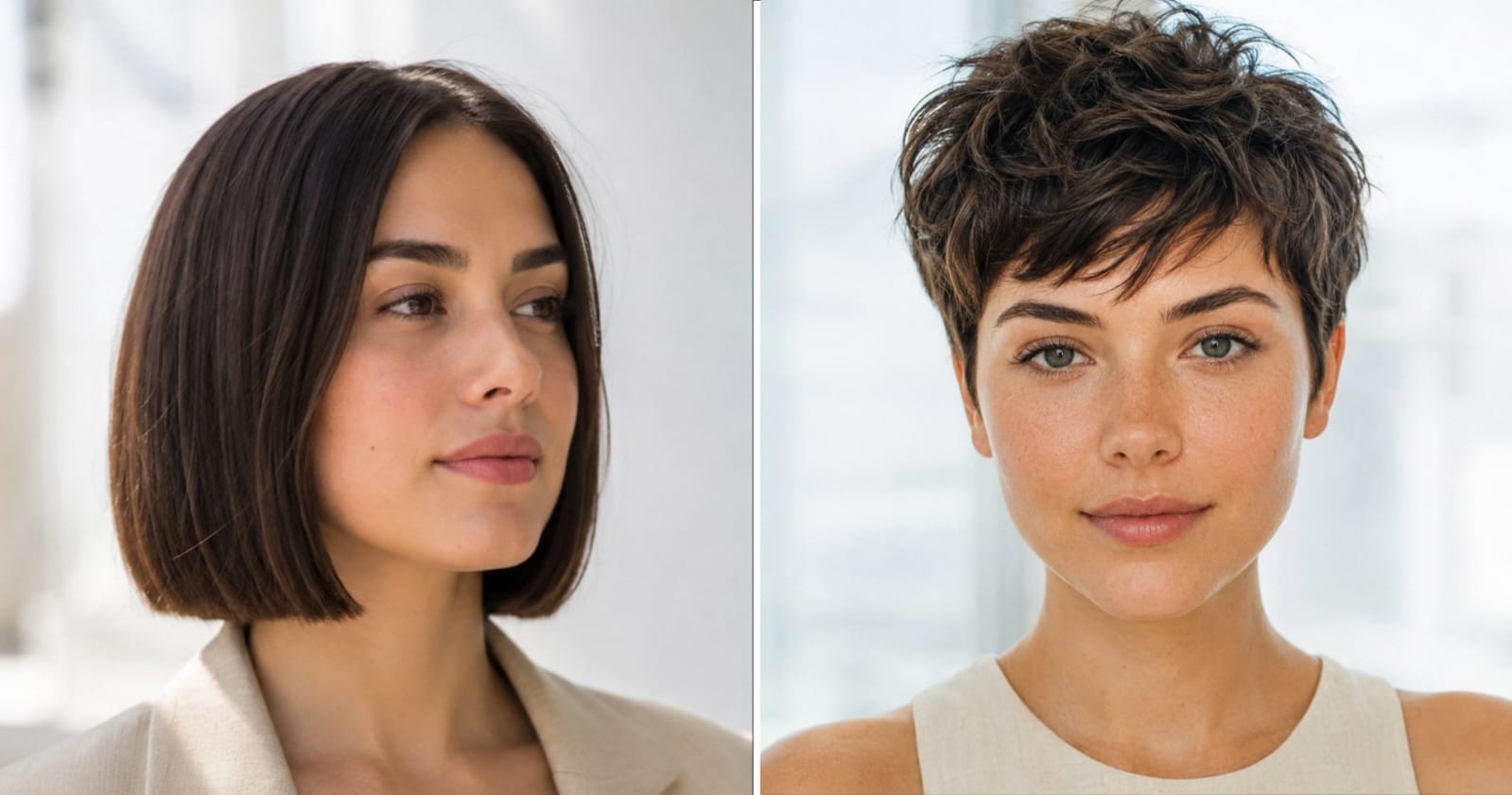
Short hair behaves differently once the temperature climbs. A cut that looks crisp and structured in spring can turn limp, frizzy, or shapeless by July if it wasn’t built with humidity and sweat in mind. The real difference between a “summer-proof” short cut and one that fights you all season usually comes down to one thing most articles skip entirely: how much internal weight the style is carrying. Heavier internal layering holds shape in dry air but collapses fast in humidity, while cuts with more removed weight near the root move easier and dry faster, even if they look less “finished” right after a fresh trim.
That weight distribution idea is going to come up again and again below, because it explains why two cuts that look almost identical in photos can perform completely differently the moment you step outside in 90-degree weather.
If you’re also debating face-framing layers or wondering how a pixie compares to a bixie for summer, those distinctions matter more than face shape alone — more on that as we go.
Quick Guide
| Style | Best For | Maintenance |
|---|---|---|
| Textured Pixie | Fine to medium hair | Trim every 4–5 weeks |
| Wavy Bob | Wavy/curly texture | Low |
| Blunt Bob | Thick, straight hair | Trim every 6 weeks |
| Curly Shag | Curly/coily hair | Low-medium |
| Bixie | Medium density | Every 5–6 weeks |
1. Textured Pixie

At first glance, a pixie looks like the lowest-maintenance option on this list, and in dry weather it usually is. The texturizing happens at the ends rather than the root, which removes bulk without flattening the crown. That structural choice is exactly why it suits fine to medium hair so well — there’s nothing heavy sitting on top to pull volume down once sweat or humidity hits it.
If Your Hair Is Fine… ask your stylist to keep more length at the crown. Over-thinning fine hair at the root just exposes scalp under direct sun, which most people don’t notice until photos.
2. Wavy Bob

One detail many people overlook with a wavy bob: the wave pattern actually gets better in summer humidity, not worse. Moisture in the air encourages the natural bend instead of fighting it the way it fights straight, blow-dried styles. The trade-off is unpredictability — two days with different humidity levels can give you two different shapes from the same cut.
Styling Challenge: if you’re switching between air-conditioned indoor spaces and humid outdoor air constantly, your wave pattern may shift mid-day. A light texturizing spray applied to damp hair helps it set into one consistent shape rather than reacting to whatever room you’re standing in.
3. Blunt Bob

Unlike softer layered cuts, a blunt bob keeps its shape specifically because the perimeter is left heavy and unlayered. That solid weight line is what gives it the geometric, polished look — but it’s also why it’s a poor match for fine or thin hair in humid climates, since there’s no internal layering to break up flatness when the ends start to feel heavy with sweat.
For thick, straight hair, though, this is one of the most reliable summer cuts available. The density does the work the styling product would otherwise need to do.
4. Curly Shag

For thicker, coilier textures, shrinkage becomes the deciding factor most listicles never mention. A curly shag is cut with the understanding that the visible length will pull up significantly once it dries and the curl pattern fully forms, so what looks short on day one settles into something even shorter and rounder by the time it’s fully dry. Stylists who don’t account for shrinkage often leave curly cuts too short.
Before You Ask Your Stylist: request a dry cut, or at minimum a dry check, so the shrinkage is factored into the final shape rather than guessed at on wet hair.
5. Bixie

The bixie sits in the gap between a pixie and a bob, and the difference isn’t really about length — it’s about how much weight stays at the nape versus how much is removed at the crown. A true pixie removes weight everywhere; a bixie keeps slightly more length and weight low while still texturizing the top. That’s why it reads as softer and more wearable for round or square face shapes than a classic pixie does.
Maintenance Schedule: every 5–6 weeks. The grow-out phase is more forgiving than a pixie’s because there’s more length to work with as it relaxes.
6. Curtain Bangs on a Short Cut

If your hair tends to get oily fast in summer heat, curtain bangs solve a problem most fringe styles create. Because they’re parted and swept to the sides rather than sitting flat against the forehead, they don’t trap as much oil or sweat at the hairline.
Common Mistake: cutting curtain bangs too short for a short overall cut. They need enough length to actually sweep and blend, or they end up looking like a straight-across fringe by accident.
7. Layered Crop

One reason this style stays popular through summer specifically is crown volume control. Internal layers are placed to lift hair away from the scalp at the root, which helps hair dry faster after a sweaty workout or a humid commute — something a one-length crop simply can’t do as well.
If Your Hair Is Thick… this is one of the better bulk-removal options available, since the layering happens internally rather than at the visible perimeter, keeping the shape intact while reducing weight.
8. French Bob

Although the silhouette looks simple, a French bob’s defining feature is a blunt, jaw-skimming length paired with a soft fringe — and that fringe is the part most people get wrong in summer. Because it sits directly on the forehead, it’s the first thing to react to sweat or humidity, often before the rest of the cut shows any change at all.
Humidity Tip: a small amount of dry shampoo at the root of the fringe in the morning absorbs oil before it has a chance to make the bangs stick or separate awkwardly by midday.
9. Undercut Pixie

The biggest strength of this haircut in summer is ventilation, plain and simple. Shaving or closely cropping the sides and back means there’s significantly less hair trapping heat against your neck, which matters more in July than most style guides admit.
Salon Tip: ask for the undercut to be cut slightly looser than a typical fade. A very tight fade grows out visibly within two to three weeks, while a slightly softer undercut stretches your maintenance window closer to five or six.
10. Shaggy Bob

Most inspiration photos don’t show how a shaggy bob is actually styled day to day — they show it fresh out of a salon blowout. In reality, the choppy, layered ends are designed to look intentional even when air-dried, which makes it one of the more realistic low-effort options for someone who isn’t curling or flat-ironing every morning in summer heat.
Air-Dry Advice: scrunch a lightweight curl cream through damp ends rather than brushing them smooth. Brushing removes the separation that gives the shag its texture.
11. Pixie Bob

For finer textures specifically, a pixie bob solves a problem that pure pixies create: not enough length to actually style with heat tools when you want a change. It keeps slightly more length through the crown and sides while still cropping shorter at the nape, giving fine hair a bit more flexibility without sacrificing the lightness a pixie offers.
Quick Styling Tip: a small amount of mousse on damp roots before air-drying adds lift without the stiffness that gels can leave behind in heat.
12. Curly Pixie

Curl expansion is the factor that makes or breaks a curly pixie. Curls expand outward as they dry, especially in humidity, which means a curly pixie cut wet will look noticeably different from how it settles once fully dry — often appearing rounder and slightly shorter than expected.
Worth Knowing: stylists experienced with curly hair typically cut these dry or check the shape at multiple drying stages, since cutting curls wet leads to unpredictable final results.
13. Asymmetrical Bob

Unlike softer layered cuts, an asymmetrical bob relies on a deliberate length difference between the two sides, which means the perimeter shape — not internal layering — is doing most of the visual work. This makes it less forgiving in humidity, since any frizz at the longer side throws off the entire asymmetry.
What to Avoid: skipping regular trims. An asymmetrical cut grows out unevenly, and the intentional imbalance starts to look accidental within about five weeks.
14. Wolf Crop

The shape changes dramatically when wolf-cropped hair is styled versus left to dry naturally. Heavy texturizing throughout creates that piecey, undone look, but it relies on some kind of root lift — whether from a diffuser, mousse, or just finger-tousling — to avoid looking flat rather than intentionally messy.
Styling Shortcut: flip your head upside down while diffusing for thirty seconds before finishing right-side up. It gives the crown lift without needing a separate volumizing step.
15. Micro Fringe Pixie

For thicker hair specifically, a micro fringe paired with a pixie creates a strong contrast between a very short, blunt bang and softer texture everywhere else. The fringe blending is the technical piece that determines whether this looks intentional or like an accident — it needs to taper into the sides rather than stopping abruptly.
Maintenance Reminder: this is one of the higher-maintenance options here. Blunt micro fringes show grow-out within two weeks, faster than almost anything else on this list.
Why Some Short Cuts Survive Summer and Others Don’t
Looking back across these fifteen cuts, face shape barely decided which ones held up best in heat and humidity. Weight distribution did. Cuts that kept heavier, unlayered perimeters — like the blunt bob or French bob — stayed structured but needed more attention to humidity-prone areas like fringe. Cuts built around removed internal weight — the textured pixie, layered crop, undercut pixie — moved more freely and dried faster, even if they looked slightly less “set” right out of the shower.
That’s the real takeaway: a haircut’s name tells you very little about how it’ll behave on a humid Tuesday. The way weight is removed, and where, tells you almost everything.
FAQ
Which short haircut handles humidity best?
Cuts with more internal layering and less blunt perimeter weight, like a textured pixie or layered crop, tend to hold shape better because there’s less heavy hair to react to moisture in the air.
How often do short haircuts need trims in summer?
Most need a trim every 4–6 weeks, but blunt shapes like the French bob or asymmetrical bob often need it closer to the 4-week mark to prevent the perimeter from looking ragged.
Is curly hair harder to maintain short in summer?
Not necessarily harder, but it requires accounting for shrinkage at the cutting stage. A curly cut measured wet will look different — usually shorter — once fully dry.
Can short hair be heat-styled less in summer?
Yes, and many of the cuts above (shaggy bob, wolf crop, textured pixie) are specifically designed to look intentional when air-dried, which cuts down on heat tool use.
Which short cut works best for thick hair in heat?
Cuts with internal bulk removal — like the layered crop or micro fringe pixie — handle thick hair best, since the weight reduction happens without sacrificing the overall shape.
Do undercuts actually feel cooler?
Yes. Less hair density against the scalp and neck genuinely reduces trapped heat, which is part of why undercut pixies remain popular through summer specifically.
Final Thoughts
None of these cuts are universally “the best” — they’re built for different hair behaviors in heat. Pay attention to how your hair handles humidity normally, and let that guide the choice more than the photo does.

