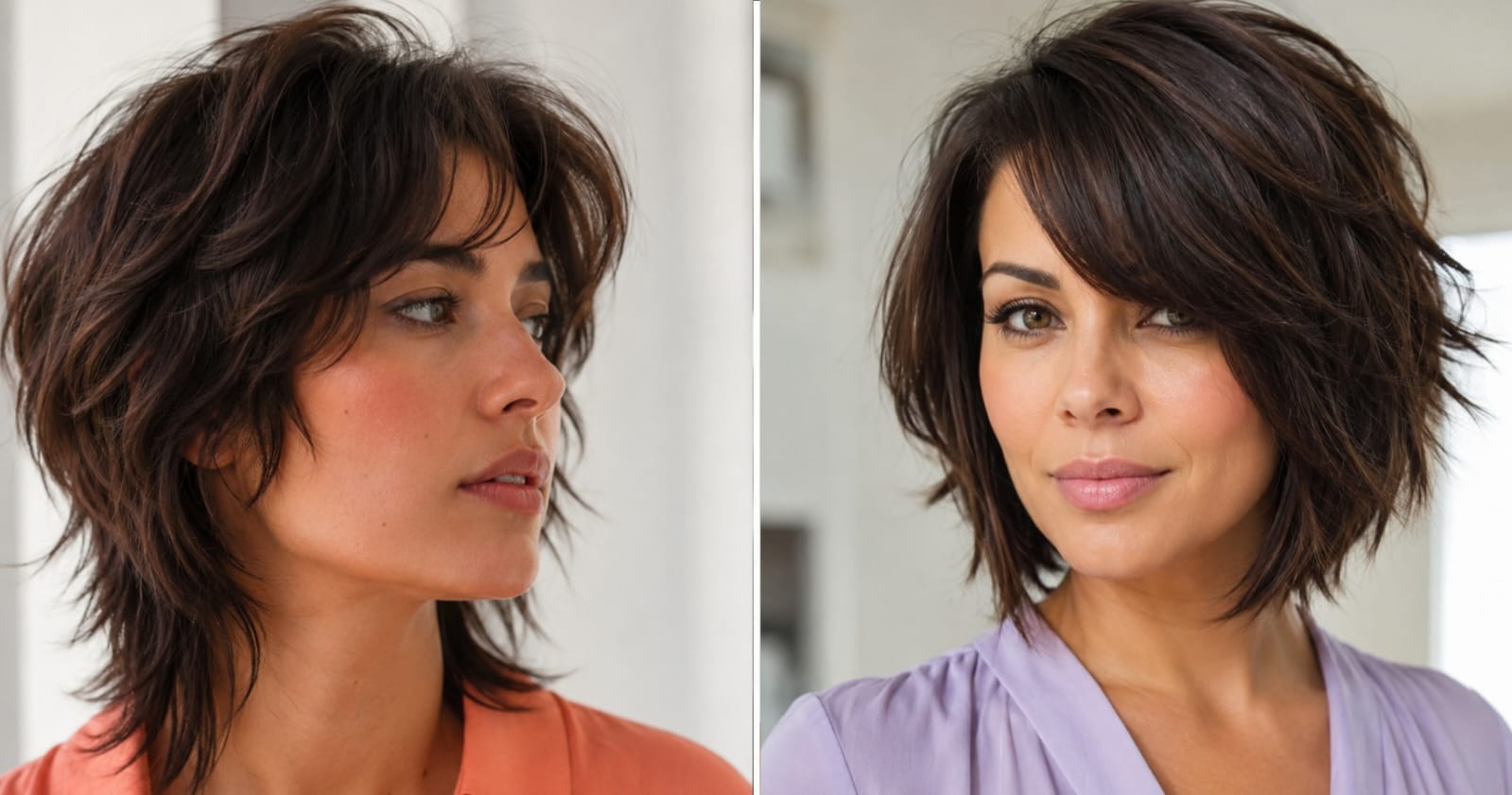
Most people assume a shag is just “short hair with layers,” which is why so many clients bring in a photo and leave the salon confused about why their version looks nothing like the picture. The real difference between a flat, sad shag and one that moves the way you want comes down to where the weight was removed, not how short the hair got. Two shags can have identical length and still behave in completely opposite ways depending on how the stylist handled the internal layering.
That’s the piece almost nobody explains, and it’s the thread running through every cut on this list. If you’ve ever wondered why your friend’s wolf cut has bounce for days while yours falls flat by noon, this is why.
Quick Guide
| What Matters | Why It Matters |
|---|---|
| Weight removal location | Determines whether hair moves or sits flat |
| Hair density | Bigger factor than face shape for most short shags |
| Perimeter shape | Blunt vs. razored changes how “shaggy” it reads |
| Styling time | Ranges from 3 minutes to 20 depending on layering |
1. Classic Pixie Shag

At first glance this looks like a standard pixie, but the layering goes deeper through the crown, which is what gives it that lived-in texture instead of a tidy, rounded shape. It works best on people with medium to thick density since fine hair can look sparse once that much weight is removed. The trade-off is regrowth: because the perimeter is already short and choppy, you’ll notice shape loss faster than with a blunt pixie.
Styling Challenge: The crown pieces need to be dried in the opposite direction they naturally fall, or the whole shape reads flat instead of textured.
2. Jawline Wolf Cut

Unlike a full wolf cut that goes past the shoulders, the jawline version concentrates all its shattered layering above the chin, so the movement happens fast instead of building gradually down the length. This is a cut that specifically rewards people with a strong natural wave, because straight hair needs more heat styling to fake the same texture. If you’re comparing this to a standard wolf cut, the jaw-length version is lower maintenance simply because there’s less hair to layer and blend.
Salon Tip: Ask specifically for “point cutting” at the ends rather than just layering — it’s the detail that separates a good jawline wolf cut from a mediocre one.
3. Curly Shag

For curly hair, shag layering behaves differently because curls shrink up when they dry, sometimes by 30-50% depending on curl pattern. A stylist who cuts this dry, curl by curl, will get a far more accurate shape than one who cuts it wet and hopes for the best. If your hair is on the coilier end of the spectrum, ask your stylist to reference the tips over on curly cuts so you’re both working from the same shrinkage expectations.
If Your Hair Is Curly: Request “curl-by-curl” cutting instead of the classic wet-cut-and-layer approach — it prevents the lopsided look that shows up after the first wash.
4. Micro-Fringe Shag

image credit:hairstyleology
One detail many people overlook with a micro-fringe is that it needs to be cut slightly longer at the very center than the sides, because the natural growth pattern at the hairline pulls it upward once it’s dry. Skip that adjustment and the fringe ends up shorter than intended within a week. This style suits people with lower foreheads and works especially well with round or oval face shapes, though the fringe itself often matters more than the face shape underneath it.
Common Mistake: Cutting the fringe completely straight across without accounting for how much it lifts once dry.
5. Smooth Mullet-Shag Hybrid

The biggest strength of this haircut is that it borrows the mullet’s dramatic length contrast without going as extreme, so it reads more “editorial” than “costume.” Structurally, the crown stays fairly heavy while the sides and nape get progressively shorter, creating that stacked silhouette. If you’ve looked at both this and a traditional mullet, the difference comes down to how blended the transition is — mullets often keep a visible line, while this hybrid smooths it out.
Maintenance Schedule: Trim every 6-8 weeks to keep the transition blended; wait longer and the two lengths start to separate visually.
6. The French Girl Shag

This one leans on effortlessness rather than precision, which sounds appealing until you realize “effortless” still requires the right cutting technique underneath it. The layers are cut with a lighter hand around the face and heavier through the back, so it looks undone without actually being shapeless. Fine hair tends to do well here since the reduced weight at the crown creates the illusion of more volume.
Air-Dry Advice: Apply a lightweight sea salt spray to damp hair and let it dry naturally — heat styling tends to make this particular shag look too polished, which defeats the point.
7. Razor-Cut Shag

Razor cutting removes hair differently than scissors do — it shaves down the strand at an angle instead of creating a clean blunt edge, which is why razor-cut shags always look softer and slightly more textured even at the same length as a scissor-cut version. The downside is that razored ends are more prone to splitting over time, especially on fine or damaged hair.
What to Avoid: Frequent flat-ironing, since heat plus already-thinned razored ends speeds up breakage noticeably.
8. Big Voluminous 90s Shag

Density is the deciding factor here more than almost anything else. Thick hair holds this shape with minimal effort, while fine hair usually needs a volumizing mousse and a round brush just to get halfway there. The style relies on heavy layering starting high at the crown, which is the opposite approach from something like a blunt bob where weight is left intentionally heavy at the ends.
For Thicker Hair: You can often air-dry this and still get decent volume, since the layering alone does most of the lifting work.
9. Tapered Nape Shag

Most inspiration photos don’t show the back of this cut clearly, which is unfortunate because the tapered nape is honestly the most technical part of the whole haircut. It requires clipper work blended into the scissor-cut top layers, similar to the technique used in cuts like the edgy pixie. Skip a skilled stylist here and you risk a visible line where the clipper work meets the longer layers above it.
Before You Ask Your Stylist: Confirm they’re comfortable with clipper-over-comb work, not just scissor layering — it’s a different skill set entirely.
10. Lavender Pastel Shag

Pastel color and shaggy layering actually work against each other in one specific way: heavy layering means more cut ends exposed to lightener, so hair that’s already been bleached for pastel tone tends to be more porous and prone to frizz at the layer tips. If color is part of your plan, look at broader guidance on seasonal hair color before committing to how light you go underneath the lavender.
Quick Product Picks: A bond-building leave-in conditioner is worth the investment here, since bleached, layered ends dry out faster than solid-color hair.
11. Textured Bowl Shag

If your hair tends toward straight and fine, a bowl shape usually looks stiff and helmet-like — but adding shag texturing at the ends changes that entirely by breaking up the solid perimeter line. This is a case where the “shag” part is doing more visual work than the “bowl” part. Thick or coarse hair, on the other hand, can make this shape feel heavy no matter how much texturizing happens.
Worth Knowing: This style grows out into an easy lob shape, so it’s more forgiving between salon visits than most people expect.
12. Blunt Perimeter Shag

Although the silhouette looks casual, this version actually keeps a blunt, unlayered perimeter line while all the shag movement happens through internal layers you can’t see from the outside. It’s a similar contrast to what you’d notice comparing a choppy bob to a razored one — same general shape, very different internal structure. This makes it a solid pick for anyone who wants shaggy movement without a heavily textured, chopped-up edge.
Styling Tip: Because the perimeter is blunt, you’ll get more visible shine along the ends than with a fully layered shag, which some people prefer and others don’t.
13. Soft Wispy Shag

For finer textures, this is usually the safest entry point into shag haircuts because the layering stays subtle instead of removing large chunks of weight, which is exactly what fine hair can’t afford to lose. If you’re weighing your options for thin hair generally, it’s worth a look at cuts built specifically around fine hair to compare density-handling approaches.
Quick Styling Tip: A light-hold mousse applied at the roots before blow-drying does more for this cut than any heavy styling product ever will.
14. Hidden Undercut Shag

The appeal of a hidden undercut is that it lets you enjoy shorter, more textured layers underneath without changing how the haircut looks when your hair is down. Structurally, this means the visible top layers can stay a bit longer and heavier, since the undercut is already handling bulk removal from beneath. It pairs naturally with the shaved-side aesthetic you’d see in more edgy pixie variations.
Grow-Out Notes: The undercut portion grows out faster than the top layers, so plan on nape touch-ups roughly every 4 weeks even if you’re stretching the rest of the cut longer.
15. Asymmetrical Shag Bob

One reason this style stays popular is that it solves a real problem — a lot of people feel like symmetrical bobs make round or square faces look wider, while an asymmetrical line draws the eye diagonally instead. The shag layering keeps the longer side from looking heavy or stiff, which is the main risk with straight asymmetrical cuts.
Comparison Note: Compared to a standard inverted bob, this shag version has far more internal texture and noticeably less structured shine.
16. Silver Metallic Shag

Silver and gray-toned color shows every bit of layering more clearly than warm tones do, since the lighter reflective color exposes shadow and depth differences between the layers. That’s a detail worth knowing before you commit — heavily layered shags photograph beautifully in silver, but any unevenness in the cut becomes much more visible too. For broader tone guidance, the color ideas roundup covers upkeep for cool, ashy tones specifically.
Maintenance Reminder: Purple or blue-toned shampoo becomes a weekly habit here, not an occasional one, since silver tones brass out faster than most other shades.
17. Beach Wave Messy Shag

If your hair air-dries with any natural wave at all, this is one of the lowest-effort shags on the list. The layering is specifically designed to enhance whatever texture you already have rather than fight against it, which is a very different philosophy from cuts that require a curling iron to look finished. It shares some DNA with looks found among general wavy hairstyles, just with more aggressive layering at the crown.
Humidity Tip: Humid climates actually help this cut rather than ruin it, since the added moisture enhances wave pattern instead of creating frizz-only volume.
18. Bottleneck Bangs Shag

The defining feature is bangs that are wider at the top and narrow in toward the cheekbones, which softens jawline angles more effectively than a straight-across fringe. This is a case where the specific styling of the bangs matters more than the shag layering underneath them, since bottleneck bangs can transform the same base cut in a completely different direction than blunt or curtain bangs would.
One Thing Most People Miss: These bangs require regular trims every 3-4 weeks to maintain the taper shape, since they lose their narrow point faster than they lose overall length.
19. Two-Tone Color Shag

Placing two contrasting colors within a heavily layered shag creates a strobing effect as the layers move, since each layer briefly reveals the color underneath it. This only works well with cuts that have real separation between layers — on a softer, more blended shag, the color transitions muddy together instead of reading crisp.
Best Occasion: This combination photographs especially well in motion, so it’s a strong pick if you’re someone who takes a lot of video content or attends events with good lighting.
20. Feathered Crown Shag

Feathering at the crown specifically targets root lift, which is a different goal than the layering you’d find lower down the head aimed at movement. This distinction matters because a lot of people ask for “volume” and get length-focused layering instead, which does very little for flatness at the top of the head.
Styling Tip: Blow-dry the crown section first while it’s still damp, lifting at the root with a round brush — doing the ends first almost always undercuts the volume you’re trying to build.
21. Minimalist Shag

For anyone who wants shag texture without the maintenance reputation shags usually carry, this pared-back version keeps layering minimal and concentrated mainly at the ends. It’s a good match for the kind of low-effort routine covered in guides on low-maintenance cuts for fine hair, even outside the fine-hair context specifically.
Keep in Mind: Fewer layers means less “shag effect,” so don’t expect the same dramatic movement you’d get from a heavily textured version.
22. Grunge Shag

The grunge shag intentionally leaves the ends uneven and slightly ragged rather than blended smooth, which is a deliberate technical choice rather than a lack of finishing. It suits thicker, coarser textures particularly well because that hair type holds a rougher edge without looking accidental.
Styling Shortcut: Texturizing spray worked in with fingers, not a brush, keeps the intentional roughness intact — brushing it out tends to smooth away the entire point of the cut.
23. Copper Shaggy Crop

Warm copper tones tend to fade toward brassy orange faster than most other reds, which becomes especially noticeable in a heavily layered crop where every layer catches light differently as it fades unevenly. This is a cut and color combination that benefits from more frequent glossing appointments than a solid, single-process color would need.
Salon Tip: Ask your colorist about a demi-permanent gloss refresh every 4-5 weeks rather than a full color reapplication — it maintains vibrancy without over-processing already-short hair.
24. Face-Framing Shag

Rather than layering evenly across the whole head, this version concentrates the shortest, choppiest pieces right around the face, leaving the rest of the cut comparatively fuller. It’s one of the few shags where face shape genuinely does drive the decision, since the framing pieces are cut to hit at different points depending on cheekbone and jaw width.
Before You Ask Your Stylist: Bring a photo showing your face at rest, not smiling, since framing pieces are cut to interact with your natural bone structure, not your expression.
25. Ultra-Short Spiky Shag

For thicker hair especially, this cut relies on heavy internal layering paired with a strong texturizing product to create separation between individual pieces. Unlike softer, longer shags that rely on natural movement, this style is built entirely around deliberate, styled texture — it won’t look “finished” without product, even right after a fresh cut.
Daily Routine: A pea-sized amount of matte paste worked through damp hair before diffusing gives the most reliable spiked texture without looking greasy by midday.
Why Density Matters More Than You’d Think
Across all 25 of these cuts, the pattern that keeps showing up isn’t face shape — it’s how much hair you actually have and where the weight gets removed from. Two people with the same face shape and length can get completely different results from the same shag because one has twice the density of the other. A stylist who asks about your hair’s thickness before touching your face shape is usually the one who ends up giving you a cut that actually behaves the way the photo suggested it would.
That’s really the through-line here: a shag isn’t one haircut, it’s a layering philosophy that gets applied differently depending on what your hair is already doing.
FAQ
Which of these shags adds the most volume to fine hair?
The Soft Wispy Shag and Feathered Crown Shag both work well, since they target root lift and subtle layering rather than removing large amounts of weight, which fine hair can’t spare.
How often do short shag haircuts need to be trimmed?
Most need a trim every 6-8 weeks to maintain shape, though heavily tapered or undercut versions may need nape touch-ups closer to every 4 weeks.
Can a shag haircut air-dry well, or does it need styling tools?
Wavy and curly shags, like the Beach Wave Messy Shag or Curly Shag, tend to air-dry beautifully. Straighter hair types generally need at least a round brush and blow-dryer to activate the same texture.
Which version works best for thick, coarse hair?
The Big Voluminous 90s Shag and Grunge Shag both hold up well on thicker hair, since that density supports the heavier layering these styles are built around.
Is a short shag high maintenance?
It depends more on the layering density than the length itself — a Minimalist Shag is genuinely low effort, while an Ultra-Short Spiky Shag needs daily product and styling time.
Do shags work on straight hair without natural wave?
Yes, but expect to rely more on styling tools and texturizing products, since straight hair doesn’t create the same natural separation between layers that wavy or curly hair does on its own.
Final Thoughts
None of these cuts are one-size-fits-all, and the right one usually comes down to your density and how much time you actually want to spend styling in the morning. Bring a couple of these photos to your consultation and ask specifically how the layering will be handled for your hair type — that conversation matters more than the name of the cut itself.

