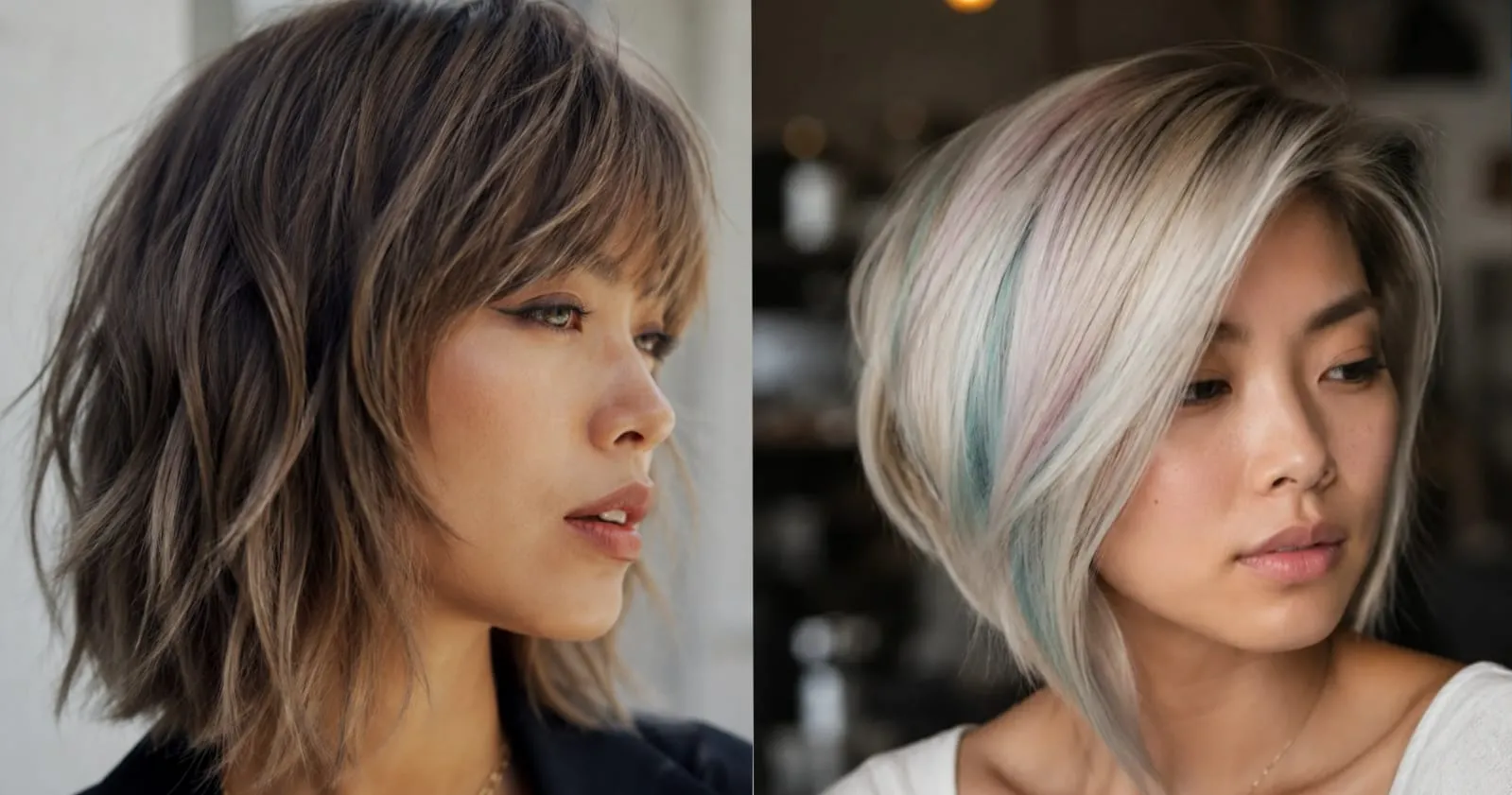
An inverted bob is built on one structural idea: shorter layers stacked at the back, longer pieces left to sweep toward your chin in front. That angle is what gives the cut its shape and its movement, and it’s also why the same “inverted bob” can look completely different depending on how steep the angle is, how much weight stays in the back, and where the length actually lands.
That structure is also what makes this cut so adaptable. A steep, dramatic angle reads edgier and more graphic, while a soft, barely-there taper keeps things closer to a classic long bob hairstyle with a bit more shape at the jaw. Neither version is “more correct,” they just solve different problems, whether that’s adding volume at the crown, softening a square jawline, or giving fine hair the illusion of thickness.
If you’ve been scrolling for inspiration and every photo looks slightly different, that’s exactly why. Here are 17 ways to wear the inverted bob, from subtle and low-maintenance to full-on statement cuts.
1. The Classic Angled Bob

This is the original. Front pieces come down to around chin length, back is cut short and tight. The angle between front and back is pretty dramatic — maybe two to three inches difference.
It looks sharp in person. Not in a scary way, just clean and intentional. The kind of haircut where people assume you have your life sorted even when you absolutely do not.
Works beautifully on straight hair. If yours has a little natural wave, a quick blowout with a round brush is all you need.
2. The Messy Textured Version

My personal favorite phase was when I stopped trying to style my bob perfectly and just scrunched in some sea salt spray and walked out the door. Somehow this looked better than the careful blowout version.
Wavy and naturally textured hair was literally made for this. You’re not fighting your hair, you’re just… letting it do its thing with a little encouragement.
The trick is applying the spray to damp hair, not dry. Scrunch it in, don’t touch it while it dries, and resist the urge to run your fingers through it every five minutes. That last part is harder than it sounds.
3. Blunt Cut Inverted Bob

No layers. No feathering. Just one clean line angling from the short back to the longer front.
This one is very striking in person. It looks extremely deliberate, like you picked this cut specifically and thought about it. Which I suppose you would have.
Thick straight hair carries this the best. Fine hair can look a little limp with a blunt cut because there’s nothing to add body. If your hair is on the finer side, scroll to number four instead.
4. Layered Inverted Bob

The blunt version’s more relaxed sibling. Layers are added throughout so the hair has movement instead of sitting heavy.
My friend Sana has hair so thick that regular bobs always looked blocky on her. She got a layered inverted bob last year and the difference was almost funny — suddenly her hair moved when she walked. She kept touching it at dinner because she couldn’t believe it felt so light.
If your hair is thick and you’ve been avoiding short cuts because you worry about the poof factor, this is your answer.
5. Curly Inverted Bob

Curly hair people get kind of forgotten in these conversations and I don’t think that’s fair because a curly inverted bob can look absolutely incredible.
The thing you have to know — and this is important — is that your stylist needs to cut your hair dry, or at least cut it knowing how much it’s going to shrink when it dries. If they cut it wet and don’t account for that, you’ll leave happy and come home to something significantly shorter than what you asked for. Ask specifically about this before they start.
The curls themselves do a lot of the work. They add volume to the stacked back naturally, and the front pieces framing your face with some curl? Really lovely.
6. Asymmetrical Bob

One side sits about an inch longer than the other. It sounds dramatic when you describe it but in practice it’s surprisingly subtle — most people won’t even notice unless they’re looking for it.
What they will notice is that something about your hair looks interesting and cool without being obvious about why.
The longer side generally looks better falling toward your non-dominant side, but honestly just look at your face and see which side you prefer parting your hair on. Go longer on that side.
7. Inverted Bob with Bangs

This combination hits differently. The bangs frame the top of your face and the bob frames the sides and suddenly your whole face is just… framed. It’s a lot.
Three options worth knowing:
Blunt bangs across the forehead look very French. Very intentional. Very “I woke up like this but also I definitely did not.”
Side-swept bangs soften the whole thing. If you’re worried the angled bob might feel too severe, side-swept bangs balance it out.
Curtain bangs are probably the easiest choice right now because they’re flattering on almost every face shape and they grow out without looking awkward. If you genuinely don’t know which to pick, go curtain bangs.
8. Short Stacked Bob

This is the version where the back is really short — almost pixie-level short — and the contrast with the longer front pieces is pretty intense.
I’m not going to lie, this one requires some confidence to ask for. But I have never seen someone with this cut look bad. There’s something about that extreme contrast that just works.
You will need to go back every four to five weeks to maintain it though. The stacking at the back loses its shape as it grows and it starts to look a bit undefined. Worth it when it’s fresh though.
9. Long Inverted Bob

For people who hear the word “bob” and immediately feel their stomach drop — this is your starting point.
The front pieces fall to around collarbone length. The back is only slightly shorter. The angle is gentle, not dramatic. From the front you almost can’t tell it’s an inverted bob at all, but from the side you get that beautiful line.
This is genuinely the best way to try the style without committing to anything scary. You can always go shorter later once you know you like it.
10. Inverted Bob with Curtain Bangs

Two trends that genuinely improve each other. The curtain bangs add softness to the front while the angled bob adds structure at the sides. They balance each other out in a way that’s hard to explain but very obvious when you see it.
Also practical: curtain bangs are one of the few bang styles that don’t require a specific length to look good as they grow. You get a long grace period before your next trim.
11. Wavy Bob

If your hair sits somewhere between straight and curly — that slightly wavy middle ground that products never seem to account for — an inverted bob is genuinely one of the best things you can do with it.
The wave adds body to the stacked back. The front pieces with a little natural movement look soft without trying. You’re not forcing your hair to be something it isn’t, which always shows.
On days when your wave cooperates, just diffuse on low heat and go. On days it doesn’t, a few passes with a wand on the ends fixes it in five minutes.
12. Highlighted Inverted Bob

Color on an inverted bob falls differently than it does on longer hair. The angle means the highlights catch light in a more interesting way — especially anything around the face.
Money pieces (two thick highlighted sections framing the face) look particularly good with this cut. Face-framing babylights — which are finer and more blended than traditional highlights — look even better if you want something more natural.
If you already have an inverted bob and feel like something is missing, color might actually be the answer before you start considering a different cut entirely.
13. Choppy Bob

The ends are deliberately cut at different lengths to create texture. Not messy in a bad way — more like intentionally undone.
This one skews a little edgy. It works really well if your personal style already leans in that direction. If you’re more classic and polished, the blunt or layered versions will feel more like you.
Thick hair genuinely shines here. You get to keep the weight of your hair but break it up enough that it doesn’t sit heavy.
14. Sleek Straight Bob

Everything above was pretty relaxed. This one is not.
Pin straight, glossy, not a single strand out of place. The kind of hair that makes people ask if it’s real.
You need a flat iron, a heat protectant (please don’t skip this), and something like a drop of argan oil worked through the ends at the finish. The heat protectant is genuinely non-negotiable — I fried my ends once thinking I’d be fine without it and spent three months dealing with the consequences.
The look is worth the effort but do protect your hair while you get there.
15. Fine Hair Inverted Bob

Genuinely, if you have fine hair, please consider this cut. It might be the single most flattering thing you can do for your hair type.
The stacking creates volume at the back that didn’t exist before. You go from hair that sits flat against your head by noon to hair that has actual shape and body all day. It’s a bit of a revelation the first time you experience it.
The key is asking for the stacking to be built up at the nape rather than adding too many layers on top. Top layers on fine hair make it look thinner. Bottom stacking makes it look thick.
16. Face-Framing Layered Bob

Instead of one sharp angled line at the front, the layers are cut to blend gradually into the cheekbones. It’s much softer than the classic version.
If you have a strong jaw or prominent cheekbones and you’re worried the angled bob might emphasize them in a way you don’t want, this version does the opposite — it softens.
Round and square faces tend to do really well with this style specifically.
17. Full Graduated Bob

The back is stacked all the way up, not just at the nape. When someone looks at you from the side, the back of your hair is almost dome-shaped with how much volume is built in there.
It sounds like a lot but it photographs beautifully and in person it reads more as “great hair” than “dramatic hair decision.”
Fine hair people, this is your most volumizing option of everything on this list.
What to Actually Say at the Salon
Walking in and saying “I want an inverted bob” isn’t enough — I found this out the awkward way when my stylist and I spent fifteen minutes clarifying what I meant before she touched my hair.
Bring a photo. More than one if you can — ideally one showing the front and one showing the back, because the back of an inverted bob is half the point. Pinterest and Instagram are both good for this. Save screenshots before your appointment so you’re not scrolling awkwardly in the chair.
Tell them your hair type honestly. Tell them how much time you actually spend styling in the morning, not how much you wish you spent. If you’re a five-minute-and-go person, say that. A good stylist will factor it into the cut.
Ask to see the back before you leave. Always. They’ll use a hand mirror to show you and it takes thirty seconds. Don’t skip it.
Things I Wish Someone Had Told Me
The back grows out faster than you think. The shorter and more stacked the back is, the quicker it loses its shape. If you get a really short stacked version, budget for a trim every four to five weeks or it starts to look grown out fast.
Going shorter is easy, going back is not. Start longer if you’re unsure. The long inverted bob is a completely valid and beautiful choice, not a compromise.
Fine hair and heavy products don’t mix. A light texturizing spray is enough. Heavy creams will make fine hair look flat and stringy within a few hours.
The first wash after getting the cut is a little humbling. You don’t have your stylist’s blowout skills yet. Don’t judge the cut by the first time you style it yourself — give yourself a week to figure out what works.
FAQ
Does the inverted bob work on older women?
Honestly, yes. It’s one of those cuts that tends to look more sophisticated with age rather than trying too hard. A classic angled or layered version especially.
How long does an inverted bob take to grow out?
Depends on how short the back is. A very short stacked back takes about six to eight months to grow to a one-length bob. The lob version is much less commitment.
Can I pull this off if I’ve never had short hair?
Start with the long inverted bob. The front pieces fall to your collarbone so it won’t feel like a drastic change but you’ll still get the shape and the angle.
Will it look good if I have a big forehead?
Bangs solve this immediately. Curtain bangs or side-swept bangs with an inverted bob covers the forehead while keeping the whole look balanced.
Is it worth the extra salon visits?
The shorter versions, yes absolutely — they look so much better maintained. The lob version you can stretch to every six to eight weeks which is pretty normal for most haircuts anyway.
To Wrap It Up
Here’s the thing nobody tells you before you get an inverted bob: it’s not really about the cut itself. It’s about what happens to how you carry yourself after. I stood a little straighter leaving that salon. Felt more like myself somehow, which sounds ridiculous for a haircut but there it is.
Pick one or two from this list that genuinely make you think “okay yes that one.” Book the appointment. Bring the photos. Trust your stylist and then trust yourself.
Worst case, hair grows. Best case, you find the cut you’ve been looking for.

