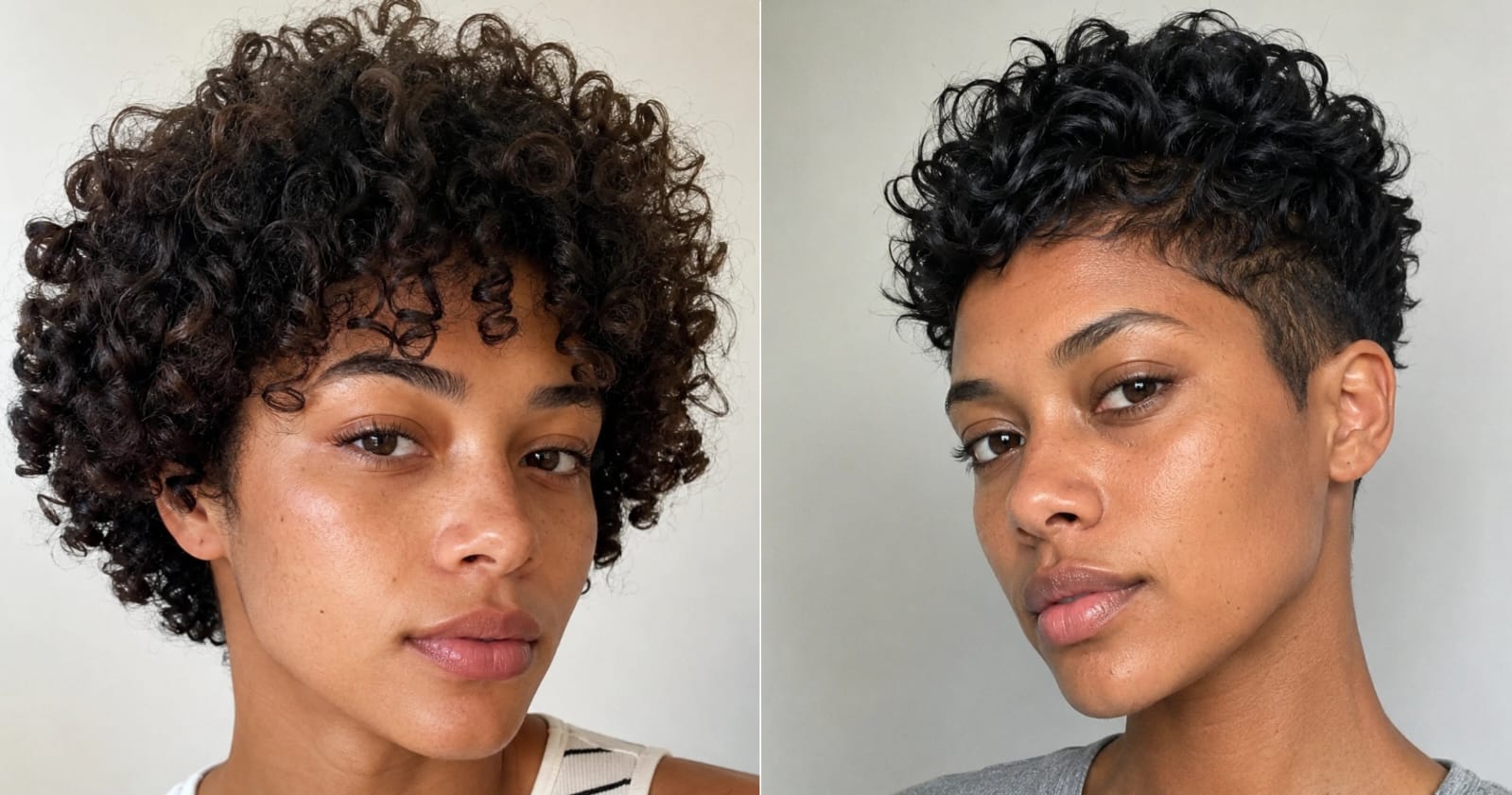
Short 4C hair doesn’t mean fewer options — it actually means more. The tight coil pattern that makes 4C hair shrink so dramatically is the same thing that lets it hold texture, volume, and definition in ways longer hair simply can’t pull off. A TWA isn’t a waiting stage. It’s a whole category of styles on its own.
The real challenge with short 4C hair isn’t finding something to do with it — it’s narrowing down which look you want to wear first. Wash-and-gos pop with density, finger coils sit perfectly defined without weighing down, and flat-twist outs stretch into shapes that would disappear on any other texture. If you’ve been treating your length as something to grow past rather than style right now, that changes today.
These 15 looks were picked specifically for 4C hair at shorter lengths — TWA stage through early growth — so every option here is actually achievable on your texture. And if you want even more to pull from, this roundup of short hairstyles for Black women is worth keeping open alongside this one.
What Makes 4C Hair Different When It’s Short
Short 4C hair behaves unlike any other texture. It shrinks dramatically — sometimes up to 75% of its actual length — which means styling tricks that work on 4B or 3C hair just won’t translate. The coils are tight, defined mostly with product help, and the strands are incredibly fine yet dense.
The good news? That shrinkage creates volume, shape, and dimension that longer hair honestly can’t replicate. Short 4C hair has its own magic, and once you stop fighting it, everything changes.
1. The Classic TWA (Teeny Weeny Afro)

This was my starting point, and honestly, I slept on it for way too long. A TWA is basically your natural hair left to its own devices with a little product love — no manipulation, no extensions, just your coils doing their thing.
I used the Ecostyler Gel (Olive Oil formula) to define my edges and let the rest air dry. The result was this incredible, full crown that turned heads everywhere. Miss Darlene always says TWAs look best when the hair is hydrated, not crunchy. Moisture is everything here.
For more everyday short hairstyles for Black women that work at this same length, that article breaks down a lot of looks that start exactly where the TWA leaves off.
TWA Info :
- Maintenance Frequency: Wash and refresh every 3–5 days
- Styling Time Required: 10–15 minutes
- Estimated Salon Cost: $0–$20 (mostly DIY)
- Best Face Shapes: Oval, heart, square
- Best Hair Growth Stage: 0–3 inches (true TWA stage)
- Difficulty Level: Beginner
- Pros: No heat, no manipulation, low cost, showcases natural texture
- Cons: Requires consistent moisture, shrinkage can feel discouraging at first
2. The Finger Coil TWA

This is the TWA’s more defined, polished cousin. Instead of letting the hair do whatever it wants, you use your finger to wrap each section into a coil. It takes more time but the result looks intentional and gorgeous.
I used Camille Rose Curl Maker on damp hair and worked in small sections. The coils popped beautifully and lasted about three days before I refreshed with a water spray.
You might also enjoy how curly pixie haircuts use the same coil-defining technique on slightly longer lengths.
Finger Coil Info :
- Maintenance Frequency: Refresh every 2–3 days, redo weekly
- Styling Time Required: 45–90 minutes depending on density
- Estimated Salon Cost: $40–$75
- Best Face Shapes: Round, oval, oblong
- Best Hair Growth Stage: 1–4 inches
- Difficulty Level: Intermediate
- Pros: Elongates the look, reduces shrinkage appearance, great definition
- Cons: Time-consuming, can feel stiff if product isn’t layered correctly
3. The Mini Puff

Don’t underestimate the mini puff. Even at 1.5 inches, 4C hair has enough volume to create a gorgeous little puff at the crown. I wore this style almost every week during my early growth phase.
A satin scrunchie is non-negotiable here — regular elastics snap 4C edges faster than anything. Wrap it loosely, lay your edges down with a soft-bristle brush and some Mielle Rosemary Mint Edge Gel, and you’re done in under five minutes.
For low-effort travel looks, check out these vacation hairstyles for Black women — the mini puff shows up there constantly.
Mini Puff Info :
- Maintenance Frequency: Daily refresh or every other day
- Styling Time Required: 5–10 minutes
- Estimated Salon Cost: DIY style, $0
- Best Face Shapes: All face shapes
- Best Hair Growth Stage: 1.5–4 inches
- Difficulty Level: Beginner
- Pros: Quick, versatile, protective for ends
- Cons: Repeated tension can stress edges if band is too tight
4. Short Flat Twists

Flat twists on short 4C hair look absolutely stunning and they’re protective too. You’re essentially cornrowing with a two-strand twist technique close to the scalp, which works beautifully even on very short hair.
My stylist would do 6–8 flat twists across my crown when my hair was around 2 inches. Left overnight with a satin bonnet, they’d create the most beautiful twist-out pattern by morning. The key is moisturizing with the LOC method (liquid, oil, cream) before twisting.
Short Flat Twist Info :
- Maintenance Frequency: Redo every 5–7 days
- Styling Time Required: 30–60 minutes
- Estimated Salon Cost: $50–$90
- Best Face Shapes: Heart, oval, oblong
- Best Hair Growth Stage: 2–5 inches
- Difficulty Level: Intermediate
- Pros: Protective, creates wave pattern for twist-out, works on very short hair
- Cons: Requires practice for neat parts, can unravel if hair is too short at roots
According to NaturallyCurly, the LOC method — applying liquid first, then oil, then cream — helps 4C hair retain moisture significantly longer than applying products out of order. This is especially important for short styles where there’s less hair to buffer against dryness.
5. The Defined Wash-and-Go

This one took me forever to get right on short 4C hair. A wash-and-go sounds simple but 4C hair needs more product layering than other textures to hold definition.
The combination that finally worked for me: SheaMoisture Jamaican Black Castor Oil Leave-In, then Aunt Jackie’s Don’t Shrink Elongating Curl Gel, applied in the shower while hair was absolutely drenched. No raking, just smoothing downward. The results were these tiny, gorgeous coils that actually held shape for two days. For more curl definition ideas, check out our guide to hairstyles for short curly hair.
Wash-and-Go Info :
- Maintenance Frequency: Full redo every 3–5 days
- Styling Time Required: 20–30 minutes (plus drying time)
- Estimated Salon Cost: DIY primarily, $30–$50 if salon-assisted
- Best Face Shapes: Oval, square, diamond
- Best Hair Growth Stage: 1.5–5 inches
- Difficulty Level: Intermediate to Advanced
- Pros: Showcases natural texture beautifully, no heat needed
- Cons: Takes trial and error to get product combo right for your specific hair
6. Mini Bantu Knots

I have a complicated relationship with Bantu knots. My first attempt looked like tiny doorknobs on my head and I left the house humbled. But when I learned to do them properly — smaller sections, neater wrapping — they became one of my most-requested styles.
On short 4C hair, smaller knots (about 8–12 across the whole head) work better than large ones. They can be worn as-is for a protective, sculptural look, or taken down for a Bantu knot-out.
The secret Miss Darlene taught me: always twist the section first before wrapping it into the knot. It creates better curl formation for the knot-out.
Bantu Knot Info :
- Maintenance Frequency: Wear 2–5 days, then take down for knot-out
- Styling Time Required: 45–75 minutes
- Estimated Salon Cost: $60–$100
- Best Face Shapes: Oval, heart, square
- Best Hair Growth Stage: 2–5 inches
- Difficulty Level: Intermediate
- Pros: Double duty style (wear as knots OR a knot-out), completely heatless
- Cons: Can feel tight if sections are too large, takes practice to make them neat
7. Short Tapered Cut

This is where it gets exciting. A tapered cut on 4C hair is one of the most sculpted, deliberate styles you can wear. The sides are cut closer while the top keeps more length and volume, creating a shape that’s incredibly flattering. If you love bold, sculpted short shapes, our edgy pixie cuts roundup has plenty more inspiration.
I went for a tapered cut after about eight months of growth and it completely transformed how I saw my hair. Suddenly the shape was doing the work, not just the length. My stylist used clipper guards on the sides and scissors at the top to keep the coil texture intact.
This style requires a skilled barber or natural hair stylist. Don’t let just anyone touch it.
Tapered Cut Info :
- Maintenance Frequency: Trim every 4–6 weeks to maintain shape
- Styling Time Required: 15–20 minutes daily
- Estimated Salon Cost: $50–$120 per cut
- Best Face Shapes: Oval, round, heart
- Best Hair Growth Stage: 3+ inches on top, any length on sides
- Difficulty Level: Beginner (once cut is done by professional)
- Pros: Extremely polished, low manipulation, works with 4C shrinkage
- Cons: Requires regular salon visits to maintain the taper line
Healthline notes that regular trims actually support healthy hair growth by preventing split ends from traveling up the hair shaft — something especially important for 4C hair, which is already prone to breakage at the ends.
8. The High-Top Fade with Natural Coils

This one is bold and I am here for it. The high-top fade — think 90s inspired with a modern 4C coil twist — is making a massive comeback and it looks stunning on natural hair.
The sides are faded low while the top coils are left full and shaped into a flat or rounded top. On 4C hair specifically, the natural shrinkage creates this dense, sculptural top that literally holds its shape on its own.
This requires someone skilled in both fading and natural hair. Not every barber gets it right.
High-Top Fade Info :
- Maintenance Frequency: Fade touch-up every 3–4 weeks
- Styling Time Required: 10–15 minutes daily
- Estimated Salon Cost: $60–$110
- Best Face Shapes: Oval, oblong, square
- Best Hair Growth Stage: 3–6 inches on top, short or faded sides
- Difficulty Level: Beginner (maintenance-wise)
- Pros: Incredibly striking, works with natural shrinkage, timeless style
- Cons: Frequent barber visits needed, not easily transitioned to other styles
9. Chunky Two-Strand Twists

Short 4C hair can absolutely rock two-strand twists, even when it feels “too short.” At 2 inches, you’ll get maybe 6–10 chunky twists depending on your density. And honestly? The chunky look on short hair is everything.
I used Cantu Shea Butter Twisting Cream and twisted on stretched, damp hair. Left them in for 3–4 days and then took them down for the most gorgeous twist-out of my natural hair life.
Two-Strand Twist Info :
- Maintenance Frequency: Redo every 5–7 days
- Styling Time Required: 30–50 minutes
- Estimated Salon Cost: $45–$80
- Best Face Shapes: All, especially round and heart
- Best Hair Growth Stage: 2–5 inches
- Difficulty Level: Beginner to Intermediate
- Pros: Easy to learn, versatile (style as twists or take down for twist-out)
- Cons: Short twists unravel more easily, need product to hold
10. The Mini Mohawk

I did this on a whim one morning when I had about three inches of hair. Gathered the sides into tiny flat twists or pinned them close to the scalp, left the center strip loose and full, and walked out feeling like a whole different person.
The 4C texture in the center strip creates this incredible puffed-up mohawk effect without any product magic needed — just the natural volume of the coils.
Mini Mohawk Info :
- Maintenance Frequency: Refresh daily or every 2 days
- Styling Time Required: 15–25 minutes
- Estimated Salon Cost: $30–$60 if styled by a pro
- Best Face Shapes: Oval, heart, diamond
- Best Hair Growth Stage: 2.5–5 inches
- Difficulty Level: Intermediate
- Pros: Creative and expressive, no heat needed, shows off 4C volume
- Cons: Sides need to be repinned or re-twisted regularly
11. Headband or Accessory Styles

Never underestimate a good accessory on short 4C hair. A wide knit headband, a silk scarf wrapped low, or even a beaded headband completely transforms a simple TWA into something intentional.
I went through a phase of obsessively collecting headbands from ASOS and Etsy. Pair them with defined edges and your short hair goes from casual to curated in under two minutes.
According to Byrdie, using satin-lined accessories is better for 4C hair specifically because cotton-based headbands and scarves can pull moisture from the hair and cause friction breakage.
Accessory Styling Info :
- Maintenance Frequency: Style fresh each day
- Styling Time Required: 2–5 minutes
- Estimated Salon Cost: $0 (DIY)
- Best Face Shapes: All face shapes
- Best Hair Growth Stage: Any stage
- Difficulty Level: Beginner
- Pros: Instant transformation, protects edges, virtually zero effort
- Cons: Daily friction from accessories can affect edges if not satin-lined
12. Freeform Loc Starter Locs on Short Hair

If you’ve been thinking about locs, short 4C hair is actually an ideal time to start them. The coil pattern at this length naturally encourages loc formation, and starting them short means your eventual locs will be beautifully uniform.
Starter locs at the TWA or short growth stage can be done with two-strand twists, comb coils, or palm rolling. My friend Tia started hers at about 2 inches and her locs are now the most defined, gorgeous things I’ve ever seen.
Starter Locs Info :
- Maintenance Frequency: Retwist every 4–8 weeks
- Styling Time Required: 2–4 hours for initial install
- Estimated Salon Cost: $150–$300 for initial locs
- Best Face Shapes: All face shapes
- Best Hair Growth Stage: 1.5–4 inches (ideal starting point)
- Difficulty Level: Intermediate (loctician recommended for start)
- Pros: Long-term protective style, low daily manipulation, grows into a full style
- Cons: Commitment-heavy, frizz in early stages is normal and expected
13. The Pineapple Updo (Mini Version)

The pineapple is usually associated with longer natural hair, but a mini version on short 4C hair is an actual style statement. Gather whatever length you have toward the very top-front of your head with a loose satin scrunchie. Even an inch or two of 4C hair will create a tiny poof that looks deliberate.
Pair it with bold earrings and clean edges, and you have a whole look. For more pulled-back inspiration, see our cute updo hairstyles collection.
Mini Pineapple Info :
- Maintenance Frequency: Daily refresh
- Styling Time Required: 3–7 minutes
- Estimated Salon Cost: $0 (DIY)
- Best Face Shapes: Oval, square, heart
- Best Hair Growth Stage: 2–4 inches
- Difficulty Level: Beginner
- Pros: Fast, cute, elongating, shows off face and neck
- Cons: Very short hair may not hold the scrunchie well at first
14. The Sculpted Curl Sponge Look

If you haven’t discovered the hair sponge yet, where have you been? This tool changed my short 4C life completely. It’s a round sponge with holes that, when rubbed over damp, product-coated hair in circular motions, creates these perfect, uniform coils across your entire head.
The result looks like you spent an hour doing finger coils. It actually takes about seven minutes. I use the Denman Brush to prep and then the sponge to finish. Always work on damp, product-covered hair for best results.
Curl Sponge Style Info :
- Maintenance Frequency: Redo every 3–5 days
- Styling Time Required: 7–15 minutes
- Estimated Salon Cost: DIY style, sponge costs $8–$15
- Best Face Shapes: Oval, round, oblong
- Best Hair Growth Stage: 0.5–3 inches (ideal)
- Difficulty Level: Beginner
- Pros: Fast, uniform look, no parting required, very beginner-friendly
- Cons: Can cause frizz if hair is too dry, results vary by hair density
15. The Shaved Design Cut

This is for the bold ones. A shaved design — a simple line, curve, or geometric shape cut into the sides or nape — adds instant personality to any short 4C style. It’s the details that make it.
My stylist does this for clients who want their short hair to feel intentional and edgy without committing to a full style change. Even a simple shaved line near the temple completely transforms the look. Essence magazine has featured this as one of the standout short natural hair trends because of how versatile the designs can be.
Shaved Design Info :
- Maintenance Frequency: Touch-up every 3–4 weeks
- Styling Time Required: 5–10 minutes daily styling
- Estimated Salon Cost: $30–$80 depending on design complexity
- Best Face Shapes: Oval, heart, square, diamond
- Best Hair Growth Stage: Any — but looks sharpest with 2+ inches on top
- Difficulty Level: Beginner (once done by a professional)
- Pros: Incredibly unique, customizable, elevates any basic short style
- Cons: Designs fade as hair grows, requires regular touch-ups
The Products That Actually Work for Short 4C Styles
I’ve spent real money finding what works. Here’s my honest short list:
For moisture: SheaMoisture 100% Raw Shea Butter Leave-In or Briogeo Don’t Despair Repair Moisture Mask.
For definition: Ecostyler Gel (Olive Oil or Krystal), Aunt Jackie’s Don’t Shrink Gel, or Camille Rose Curl Maker.
For twists and flat twists: Cantu Shea Butter Twisting Cream or TGIN Butter Cream Daily Moisturizer.
For edges: Mielle Organics Rosemary Mint Strengthening Edge Gel or Ampro Pro Styl Gel.
Tools: The hair sponge, a Denman D3 brush, a boar bristle brush for edges, and satin bonnets/scrunchies — always.
FAQ
Q: Can I do protective styles on really short 4C hair, like less than an inch? Absolutely, but your options narrow at that length. The curl sponge, a TWA with a headband, and soft Bantu knots (if there’s enough to grab) are your best friends under one inch. Most manipulation styles need at least 1.5–2 inches to hold properly.
Q: How do I stop my short 4C styles from looking dry and frizzy by day two? The refresh game is everything. Keep a spray bottle with water and a tiny bit of leave-in conditioner mixed together. Lightly mist your hair, scrunch gently, and add a small amount of gel or cream to problem areas. Always seal in moisture with an oil like jojoba or sweet almond before your satin bonnet at night.
Q: Is it worth going to a salon for short 4C hairstyles or can I do everything at home? Both are valid, but a good natural hair stylist is worth it at least for your first attempt at styles like tapered cuts, starter locs, or shaved designs. Watching a professional do it once teaches you more than any YouTube tutorial. After that, many styles are completely DIY-able.
Q: Why does my short 4C hair look different every time I try the same style? Moisture levels, humidity, and even how long you let it dry all affect the outcome. 4C hair is incredibly reactive to its environment. Try to recreate the same conditions — same products, same dampness level, same drying method — and your results will be much more consistent.
Real Talk Before You Go
Short 4C hair isn’t a waiting stage. It isn’t something to get through until your hair is “long enough.” It’s a whole era of your hair journey with its own beauty, its own rules, and its own wins.
The day I stopped looking at my TWA as a problem to solve was the day I actually started enjoying my hair. Miss Darlene was right — it really is a playground.
Try one style. Get comfortable. Then try another. Your 4C hair at any length is doing something remarkable.

