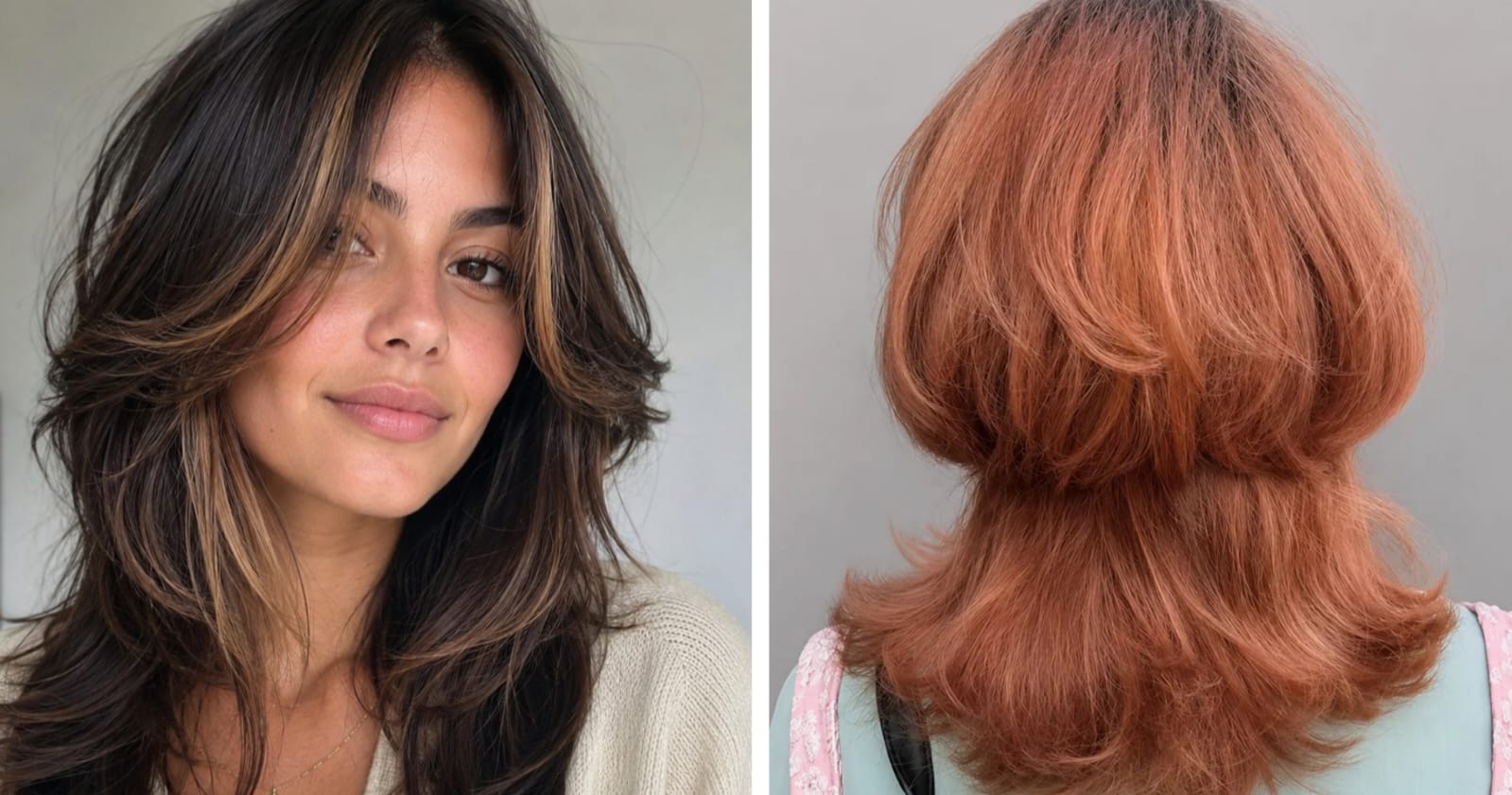
The jellyfish haircut has a structural logic to it that makes immediate sense once you see it up close: a blunt, bowl-like cap on top with long, flowing layers underneath, almost like two distinct haircuts occupying the same head. That contrast is exactly what makes it so versatile — the top section adds shape and weight, while the layers underneath give you movement whether your hair is straight, wavy, or somewhere in between.
If you’ve been drawn to the textured, lived-in energy of wolf cut hairstyles but want something with a cleaner silhouette up top, this might be the cut you’ve been circling around without realizing it. It works across a surprising range of hair types and lengths, and most stylists can adapt it to suit your face shape without losing what makes it distinctive.
The 14 looks below cover everything from soft and romantic to bold and graphic — so whether you want to ease in or go all out, there’s a version here worth bringing to your next appointment.
So What Actually Makes It a “Jellyfish” Cut?
The name makes more sense once you see it from behind. There’s a shorter, rounded section on top — usually somewhere between a bob and a mushroom cut — and then longer layers underneath that hang down and flow freely. The gap between the two sections is intentional. That visible separation, that contrast between structured top and loose flowing bottom, is the entire personality of this haircut.
It shares some DNA with the wolf cut hairstyles that took over a couple years ago — both are heavily layered and lean into movement and texture. But where the wolf cut is shaggy all the way through, the jellyfish has that distinct two-tier structure that makes it look more deliberate, almost architectural.
Celebrity hairstylist Chaz Dean described it well when he said: “The cuts that resonate right now have this quality of looking effortless but clearly thought-through — the jellyfish is a perfect example of that tension between structure and freedom.”
14 Jellyfish Haircut Ideas Worth Trying
1. Classic Blunt Bob Top With Straight Long Layers

This is the version most people picture when they hear “jellyfish cut” — a clean, chin-length blunt bob sitting on top, with long straight layers hanging underneath. No graduation, no blending between the two sections, just a hard visual break. It’s the most graphic version of the cut and it photographs incredibly well. It suits straight hair and oval or heart-shaped faces naturally, and if you want the effect to really land, tell your stylist to keep at least 4 to 6 inches of difference between the top section and the under-layers — anything less and the contrast gets lost.
This style carries the same clean-line energy as inverted bob hairstyles but with a whole second layer of drama happening underneath that completely changes the silhouette.
2. Curly Jellyfish Cut

Curly hair and the jellyfish cut are genuinely made for each other, and I don’t think enough people know this. The top section naturally forms a rounded shape on its own when the curls are defined, and the under-layers spiral out underneath in a way that looks intentional without any extra effort. It works best on 2C to 3B curl patterns where the coil definition is strong enough to make the separation visible. One thing worth mentioning — if your stylist isn’t specifically experienced with curly cuts, push back on dry-cutting. Curl shrinkage is real and it affects both sections of this cut differently, so a stylist who doesn’t account for that can leave the proportions completely off.
While you’re thinking about curly styles, cute hairstyles for curly hair has a lot of inspiration worth looking through — especially if you want to see how different curl patterns handle layered cuts like this one.
3. Wavy Jellyfish With Curtain Bangs

This combination genuinely surprised me when I first saw it done well. Curtain bangs soften the front of the top section, the bob shape gives everything structure, and then wavy under-layers come out underneath with that effortless undone quality that’s really hard to fake. On medium-to-coarse wavy hair with oval or longer face shapes, this version is close to perfect. The bangs do a lot of the work of making the face look framed and balanced without the overall cut feeling heavy.
Frédéric Fekkai, the French-American stylist who’s been behind some of the most iconic hair moments in fashion, put it simply: “When you pair a disconnected layer structure with curtain bangs, you’re creating a frame within a frame — the movement is incredible and it works on almost everyone.”
4. Short Jellyfish — The Mini Version

The version for people who like the concept but aren’t ready to go full commitment. Instead of dramatic waist-length under-layers, this keeps everything at collarbone or shoulder length — the contrast is still there, the structure is still there, but it’s toned down enough to work in professional environments or for anyone who just lives a more practical daily life. Fine hair handles this version especially well because shorter layers don’t weigh themselves down and the shape stays intact between cuts.
5. Jellyfish Cut With Face-Framing Highlights

Color can completely transform how readable the jellyfish structure is. Adding face-framing highlights — money pieces around the front, a balayage that lightens toward the ends, even a soft ombre — creates a second layer of contrast on top of the length contrast that’s already built into the cut. On darker base colors especially, this technique makes the whole two-tier effect dramatically more visible. It works across all hair types and the color maintenance is actually pretty manageable depending on how bold you go.
6. The Mushroom-Bob Jellyfish Hybrid

Two trends that genuinely belong together. The mushroom bob on its own already has that rounded, slightly inward-curving top that’s been everywhere lately — combine it with jellyfish under-layers and you get something that looks way more unique than either cut does alone. The rounded crown creates volume where a lot of people need it most, and the under-layers give you length and movement so the overall silhouette doesn’t feel top-heavy. Fine to medium hair benefits from this version the most because the rounded top section creates visible fullness that’s otherwise hard to achieve.
7. Textured Shaggy Jellyfish

Forget clean lines. This version is all choppy, jagged layers throughout both sections — the top isn’t perfectly blunt, the under-layers aren’t smooth, and somehow the whole thing looks incredible. Thick hair handles this best because there’s enough density to make all that texture visible without the style looking thin or stringy. It’s also genuinely one of the lowest-effort versions to maintain because the texture itself hides grown-out edges in a way that blunt cuts never do.
Jen Atkin, stylist and founder of OUAI, has talked about this approach openly: “When texture is built into the actual cut rather than added with products after, you spend less time styling and the hair just behaves better on its own.”
8. Jellyfish Cut With Blunt Micro Bangs

This is the version for people who were already considering something bold. Micro bangs above the rounded top section create a very specific kind of drama — it’s editorial, it’s striking, and it frames the face in a way that very few cuts can. Oval faces wear this most naturally. The important thing to know going in is that micro bangs require real commitment — they need regular trims to stay at the right length, and growing them out is its own journey. But if you’re ready for that, the visual payoff is genuinely unlike anything else on this list.
9. Long Jellyfish — Waist-Length Under-Layers

For anyone with long hair who’s been nervous about losing their length — this is the version that lets you completely transform your haircut while keeping most of what you have. The top section gets shaped into a shoulder-length or mid-neck bob, and the under-layers stay long, sometimes all the way to the waist. The overall length barely changes because most of what gets cut is the top section only. What you’re left with is a silhouette that looks completely different from every other long hairstyle, with movement that’s hard to describe until you see it in person.
10. Jellyfish Cut on Natural Black Hair

On natural Black hair with a defined wash-and-go or twist-out, this cut does something really special. The coils in the top section naturally pull into a rounded, voluminous shape without any effort, and the longer under-layers beneath create a dramatic length contrast that’s hard to achieve with any other cut. It works beautifully across 4A to 4C textures, but this is one of those cuts where the stylist choice matters more than almost anything else. Someone without specific experience in natural hair cuts can easily misjudge both sections, especially given how much shrinkage affects the visible proportions.
11. Platinum Blonde Jellyfish

The version that made TikTok lose its mind, and honestly for valid reasons. When the entire cut is done in platinum blonde, the separation between the two sections becomes almost surreal — the blunt top section and the flowing under-layers read like they belong to two completely different textures even when they’re the same color. It’s a high-maintenance commitment on the color side, bleach and toner every few weeks to keep the platinum from going brassy, but if you’re someone who’s already living that blonde life, adding the jellyfish structure is a natural next step.
12. Dark Roots + Bleached Ends Jellyfish

This is the version for people who want something interesting without committing to a full bleach process. Dark roots naturally in the top section, lighter or bleached ends in the under-layers — the color does half the work of making the two-tier structure pop without any extra effort. What makes it clever is that regrowth actually improves the look over time rather than ruining it. The darker root gets more prominent as weeks pass and the depth in the top section gets more dramatic. For low-maintenance color people who still want something intentional, this is the sweet spot.
13. Jellyfish Lob (The Wearable Middle Ground)

If there’s one version on this list that works for the widest range of people, it’s this one. The top sits around collarbone length and the under-layers fall to mid-back — there’s real contrast, real drama, but nothing extreme enough to feel impractical. It suits most face shapes, handles most hair textures reasonably well, and grows out gracefully enough that you’re not rushing back to the salon every six weeks. If you’ve been back-and-forth about whether the jellyfish cut is really for you, book this version first. A lot of people who start here end up never wanting to go back to a regular cut.
14. The Asymmetrical Jellyfish

The most daring one. An asymmetrical top section — one side cut shorter than the other — sitting above flowing under-layers that hang evenly. It looks like something off a runway, which is exactly the point. Oval faces wear it most naturally and it genuinely thrives in creative or artistic environments where standing out is a feature rather than something to manage. It’s not a casual everyday cut for most people, but for the right person, it’s one of the most genuinely striking things happening in hair right now.
Mark Townsend, celebrity stylist known for his work with some of Hollywood’s biggest names, said it well: “Asymmetry in a haircut communicates something about the person wearing it — it says they paid attention and made a real choice, not just picked something safe.”
How to Actually Talk to Your Stylist About This Cut
Most miscommunications at the salon happen because “jellyfish cut” means something slightly different to every stylist who’s done it. Walking in with just the name and no context is a gamble. Here’s what actually helps:
Bring multiple reference photos — not just one. Show specifically what you want the top section to look like, and separately show the length and texture you want for the under-layers. Those are two different decisions and treating them separately makes the conversation much clearer.
Be specific about the gap. The disconnect between the two sections — how obvious, how dramatic, how much visible separation — is really the defining characteristic of this cut. If you don’t specify, your stylist will make that call on their own and it might not match what you pictured.
Talk honestly about your texture and how much time you realistically spend styling. The jellyfish cut looks completely different on straight, wavy, and curly hair, and some versions require a diffuser or a round brush every morning while others air-dry beautifully. Knowing which camp you fall into will narrow down the right version for you.
Products That Actually Make This Cut Work
The goal with styling is to make the separation between the two sections visible and intentional-looking — not like two things accidentally happening on the same head.
For the top section, a light-hold mousse or a small amount of styling cream applied before drying helps maintain the shape without going stiff. For the under-layers, a wave spray or curl cream depending on your natural texture keeps the bottom flowing and controls frizz without weighing the layers down. A few drops of finishing oil on the ends of the under-layers is the last step that pulls everything together — it adds shine, defines the ends, and makes the contrast between the two sections look like it was planned that way.
FAQ
Is the jellyfish haircut hard to maintain? Depends on which version you go with. The blunt-top styles need trims every 6 to 8 weeks to stay sharp — when those edges grow out the whole structure starts to look undefined. The textured and shaggy versions are much more forgiving and can go 10 to 12 weeks without looking like they’ve grown out.
Does it work on thin or fine hair? It does, but the under-layers need to stay shorter — collarbone to shoulder at most. Long fine layers go flat and limp quickly, which kills the contrast effect. Shorter under-layers have more natural movement and the structure holds between cuts.
What about wearing it with glasses? It actually works really well with glasses. The rounded top section echoes most frame shapes in a way that feels cohesive, and the length underneath balances the face without adding more visual weight around the eyes where the frames already sit.
Can I get this cut if I already have heavy layers throughout? Your stylist can reshape existing layers into the jellyfish structure in most cases, but the top section usually needs to come shorter to make the disconnect readable. Bring reference photos and ask directly whether your current length and layering allows for it — some situations need a transitional cut first.
How is this different from the wolf cut? The wolf cut layers everything together into one shaggy whole — the texture is consistent from roots to ends. The jellyfish has a real structural break between the top and bottom sections. One feels organic and grown-in, the other feels intentional and designed. Both are great, just different in what they communicate.
Final Thought Before You Book
What makes this cut actually worth considering isn’t the trend factor — it’s that the structure does real work. It creates movement without needing to be styled constantly, it photographs well from every angle, and it has enough variety within the concept that almost anyone can find a version that fits their hair and their life.
Find the variation that matches your texture, be specific with your stylist about what you want the separation to look like, and bring the reference photos. That combination is really all it takes to walk out with exactly what you had in mind.

