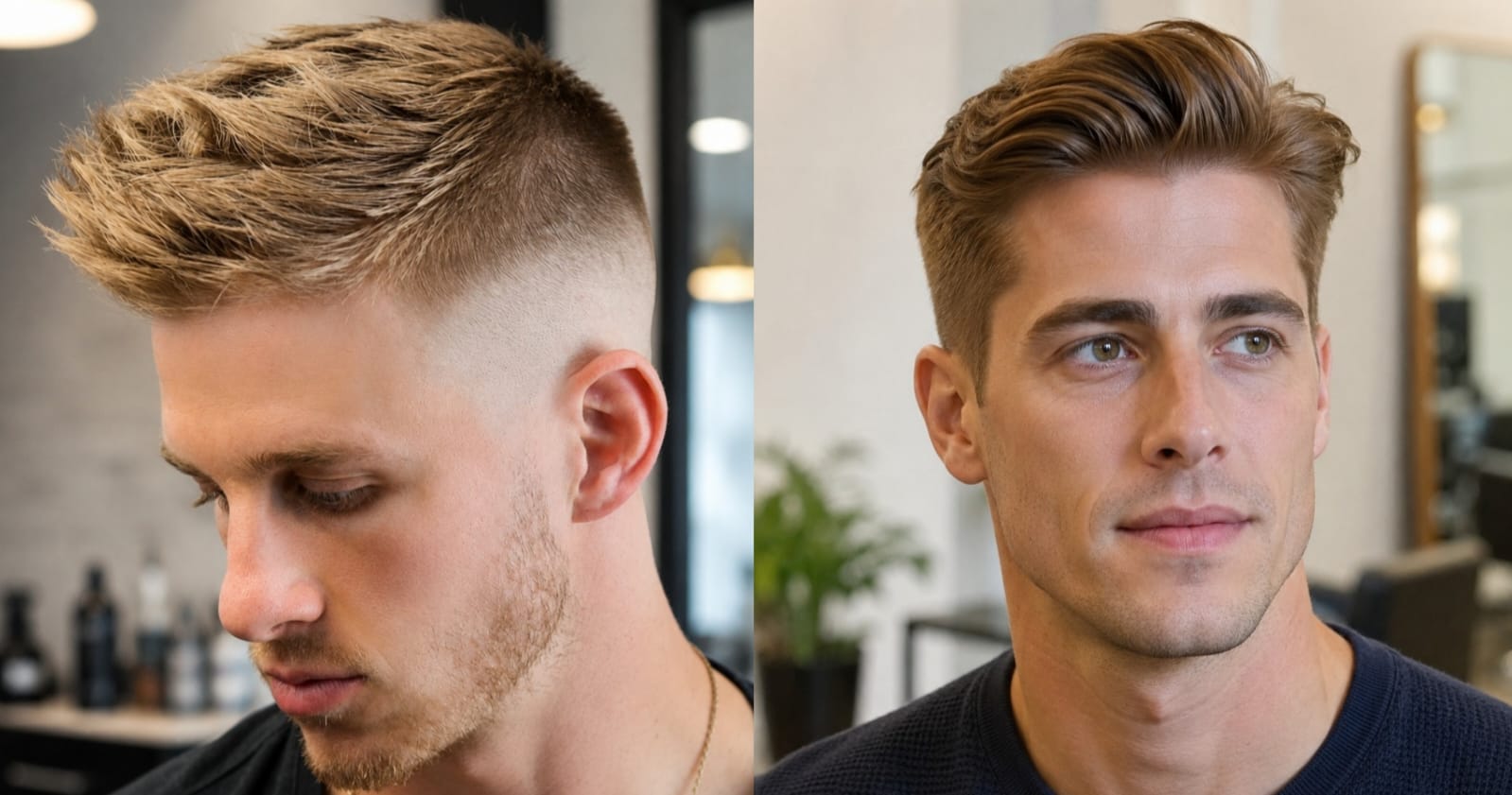
Most men don’t hate their haircut — they just never had one that was actually chosen for them. There’s a real difference between walking out of a barbershop with a cut that fits your face, your texture, and how much time you’re realistically going to spend on it each morning, and walking out with whatever the clippers defaulted to. That gap is what makes one man look sharp in a buzz cut while another looks forgettable in the exact same one.
Short hair is genuinely one of the most forgiving categories in men’s grooming — but only when the details are right. Face shape, hair texture, fade height, product weight: these are the things that turn a basic short cut into something that actually earns a second look. The 15 cuts below cover the full range, from zero-effort to moderate styling, with the specifics that most barber conversations skip straight past.
1. The Classic Buzz Cut

There is a reason this cut never dies. It is the little black dress of men’s hair — simple, always appropriate, and surprisingly flattering when done right. A buzz cut is done using clippers at a near-uniform length, and modern versions include fades, tapers, shape-ups, and beard blending — making it minimal hair with maximum structure. My brother-in-law went buzz when he started thinning at the crown, and instead of hiding it, everything suddenly looked intentional.
- Best face shapes: Oval, square, angular
- Hair texture: All textures
- Maintenance: Low
- Styling difficulty: Easy — no product needed
- Common mistake: Going too short too fast; start with a #2 or #3 guard first
- Pros: Zero morning routine, universally professional, great for thinning hair
- Cons: Very little room to hide an irregular head shape
2. The Buzz Cut with Skin Fade

This is the buzz cut’s sharper, more polished cousin — and it is everywhere right now for good reason. The skin fade buzz cut creates a sharp fade that disappears into the skin, emphasizing structure and symmetry, making it one of the most requested variations for men who want a no-fuss buzz with a more contemporary, modern edge. My neighbor’s son got this for his high school graduation and honestly looked like he’d stepped out of a grooming campaign.
- Best face shapes: Oval and oblong; pair with a beard if face is round
- Hair texture: Best on straight and wavy; curly hair — keep top a guard longer
- Maintenance: Medium
- Styling difficulty: Easy
- Common mistake: Asking for a high fade when low or mid would be more flattering and grow out better
- Pros: Ultra-modern, incredibly clean, pairs beautifully with a beard
- Cons: Requires frequent barber visits to keep the fade sharp
3. The Classic Crew Cut

This is the cut my dad has worn for 40 years — and it never once looked wrong. The crew cut originated with university rowing teams who needed a no-fuss haircut during races, and by the mid-20th century, military establishments embraced it for its disciplined appearance, cementing it as a quintessential men’s haircut. It is short enough to require almost no styling but long enough on top to have actual shape — works in boardrooms, works at barbecues.
- Best face shapes: Oval (any variation); round — add height on top; square — softer edges
- Hair texture: Straight to slightly wavy; thick hair can look boxy without texture on top
- Maintenance: Low–Medium
- Styling difficulty: Easy — a dab of American Crew Forming Cream is all you need
- Common mistake: Letting it grow past its shape before trimming
- Pros: Professional, suits almost any lifestyle, extremely low upkeep
- Cons: Can look uninspired without a fade or texture detail
4. The Taper Fade

If I had to pick one haircut detail that separates a forgettable look from one people actually compliment, it is this. A taper is where the edges of the sideburns and nape are progressively shortened until they fade to nothing — and when added to a classic short cut, it gives a much more modern finish that is a favourite among athletes, actors, and musicians for its incredible versatility. Always tell your barber exactly where you want it — low, mid, or high — or you will get something unexpected every time.
- Best face shapes: Works on virtually all; high taper elongates round faces, low taper softens strong jaws
- Hair texture: All textures; thick hair benefits especially as the taper removes bulk naturally
- Maintenance: Medium
- Styling difficulty: Easy
- Common mistake: Not specifying fade height to your barber
- Pros: Versatile, looks sharp even during grow-out phase
- Cons: A sloppy taper from an unskilled barber looks worse than no fade at all
5. The Textured Crop

This cut replaced the basic short back and sides for most men under 40, and for very good reason. The textured crop with a brushed-up fringe lifts the hair away from the forehead and creates a flattering, face-opening effect, while a fade on the sides adds strong contrast and keeps the style suitable for both casual and semi-formal settings. My husband’s barber uses a razor on the ends to add choppiness — that one small detail is what makes it look intentional rather than just short.
- Best face shapes: Round and short face shapes gain height; oval is ideal
- Hair texture: Thick and medium hair shines here; fine hair needs texturizing spray for body
- Maintenance: Low–Medium
- Styling difficulty: Easy–Medium (blow-dry forward, brush upward)
- Common mistake: Too much product making it stiff instead of naturally textured
- Products: Matte clay or texturizing powder — try American Crew Fiber for thick hair
- Pros: Hides cowlicks well, works for casual and professional settings
- Cons: Needs some morning styling — air drying alone won’t give the shape
6. The French Crop with Taper

The French crop differs from a regular crop by that one defining detail — a short, blunt horizontal fringe sitting just above the forehead. It is bold without being loud. The French Crop with Taper Fade creates a sharp, modern silhouette, and the right choice depends on carefully considering face shape, hair texture, and lifestyle to ensure the style is actually maintainable long term. I have seen this look incredible on men with strong foreheads — it frames the face in a way few other cuts can pull off.
- Best face shapes: Square and oval; draws attention away from a high forehead; avoid if forehead is very small
- Hair texture: Straight to slightly wavy for the cleanest fringe line; fine hair can lack density
- Maintenance: Medium
- Styling difficulty: Easy–Medium
- Common mistake: Letting the fringe grow too long — it blurs the whole look
- Pros: Sharp, modern, surprisingly easy to style daily
- Cons: Requires a confident barber who can cut a clean horizontal fringe line
7. The Side Part

This is the haircut that never gets old because it reads as polished without trying too hard. Like a crew cut but with longer hair on top, the side part is combed to the side for a polished finish — a stellar option for men seeking a casual yet professional look, with trims every four to six weeks and a style that pairs well with suits, sweatpants, and everything in between. A low fade underneath elevates it from dad territory into something genuinely modern.
- Best face shapes: Oval, oblong, square — the part adds asymmetry that flatters strong features
- Hair texture: Best on straight and fine hair; wavy can work with product
- Maintenance: Low–Medium
- Styling difficulty: Easy — pomade or medium-hold cream, a comb, 60 seconds
- Common mistake: Too much product making it look greasy instead of polished
- Products: Layrite Natural Matte Cream or Baxter of California Clay Pomade
- Pros: Works in professional environments, never fully goes out of style
- Cons: Fine hair can lose the part quickly without product throughout the day
8. The Undercut

The undercut is for the man who wants real edge in his haircut but still needs to look put-together at work. The undercut features shaved or short sides with a longer, versatile top — you can slick it back, leave it messy, or add volume, and maintenance involves trims to keep the sides clean while styling options on top are entirely yours. One haircut gives you three or four different looks depending on how you style the top that day.
- Best face shapes: Oval and oblong; dramatic contrast makes round faces look rounder — proceed carefully
- Hair texture: Works beautifully on thick, straight, and wavy hair; not ideal for very fine hair
- Maintenance: Medium
- Styling difficulty: Medium — depends entirely on how you style the top
- Common mistake: Letting the sides grow without trimming — they blend into the top and kill the effect
- Products: Matte pomade for textured look; high-hold gel for slicked-back finish
- Pros: Extremely versatile, works for creative and corporate environments
- Cons: Requires regular trimming or the disconnect between top and sides disappears
9. The Comb-Over Fade

The comb-over fade sounds dated until you actually see it done right — then it clicks completely. The comb-over fade features short sides that fade into a longer top combed neatly to one side, and maintenance involves light styling with pomade and a barber visit every four to six weeks to keep the fade sharp, professional, and suave. This is the updated version of what your grandfather wore — cleaner lines, tighter fade, way less Brylcreem.
- Best face shapes: Most face shapes; swept top adds asymmetry that flatters angular faces especially
- Hair texture: Best on straight and slightly wavy; curly hair loses the comb-over structure
- Maintenance: Medium
- Styling difficulty: Easy–Medium
- Common mistake: Parting too aggressively — a soft natural part looks more modern than a hard ruler-straight line
- Products: American Crew Pomade or any medium-hold, low-shine product
- Pros: Polished and office-appropriate, looks intentionally styled
- Cons: Straight hair can go flat by midday without a quality hold product
10. The Faux Hawk Fade

For the man who wants personality in his haircut but cannot walk into work with an actual mohawk. The faux hawk is a toned-down mohawk with longer hair spiked up in the center — the sides are clipped short, making it edgy but wearable — and it requires some gel or wax, but the results scream personality. When the fade underneath is clean and the top is well-shaped, this cut looks genuinely cool rather than trying-too-hard.
- Best face shapes: Oval and oblong; center height is too elongating for already-long faces
- Hair texture: Medium to thick holds the shape best; fine hair needs strong-hold product constantly
- Maintenance: Medium–High
- Styling difficulty: Medium — requires blow drying top upward and hold product
- Common mistake: Spiking too aggressively — a softer textured lift looks more current than sharp spikes
- Products: Got2b Glued or a matte clay over blow-dried volume
- Pros: Statement haircut, looks great in photos
- Cons: Needs daily effort to maintain the shape on top
11. The Caesar Cut

The Caesar cut gets slept on constantly and I genuinely do not understand why. Short, structured, and with a distinctive forward fringe, the Caesar cut brings a vintage flair with modern simplicity — associated with clean, no-fuss styling that suits men who want structure without daily effort. It looks equally good on a 19-year-old and a 50-year-old — the secret is keeping that fringe line crisp and even.
- Best face shapes: Round and square; horizontal fringe shortens appearance of longer faces too
- Hair texture: Straight and slightly wavy; curly hair makes the fringe choppy unless cut very short
- Maintenance: Low
- Styling difficulty: Easy — wash, dry, done
- Common mistake: Letting the fringe grow too long so it starts flopping forward unevenly
- Products: Minimal — a light matte paste if anything at all
- Pros: Extremely low maintenance, covers forehead insecurities well
- Cons: Can look too severe without some softness around the temples
12. The High and Tight

Military precision meets modern barbering — this is one of the cleanest looks on the entire list. A military-inspired classic, the High and Tight features ultra-short sides with a slightly longer top, delivering a style that is clean, tough, and genuinely low-maintenance with a disciplined, structured appearance. The difference between a sloppy high and tight and a sharp one is entirely in the transition line — that needs to be clean and deliberate.
- Best face shapes: Square and oval; strong jawlines look even sharper with this cut
- Hair texture: All textures; especially good on thick and coarse hair that needs volume control
- Maintenance: Low–Medium
- Styling difficulty: Easy
- Common mistake: The line between high sides and top being blurry — ask for a hard part if needed
- Products: Light paste or nothing at all
- Pros: Very clean, zero styling time, great for active lifestyles
- Cons: Not versatile — essentially one look with no styling variations
13. The Ivy League Cut

If the crew cut had a more ambitious older brother, it would be this. Styles like the Ivy League are widely accepted in professional environments and are considered clean, polished short haircuts that work for office settings without looking stiff or overdone. It is slightly longer on top than a crew cut, which means you can actually part it, sweep it, or add texture — far more versatile than it first appears.
- Best face shapes: Oval and oblong; added length on top elongates round faces flatteringly
- Hair texture: Straight to slightly wavy is ideal; thick hair needs slight thinning on top
- Maintenance: Low–Medium
- Styling difficulty: Easy
- Common mistake: Too much product losing the natural, clean finish that makes this cut charming
- Products: Baxter of California Paste Pomade — light hold, natural finish
- Pros: Professional, versatile, grows out gracefully
- Cons: Not much edge — if personality in a cut is the goal, this is not it
14. The Blowout Low Taper Fade

This one surprised me the first time I saw it done well — it looks like way more effort than it actually takes. The blowout low taper fade gives short cuts a voluminous edge while keeping the neckline and sides tight and clean — combining retro structure with a modern fade and working best on medium to thick hair. The hair on top is blown upward and backward for soft volume that can be worn messy or polished depending on the day.
- Best face shapes: Round and oval; volume on top creates welcome length
- Hair texture: Medium to thick performs best; fine hair needs volume mousse to hold the lift
- Maintenance: Medium
- Styling difficulty: Medium — requires a blow dryer and round brush for proper lift
- Common mistake: Skipping the blow-dry and wondering why the top lies completely flat
- Products: Lightweight styling cream or mousse before blow-drying
- Pros: Voluminous without being high-effort, retro-cool aesthetic
- Cons: Humidity kills this look fast — use a finishing spray in summer
15. The Short Textured Quiff

The quiff is the haircut that says “I know what I am doing” without being try-hard about it. The textured quiff adds a modern twist with short sides and a lifted, voluminous top — the hair is cut close on the back and sides while the front is left long enough to style upward with a blow-dryer and round brush for strong hold, movement, and all-day definition. What I love about this cut is that it works going from a morning coffee run straight to a dinner reservation without touching it again.
- Best face shapes: Round and square — the height creates balance; avoid if face is already very long
- Hair texture: Medium to thick is perfect; fine hair can work with strong-hold mousse but needs effort
- Maintenance: Medium
- Styling difficulty: Medium — blow dryer is non-negotiable for the lift
- Common mistake: Applying clay to air-dried hair — always blow-dry first for proper volume
- Products: Molding paste or medium-hold clay; Kenra Platinum Molding Paste is a stylist favourite
- Pros: Sophisticated, works in nearly every setting, very photogenic
- Cons: Requires a couple of minutes of actual styling each morning — not truly wash-and-go
How to Actually Talk to Your Barber
Walk in with a photo on your phone — not a celebrity with a completely different face shape, but someone with similar features. In much the same way a great suit is tailored to your frame, the right haircut is tailored to your face shape — and knowing how to choose a style that complements your structure is one of the most important parts of getting a cut that is flattering, balanced, and easy to wear. Three words go a long way: “low maintenance,” “needs to look professional,” or “I want some texture.” That is genuinely enough for a good barber to work with.
Frequently Asked Questions
Q: How do I know which short haircut suits my face shape? Oval faces are the jackpot — almost any cut works. Round faces need height on top and shorter sides. Square faces look best with texture and softness rather than tight, boxy cuts. Long faces should avoid extra height and focus on adding width instead. When in doubt, a taper fade works on pretty much everyone.
Q: How often should men get a haircut to keep short styles looking sharp? Skin fades and buzz cuts need touching up every 2–3 weeks or they blur fast. Crew cuts and Ivy League styles stay fresh for 4–6 weeks. Textured crops and quiffs can go 4–5 weeks between trims. General rule — when it stops looking like a haircut and starts looking like regrowth, it is time.
Q: What is the best low-maintenance short haircut for men? The buzz cut is the undisputed king of low maintenance, especially with a simple taper. The crew cut is a close second if you want something with slightly more shape. Both require minimal product and grow out cleanly without looking unkempt too fast.
Q: What products work best for short men’s haircuts? Matte clay is the most versatile product for short hair — hold and texture without shine or stiffness. Layrite Natural Matte Cream and American Crew Fiber are reliable choices barbers consistently recommend. For volume-heavy styles like the quiff or blowout, a lightweight mousse before blow-drying makes a huge difference.
The Bottom Line
The best haircut is not the most trending one — it is the one that makes the man wearing it feel like the best version of himself. Start with face shape, factor in texture, be honest about how much time is realistically going on grooming each morning, and find a barber you actually trust. That combination beats scrolling through styles and hoping for the best every single time.

