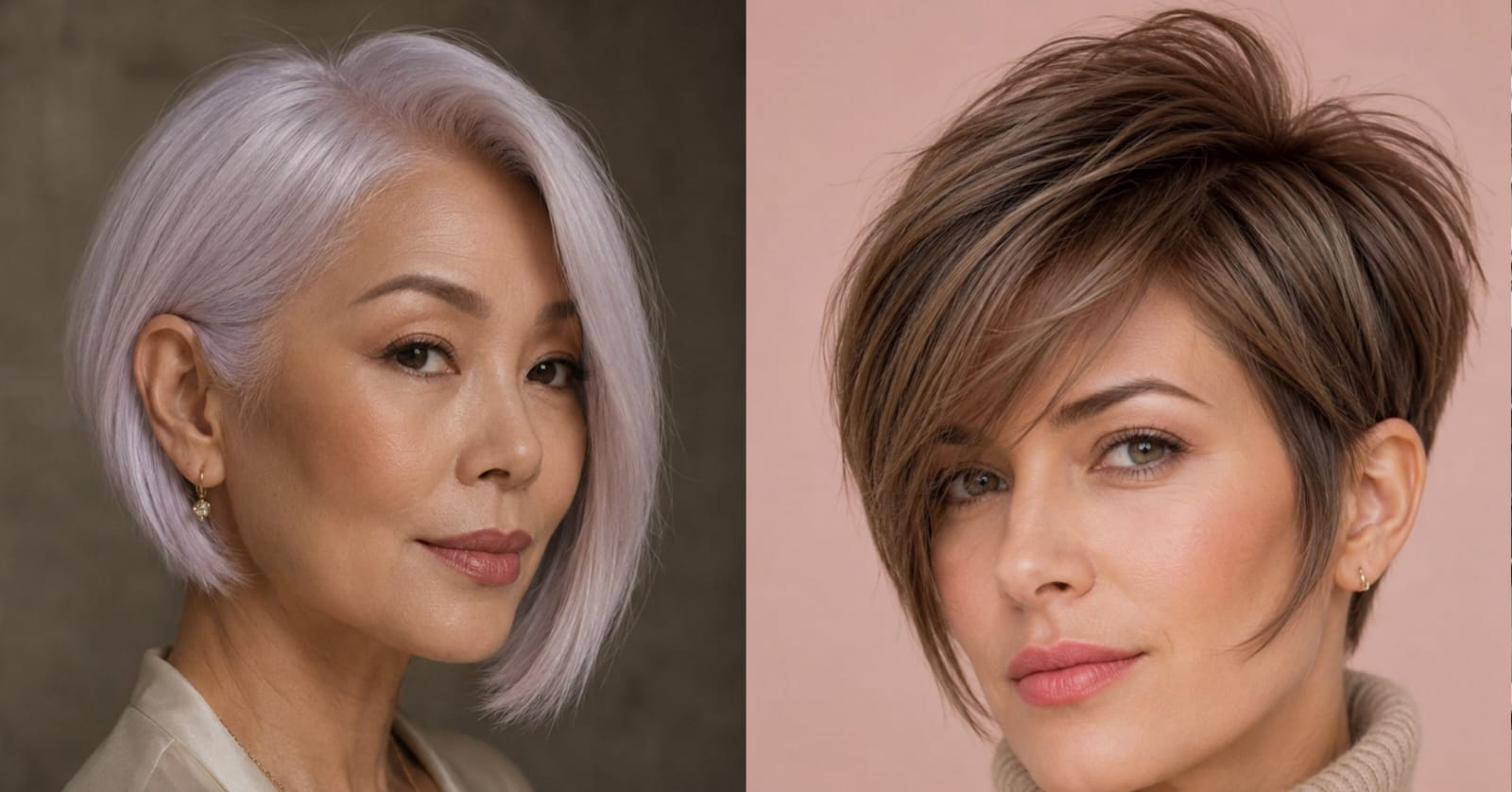
Short hair gets blamed for a lot: too hard to style, too limiting, too “safe.” None of that holds up once you look at what’s actually happening with short cuts right now. A well-cut bob or pixie takes less product, less heat, and less morning time than most long-hair routines, and it still photographs sharper on camera than a lot of longer styles do.
The catch is that “short hair” isn’t one haircut, it’s a whole category, and the version that works depends on your face shape, your hair texture, and how much daily styling you’re actually willing to do. If your face shape is round and you want cuts built specifically around that, our guide to short haircuts for women with a round face goes deeper into that pairing.
These 20 looks cover the range, from low-maintenance everyday cuts to versions with a little more edge, so you can find the one that fits your actual life and not just your Pinterest board.
Why Short Hair Gets Underestimated
People assume short hair limits your options. After living with it, I completely disagree. When your hair is short, the cut itself carries the entire look. There’s a clarity to it that long hair simply doesn’t have — every style lands with more impact because nothing is diluted by extra length.
You just have to find the right style for your face, your texture, and honestly, your patience level in the morning.
Pixie Cuts
1. The Classic Pixie

This cut is cropped close on the sides and back with a little more length sitting on top. It’s sharp, clean, and once you find a stylist who actually knows how to cut it, surprisingly easy to maintain day to day. Oval and heart-shaped faces tend to wear it best, though it really comes down to confidence more than face shape.
Nobody tells you about the adjustment period. The first two weeks you keep reaching back for a ponytail that no longer exists. Push through that phase before forming any opinion about the cut — because around week three, something clicks and you start to genuinely love it.
2. The Textured Pixie

Same structure as the classic, but the stylist adds choppy, uneven layers across the top that break up the weight and add dimension. For anyone with thick hair, this version is a game changer because those layers pull out the bulk without flattening the shape. A small pinch of matte pomade through the ends seals the whole look.
The thing I like most about this style is how deliberately casual it looks. Like you woke up, ran your fingers through it once, and walked out the door. Getting to that point actually takes a little practice, but once you figure out the product and the technique, it becomes your quickest morning routine.
3. The Long Pixie

If committing to a full crop feels terrifying, start here. The top section stays around three to four inches long while the sides and back are kept tight. That extra length on top gives you options — you can sweep it to the side, push it back, or curl the front slightly for something more dressed up.
It sits right at that comfortable intersection between bold and approachable. You get nearly all the low-maintenance benefits of a short cut while keeping just enough length to feel like yourself during the transition. A side-swept fringe works beautifully here and softens the whole look considerably.
4. The Undercut Pixie

The undercut version keeps everything closely shaved or cropped underneath while the top section stays full and longer. That contrast between the two sections is what makes this style so visually interesting — it has an edge to it that other pixie variations don’t quite reach.
Practically speaking, it’s also incredibly comfortable in warmer months when you want your neck completely free. The undercut section grows back faster than you’d expect, so plan for touch-ups every three to four weeks to keep that contrast defined. Between appointments, the top length carries the entire look on its own.
Bob Variations
5. The Classic Bob

Jaw length, blunt all the way around, completely even. This cut has been coming back every decade for a reason — it works on a wide range of face shapes and it carries itself without needing much daily effort. Round and square faces particularly benefit from it because the angle pulls the eye downward and adds visual length.
The versatility is what keeps people loyal to it. Blow it out straight and smooth for something professional. Hit it with a texturizing spray and scrunch slightly for the weekend. Same haircut, completely different feeling depending on how you finish it.
6. The French Bob

Shorter than a classic bob — sitting just under the cheekbone — and almost always worn with a blunt, full fringe. There’s something very intentional about the way this cut sits. It looks like a decision, not an accident, and that deliberateness is what makes it so striking on the right person.
It does require confidence because between the short length and the full bang, your face is very much on display. But when it’s cut correctly for your features, it generates more compliments than almost any other short style. People notice it immediately.
7. The Asymmetrical Bob

One side longer, one side shorter — and the whole style lives in that imbalance. The asymmetry creates movement and visual interest without needing any waves, curls, or layering. The geometry of the cut handles everything, which makes it one of those styles that looks great even on completely unstyled hair.
Straight hair shows the contrast most cleanly. On wavy hair the effect can become unpredictable depending on how your waves fall, so worth having an honest conversation with your stylist about whether asymmetry will behave the way you’re imagining before committing.
8. The Wavy Bob

A jaw-length bob worn with loose, relaxed waves rather than the usual sleek blowout. The texture shifts the whole vibe from polished to effortless, and if your hair has natural wave to it, this style essentially does itself after a good cut. The wash-and-go factor is very real.
For straight hair, a one-inch curling wand and some sea salt spray gets you there in about ten minutes. The waves don’t need to be uniform or perfect — slightly uneven and a little undone is actually what you’re going for with this one.
9. The Stacked Bob

The back is cut with short, graduated layers that stack on top of each other and build real volume, while the front sections stay longer to frame the face. The silhouette from behind is distinctly rounded in a very satisfying way, and it holds its structure throughout the day better than most other bob variations.
Fine hair genuinely benefits from this cut more than almost any other style. That stacking at the back creates the appearance of thickness that fine-haired people spend years chasing with products. The shape does the heavy lifting so you barely need anything on top of it.
10. The Inverted Bob

The reverse of the stacked approach — shorter at the back, graduating longer toward the front. The angle is sharper and more architectural, and it creates a silhouette that looks polished from every direction. It’s the version for people who want a bob that reads as deliberate and fashion-forward rather than classic.
The back angle needs consistent trims to stay sharp, so factor that into your maintenance schedule. But the front length gives you flexibility on days when you want to change things up slightly without the cut feeling restrictive.
Shaggy and Layered Styles
11. The Shag Cut

Heavy layers, choppy ends, and almost always a curtain fringe that splits down the middle. The shag embraces mess in a way that feels very intentional — controlled chaos is probably the best description. On wavy or curly hair it’s particularly stunning because the natural texture just amplifies everything the cut is doing.
Styling takes almost no effort. Scrunch a light mousse through damp hair and let it air dry. That’s genuinely it. The shag rewards the people who touch their hair the least while it’s drying, which makes it one of the most honest low-maintenance styles on this entire list.
12. The Bixie

Sitting somewhere between a bob and a pixie — shorter than one, longer than the other. It usually lands around the ear and upper neck, and it gives you a cut that reads clearly as short without fully committing to a crop. You can tuck it behind your ear, leave it forward, or push it back depending on the day.
This became genuinely popular because it removes the pressure of the pixie commitment while still delivering most of the low-maintenance benefits. People who are nervous about going short often land here and end up staying for a long time because it suits such a wide range of faces and textures.
13. The Layered Lob

When the lob is cut short enough to just graze the tops of your shoulders, it stops behaving like a medium-length style and starts acting like a proper short cut. Layers through the body prevent it from sitting heavy or looking like a blunt one-length chop. It moves, it has lightness to it, and almost every face shape wears it comfortably.
If you are genuinely nervous about going short for the first time, this is where I would tell you to start. You get all the freshness and ease of a short style without the dramatic shift that comes with anything above the jaw. It grows out gracefully too, which matters.
14. The Wolf Cut

Shag layers combined with a strong curtain fringe and serious volume pushed up at the crown. The shorter version — ending around the jaw and neck — has a very rock-and-roll energy that somehow translates across casual and dressed-up occasions without looking like you tried too hard.
Thick hair carries this cut most naturally because the layers need some weight behind them to fall the way they should. On finer hair, a volumizing mousse at the roots before diffusing keeps the crown lifted and prevents it from going flat by midday.
Curly and Natural Short Styles
15. The Curly Pixie

Curly hair and short cuts work together in a way that genuinely surprised me when I first saw it up close. The curl pattern becomes the entire focal point of the style — there’s no length pulling it down or diluting it. A curly pixie is one of those cuts where your natural texture stops being something you manage and starts being something you actually show off.
Curl cream on damp hair, scrunch upward from the ends, and leave it completely alone while it dries. Touching curly hair mid-dry is what creates frizz. Let the process finish on its own and the definition that comes through is worth the patience.
16. The TWA

A close-cropped natural style for Type 4 hair that is far bolder and more beautiful than most people expect before they try it. The cut removes all the length that can sometimes obscure your features and suddenly your cheekbones, eyes, and jawline have nowhere to hide — in the best possible way. People who make this cut often describe it as the first time they genuinely saw their own face clearly.
Keeping it healthy is mostly about moisture. A leave-in conditioner and a light sealing oil maintain definition and prevent the dryness that makes tight curl patterns look dull. A satin bonnet at night protects everything you put in during the day.
17. The Short Curly Bob

Chin to jaw length, worn completely natural. The curls spring upward as they dry and create a full, rounded shape that looks considered and put-together without any straightening or heat involved. The curl is the style — everything else just supports it.
Diffuse on low heat if time is short, or air dry if you have it. Either way, scrunch out any crunchiness once the hair is completely dry before you leave the house. The whole routine from wash to out the door runs about ten minutes once you know your curl’s behavior.
Sleek and Polished Short Styles
18. The Sleek Side Part

Less a cut and more a styling decision that completely transforms whatever short style you already have. A fine-tooth comb, a small amount of smoothing serum, and a deliberate side part shift any casual short cut into something that reads as intentional and put-together. Five minutes, no extra tools needed.
The depth of the part controls how dramatic the result is. A slight part is subtle and professional. A deep, exaggerated part pushed far to one side leans more editorial and striking. The same technique works across both ends of that spectrum depending on what you need that day.
19. The Slicked-Back Pixie

Everything pushed back with a medium-hold gel or pomade, smooth and flat against the head. Nothing moves, nothing is loose — every strand sits exactly where you placed it. It has a very architectural quality that reads as intentional and confident rather than severe.
This is not an everyday style for most people, but for an event or an evening out it lands with real impact. The product choice matters here — medium hold that dries with a slight sheen looks polished. Anything that goes fully crunchy or shiny will undercut the whole effect.
20. The Finger-Waved Short Style

Old Hollywood technique that involves pressing deep S-shaped waves close against the head using a setting spray and either your fingers or a fine comb, then allowing them to dry in place. On a short bob or pixie it looks genuinely glamorous — the kind of style that makes short hair look undeniably sophisticated.
It looks harder than it is. A couple of practice runs at home before any important occasion is all it takes to get the motion right. Lock the finished waves with a light-hold finishing spray and they hold through an entire evening without lifting or losing their shape.
Choosing the Right Cut for You
Face shape gives you a starting point, not a verdict. Oval faces wear almost everything well. Round faces benefit from height at the crown and cuts that avoid adding width at the sides. Square faces soften beautifully with layered, textured styles that break up the angles. Heart-shaped faces look great with anything that adds volume near the jaw.
Texture matters just as much, sometimes more. Fine hair needs blunt cuts and stacking to look full. Thick hair needs thinning and layers to remove weight and sit properly. Curly hair needs a stylist who actually specializes in curls — not every stylist does, regardless of what they tell you. Ask to see their work before you sit down.
What You Actually Need on Your Shelf
Short hair needs very little. Matte pomade for texture and separation on pixie styles. Curl cream for any natural texture cut. Light-hold spray wax for a tousled, undone finish on bobs and shags. Smoothing serum for sleek styles. Dry shampoo to carry you into day two without the roots going flat.
Start with less product than you think you need. Short hair shows buildup immediately and a heavy hand ruins the shape fast. A pea-sized amount of almost any product is enough — add more only if you genuinely need it after seeing how the first bit sits.
FAQ
Does short hair actually suit everyone?
With the right cut chosen for your specific features, yes. A bad short haircut is almost always a cut that wasn’t right for that particular face — not a failure of short hair as a category. A good stylist helps you identify which styles will actually flatter you rather than just cutting what you ask for.
Will short hair make me look older?
The cut determines that entirely. Choppy, textured styles with movement look youthful on almost anyone. Severe, stiff cuts with no softness can add years. Keep the lines soft, add some texture, and avoid anything that sits too tight or rigid against your face.
How much time does styling actually take?
Genuinely five to ten minutes for most short styles with the right product. Even sleek, polished looks that require a flat iron take three minutes maximum when your hair is short. The brevity of the morning routine is one of the most underrated benefits of the whole thing.
How often do trims need to happen?
Pixies need attention every four to six weeks. Bobs and lobs every six to eight. Short hair loses its shape visibly and quickly — you notice a missed trim on short hair far sooner than you would on long hair where the growth just adds length.
Final Thoughts
Getting that first short cut right is everything. Once the shape is correct for your face and texture, the daily effort drops dramatically and you stop overthinking your hair every morning. That mental quiet is something nobody mentions when they talk about going short — but it might be the best part of the whole experience.

