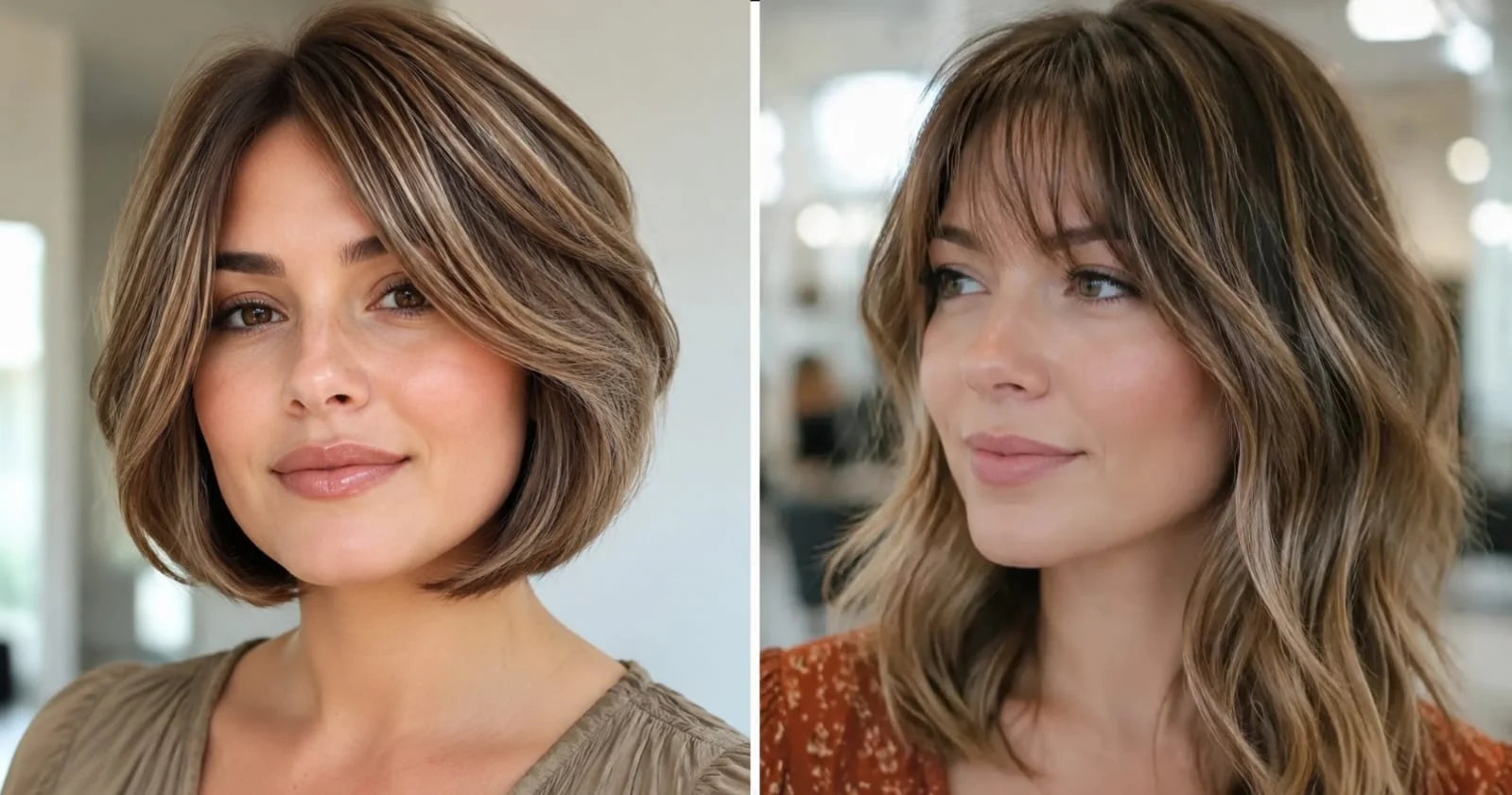
Thin hair has a reputation for going flat by noon, but the truth is, most of that comes down to the cut, not the hair itself. A blunt line holds density where a heavily layered one won’t, and the right length can shift how much weight your roots are fighting against all day. Get the structure right, and thin strands can look every bit as full as thicker hair.
Below are 15 volumizing haircuts for thin hair that stylists reach for again and again, from short pixies that cut weight entirely to longer layered shapes that build lift at the crown. If you want more length-specific inspiration once you’ve narrowed things down, this guide to haircuts for fine hair is a good next stop. Each entry below covers what the cut is, who it flatters, and how to actually get volume out of it at home.
1. Textured Bob

A chin-to-jaw length textured bob is one of the most reliable volumizers because shorter hair carries less weight, so it can’t drag itself flat the way long hair does. Soft, face-framing layers add movement without stripping out the density a blunt line gives you.
This works best on straight-to-wavy thin hair and rounder or longer face shapes, since the width at jaw level adds visual balance.
Book a trim every 6-8 weeks — a textured bob loses its shape and starts looking stringy right around week nine.
2. Shag with Curtain Bangs

The shag is built on choppy, disconnected layers that create the illusion of thickness by giving each section its own movement instead of one heavy sheet of hair. Curtain bangs soften the face and add extra fullness right at the hairline.
It suits medium-to-long thin hair and works across face shapes, since the bangs can be tailored to frame differently.
Avoid asking for too many layers too close together. On thin hair, dense layering thins out the ends until they look wispy instead of textured — tell your stylist to keep layers longer and more blended.
3. Long Layers with Face-Framing Pieces

Long layers cut in strategically — not all over — remove just enough weight to let hair bounce instead of hang. Face-framing pieces around the cheekbones draw the eye and disguise thin patches near the temples, a trick also used in styles like updos for fine, thin hair when hair is pulled back.
This is a strong option if you’re not ready to cut off length but still want lift.
Ask your colorist for subtle root shadowing along the part — visible scalp under thin, one-tone hair reads as flatter than it is.
4. Blunt Lob (No Layers)

Counterintuitively, cutting thin hair with zero layers can be one of the most volumizing choices. A blunt, one-length lob keeps every strand at the same weight, so the ends look thick and solid instead of feathered off into nothing.
It flatters most face shapes and works especially well on fine, straight hair that doesn’t hold curl well anyway.
Don’t let the cut grow out unevenly. Because there’s no layering to hide growth, a blunt lob needs a trim every 6 weeks or the ends start looking uneven and thin.
5. Layered Pixie

A pixie cut is one of the shortest routes to visible volume because there’s simply less hair weight fighting gravity. Layering through the crown lifts roots and gives the top of the head shape and height.
This suits women who want a low-effort daily routine and don’t mind more frequent salon visits — it’s especially popular for thin hair that’s also thinning with age.
Trim every 4-6 weeks. Pixies grow out of shape faster than any other cut on this list because the structure depends on precise length at the crown and nape.
6. Bubble Bob

The bubble bob is a rounded, under-flipped bob where the ends curve slightly inward, creating a soft, ball-like silhouette that reads as noticeably fuller than a straight-cut bob. The rounded shape catches light differently at the ends, which visually adds thickness.
It works on straight to slightly wavy thin hair and tends to suit oval and heart face shapes best.
Don’t skip a round brush blowout. This cut is engineered for the bend at the ends — worn straight with no styling, it loses most of its volumizing effect.
7. Wolf Cut

The wolf cut combines short, choppy layers on top (mullet-inspired) with longer shag-style pieces underneath. The heavy layering at the crown specifically targets the area where thin hair goes flattest first — right at the roots.
It’s best for medium-to-long thin hair and works particularly well if you like a slightly edgy, undone look.
Use a texturizing spray at the roots before drying, not after — it lifts the base layers instead of just coating the surface.
8. Shoulder-Length Cut with Wispy Bangs

Shoulder-length hair sits at a sweet spot: long enough to style, short enough that it doesn’t collapse under its own weight the way waist-length thin hair does. Wispy bangs add fullness at the forehead without the heaviness of a full, blunt fringe.
This flatters nearly every face shape and is a solid pick if you want length without sacrificing lift.
Avoid cutting bangs too thick. On fine hair, dense bangs look patchy rather than full — ask for them cut wispy and slightly piecey instead.
9. Asymmetrical Bob

An asymmetrical bob is cut shorter on one side and longer on the other, which breaks up the visual monotony of thin hair lying flat and even. The uneven line tricks the eye into perceiving more density and movement than a symmetrical cut would.
It’s particularly flattering on round and square face shapes, where the diagonal line adds definition.
Trim every 6-7 weeks to preserve the asymmetry — because the two sides grow at different visual rates relative to the style, it looks “off” faster than a symmetrical bob does.
10. Curly Cut with Diffused Layers

For naturally curly or wavy thin hair, layering has to be handled differently — too many layers can make curls look sparse, while too few can weigh the curl pattern down. A diffused, curl-by-curl cut removes bulk only where needed and lets natural texture do the volumizing work.
This is specifically for curly and coily thin hair textures, not straight hair.
Always diffuse upside-down at the roots on low heat — this is the single biggest lever for volume on curly, fine hair, more than the cut itself.
11. Side-Parted Deep-Part Pixie

A deep side part on a pixie cut shifts more hair to one side, building height and dimension right at the crown where a center part would otherwise lie flat. Choppy layers through the length add texture without adding weight.
It suits women who want a bold, editorial short style and have an oval or heart-shaped face that can handle the asymmetry.
Don’t blow-dry straight down. This cut needs to be dried against the direction of the part, lifting at the root, or the deep-part effect disappears within an hour.
12. Blowout-Friendly One-Length Cut with Root Lift

This is a one-length cut — no heavy layering — specifically styled with a root-lift blowout technique, where hair is dried upward and away from the scalp before falling into place. It proves that sometimes the styling method matters as much as the cut itself.
It works on any length of thin, straight-to-wavy hair and is a favorite for women who want a polished, “done” look for work or events.
Invest in a volumizing mousse applied to roots only, not lengths — product at the ends adds weight and cancels out the lift you just created.
13. French Bob

The French bob is a blunt, chin-to-cheekbone length cut with minimal to no layering, often paired with soft, curtain-style bangs. The density comes from the blunt line itself — every strand ends at the same point, creating a thicker-looking edge.
It flatters oval, heart, and square face shapes and pairs especially well with straight, fine hair.
Avoid over-texturizing the ends with a razor. Even light razoring on thin hair thins the perimeter and undoes the density the blunt cut is meant to create.
14. Feathered Layers

Feathered layers are cut at an angle so the ends taper softly rather than blunt off, adding movement through the mid-lengths while keeping enough weight at the root to avoid looking sparse. It’s a middle-ground option between a blunt cut and a heavily layered shag.
This suits medium-to-long thin hair and is especially good for hair that tends to look stringy rather than genuinely thin — the feathering breaks up that stringiness.
A light-hold sea salt spray on damp hair before blow-drying helps the feathered ends hold separation instead of clumping together.
15. Undercut Bob (Graduated Bob)

A graduated bob is stacked shorter at the back and gradually lengthens toward the front, building visible bulk at the nape and crown — the two spots where thin hair typically looks thinnest from behind. The graduation does the volumizing work structurally, not just through styling.
It’s best for straight or slightly wavy thin hair and works well on rounder face shapes since the front length balances the width.
Don’t let a stylist over-thin the stacked layers at the back with thinning shears — on already-fine hair, this removes exactly the bulk the cut is designed to create.
How to Pick the Right Volumizing Cut for Your Hair
Start with length: shorter cuts (pixies, bobs) volumize through less overall weight, while longer cuts (shags, wolf cuts, layered styles) volumize through strategic layering at the crown. If your hair is also thinning with age, shorter, more structured cuts tend to hold shape longer between salon visits than long, layered ones.
Texture matters just as much as length — curly and wavy hair needs different layering logic than straight hair, since curl pattern already adds some natural volume that a cut shouldn’t fight against.
FAQ
What haircut makes thin hair look thicker?
Blunt cuts with minimal layering — like a blunt lob, French bob, or graduated bob — tend to make thin hair look thickest, since every strand ends at the same weight instead of tapering off into wisps.
Does cutting thin hair shorter make it look fuller?
Generally yes. Shorter hair carries less of its own weight, so it doesn’t collapse or go flat the way long, thin hair does — pixies and bobs are consistently the top-recommended lengths for volume.
How often should thin hair be trimmed to maintain volume?
Most volumizing cuts need a trim every 6-8 weeks, with shorter, more structured styles like pixies needing them closer to every 4-6 weeks to keep their shape.
Should thin hair avoid layers completely?
Not entirely — the issue is too many layers cut too close together, which strips out density and leaves the ends looking sparse. A few strategic layers, kept longer and more blended, can add movement without sacrificing thickness.
What haircuts should you avoid if you have thin hair?
Steer clear of heavily razored cuts, ultra-thinned ends, and very long, one-length styles with no shape — all three remove weight from hair that can’t afford to lose any, leaving it looking limp rather than lifted.
Is long hair or short hair better for thin, fine strands?
Short-to-medium lengths generally hold volume better, since gravity has less hair to pull flat. Long hair can still work, but it needs internal layering and regular upkeep to avoid pulling flat at the roots.
Final Thoughts
At the end of the day, volume for thin hair comes down to the cut, not the products sitting on your shelf. Whether you go short with a pixie or bob, or keep length with a shag or wolf cut, the goal is the same: remove weight where it’s dragging hair down and build it back up where it counts, at the crown and along the perimeter.
Take this list to your next salon visit, bring reference photos, and don’t be afraid to ask your stylist exactly where they’re placing layers and why — that conversation is often the difference between a cut that looks full in the mirror and one that only looks full in the picture.

