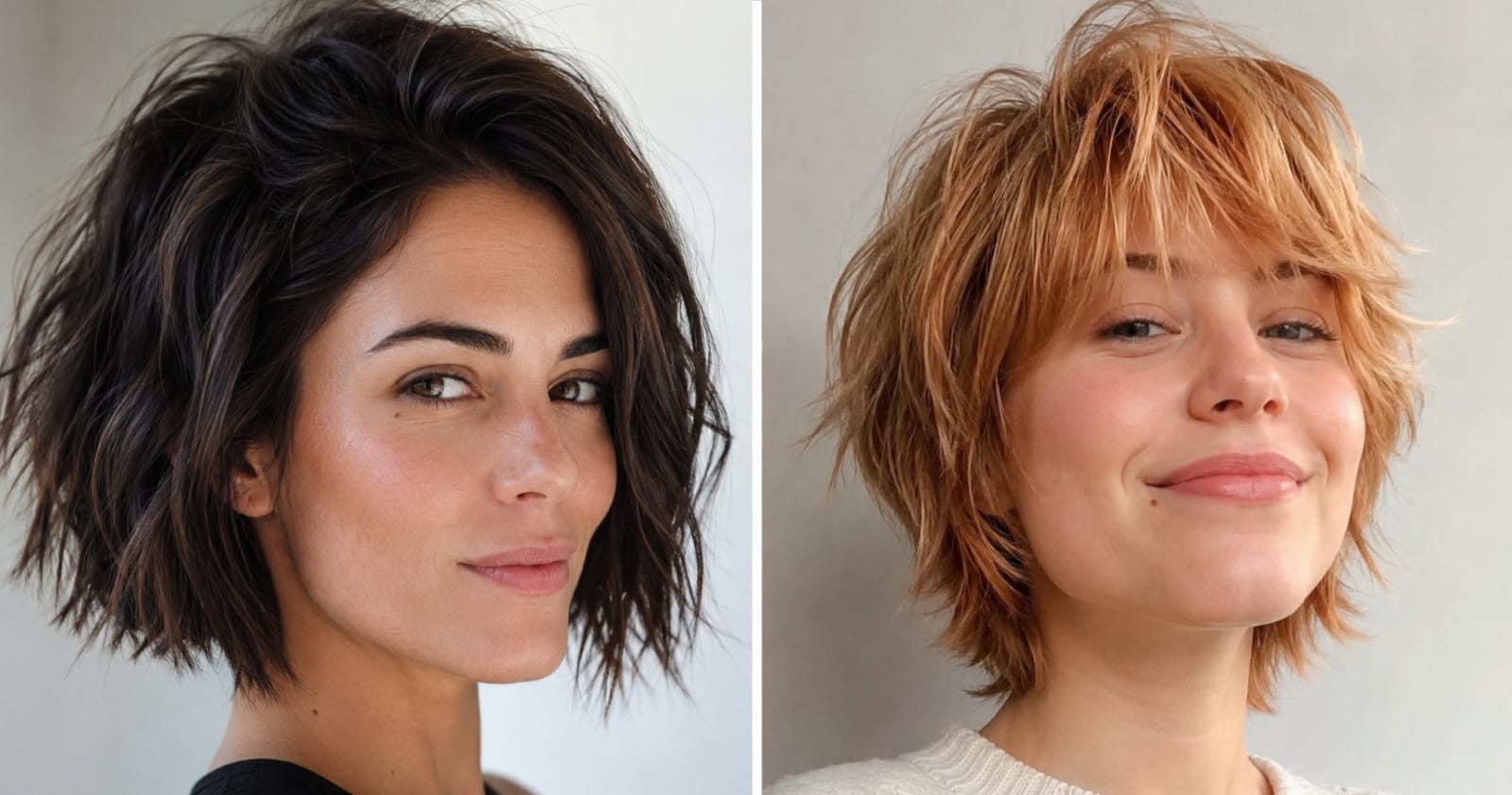
A layered bob has one job that a blunt bob doesn’t: it has to move. Cut a bob with one flat line and it sits like a helmet until it’s styled within an inch of its life. Add layers in the right places and the cut does some of the work itself — it falls, it separates, it catches air when you walk. That’s really the whole story behind why this shape works on so many different people. It’s not that layers are universally flattering by accident; it’s that layering lets you adjust weight and movement to match what your hair is actually doing, instead of forcing every head into the same silhouette.
That’s the angle most “best bob haircuts” roundups skip. They’ll show you ten pretty photos and call it a day, but they won’t tell you that a stacked layered bob and a soft layered bob aren’t interchangeable — one builds volume at the crown by removing length underneath, the other removes weight evenly so fine hair doesn’t look flat. Picking the wrong one for your density is the most common reason a bob “looks right in the salon” and wrong three days later. If you’re also weighing a longer option, a choppy version, or you’re working with thin or fine hair specifically, it’s worth understanding the structural differences before you sit in the chair.
Below are ten layered bob variations, what each one is actually doing to your hair’s weight distribution, and who tends to get the best results from it.
1. The stacked layered bob

Short layers are concentrated at the back, getting progressively longer toward the front, which stacks volume at the crown and nape rather than letting it pool at the ends. It’s the layered bob built specifically for hair that goes limp by midday. Best for fine to medium hair and oval or heart-shaped faces, since the back volume balances a narrower jaw.
How To Style:
- Rough-dry with a round brush, lifting at the roots in the back section.
- Set the back panels in velcro rollers while you finish your makeup.
- Release rollers and rake fingers through gently — don’t brush it flat.
- Mist with a light-hold spray at the roots only.
Best For: Oval, heart, and round faces; fine to medium density.
Tools & Products: Round brush (1.5″), velcro rollers, root-lift spray, flexible-hold finishing spray.
2. Curtain bangs with a layered bob

The bangs are cut on a diagonal, longest at the cheekbone and shortest in the center part, so they blend into the bob’s side layers instead of reading as a separate piece. This is the rare combination that softens a square jaw and shortens a long forehead at the same time, because the diagonal line breaks up both. Works on nearly every face shape except very round, where the extra width at the cheek can widen things further.
Quick Styling Note: Blow-dry the bangs away from your face first with a paddle brush, then curl the ends back toward your cheek — drying them straight down is the most common reason curtain bangs look flat instead of swooped.
3. Choppy textured bob

Heavy point-cutting throughout removes weight unevenly on purpose, creating a piecey, slightly undone finish rather than one continuous layer line. The texture does the heavy lifting, so even a simple air-dry looks intentional. Best for thick or coarse hair that tends to look bulky in a smooth, one-length bob, and for square or rectangular faces that benefit from a broken-up edge.
How To Style:
- Apply a texturizing cream to damp hair, focusing on the ends.
- Air-dry or diffuse, scrunching upward rather than smoothing down.
- Twist a few random pieces around your finger for extra separation.
- Finish with a matte pomade worked only into the tips.
Best For: Square and rectangular faces; thick or coarse hair.
Tools & Products: Texturizing cream, diffuser attachment, matte pomade.
4. Soft layered bob for fine hair

This one uses long, subtle layers — barely visible compared to a stacked cut — because fine hair loses density fast when you remove too much weight at once. The goal isn’t movement for movement’s sake; it’s the illusion of more hair without the layer lines becoming visible gaps. Best for fine, straight hair and most face shapes, since the effect is gentle rather than face-shape-specific.
Quick Styling Note: Skip heavy serums, which weigh fine hair down — a lightweight mousse on damp hair before blow-drying does more for the illusion of thickness than any post-styling product can fix afterward.
5. Asymmetrical layered bob

One side is cut noticeably shorter than the other, with layers blended through both lengths so the imbalance looks deliberate rather than like a bad haircut day. It’s the layered bob most likely to make a symmetrical face look more dynamic, and it tends to suit oval and oblong faces best, since the angle adds width where a longer face needs it.
How To Style:
- Part hair on the side opposite the shorter length.
- Blow-dry the longer side under with a round brush.
- Tuck the shorter side behind the ear, or let it fall free for a more undone look.
- Set with a light flexible-hold spray.
Best For: Oval and oblong faces; medium to thick hair.
Tools & Products: Round brush, flexible-hold hairspray, edge control or smoothing balm for shorter pieces..
6. Face-framing layered bob

Long layers are concentrated at the front, cut to land at the jaw, chin, or cheekbone depending on what needs softening, while the back stays slightly shorter and more solid. Unlike curtain bangs, there’s no fringe involved — the framing comes entirely from the layer placement around the face. Especially good for round or square faces, since the angled pieces create a visual taper the rest of the cut doesn’t have.
Quick Styling Note: Curl the face-framing pieces away from your face, not toward it — curling toward the face shortens it visually, which defeats the point of the layer placement.
7. Layered bob for curly or wavy hair

Layers here are cut dry, curl by curl, because curly hair springs up significantly from its wet length and a wet cut almost always ends up shorter and more uneven than planned. The layering removes bulk at the bottom of the curl pattern, where curls tend to clump into a triangle shape otherwise. Suits nearly all face shapes; the main variable is curl pattern, not face shape, since looser waves and tighter coils need different layer spacing.
How To Style:
- Apply curl cream to soaking-wet hair, working in sections.
- Diffuse on low heat, scrunching upward toward the scalp.
- Once dry, separate curls gently with fingers — don’t brush.
- Add a pea-sized amount of gel to frizz-prone pieces only.
Best For: All face shapes; wavy to coily hair textures.
Tools & Products: Curl cream, lightweight gel, diffuser, microfiber towel.
8. Blunt bob with interior layers

The outer perimeter stays one clean length, but layers are cut underneath, invisible from the front, to remove bulk without disturbing that crisp line. This is the option for anyone who wants the graphic, sharp look of a blunt bob without the triangular bulk that thick hair often gets at the bottom. Best for thick or coarse hair and oval, heart, or diamond faces, since the sharp outer line adds structure a softer cut wouldn’t.
How To Style:
- Blow-dry straight down using a paddle brush for maximum smoothness.
- Flat-iron in small sections, keeping the ends turned slightly under.
- Run a shine serum over the top layer only, avoiding the roots.
- Check the perimeter line in a mirror and tuck any flyaways with a flat brush.
Best For: Oval, heart, and diamond faces; thick or coarse hair.
Tools & Products: Paddle brush, flat iron, shine serum, smoothing brush.
9. Easy grow-out bob

Layers are cut longer and more gradual than a typical bob, specifically so the cut still looks intentional at three, four, even five months out instead of needing a trim every six weeks. The trade-off is less immediate shape — it won’t look as crisp on day one as a stacked or blunt version. Best for anyone transitioning to longer hair, and works across nearly all face shapes since the layering is subtle rather than face-shape-specific.
Quick Styling Note: Ask your stylist to “layer the front, leave the back heavier” — this is the specific request that makes a grow-out bob age well, since most of the awkward stage happens at the back as the shortest layers catch up.
10. Shaggy layered bob

Heavy, choppy layers are cut throughout, including shorter pieces around the crown, borrowing from shag haircuts to create deliberate texture rather than the smoother movement of a standard layered bob. It reads more “undone” than any other cut on this list, on purpose. Best for thick to medium hair and square or round faces, since the crown layers add height that elongates both shapes. If you want to see how this texture pushes further into shorter lengths, the short shag haircuts collection shows the next step down.
How To Style:
- Apply a texturizing spray to damp hair before blow-drying.
- Dry with fingers instead of a brush, lifting at the crown.
- Twist random sections around a 1-inch curling iron, alternating direction.
- Tousle with fingers and a small amount of paste at the ends.
Best For: Square and round faces; thick to medium hair.
Why Layering Works Across So Many Hair Types
The thread running through all ten of these is weight removal placement, not the amount removed. A stacked bob and a soft layered bob can take off a similar percentage of length, but one concentrates that removal at the bottom layers to build volume up top, while the other spreads it evenly so the line stays soft. That’s why the “right” layered bob isn’t really about your face shape first — it’s about matching the layering pattern to what your hair density and texture are already doing. Thick hair generally needs layers to remove bulk; fine hair needs layers to fake volume; curly hair needs layers cut dry to account for spring-back. Face shape is the second filter, not the first. Skip that order and you can end up with a technically well-cut bob that still doesn’t behave the way you expected.
If you’re narrowing things down further by face shape specifically, the haircuts for round faces guide breaks that down in more depth than we can cover here.
FAQ
Will a layered bob make my hair look thinner?
Only if the layers are placed wrong for your density. On fine hair, heavy layering can expose scalp and read as thinner — a soft, barely-there layer pattern avoids this. On thick hair, layering almost always reduces bulk without reducing the appearance of thickness.
How often do layered bobs need a trim?
Most need a shape trim every 6-8 weeks to keep the layer lines crisp. The easy grow-out bob is the exception, built to stretch to 4-5 months.
Can I get a layered bob with curly hair?
Yes, but it should be cut dry, not wet. Wet-cutting curly hair almost always results in shorter, more uneven layers once the curl springs back up.
Do layered bobs work on thick, coarse hair?
Generally yes — thick hair tends to benefit the most from layering, since it removes bulk that a one-length blunt bob can’t.
What’s the difference between a stacked bob and a shaggy bob?
A stacked bob builds volume mainly at the back and crown with smoother layering. A shaggy bob uses choppier, more textured layers throughout, including shorter pieces at the crown, for a more undone finish.
Will layers grow out badly?
Most will need reshaping within a couple months, except the easy grow-out bob, which is specifically cut to age gracefully.
Final Thoughts
The best layered bob isn’t the prettiest photo — it’s the one cut for your actual density and texture. Bring a couple of these references to your next appointment and talk through the layering placement, not just the length

