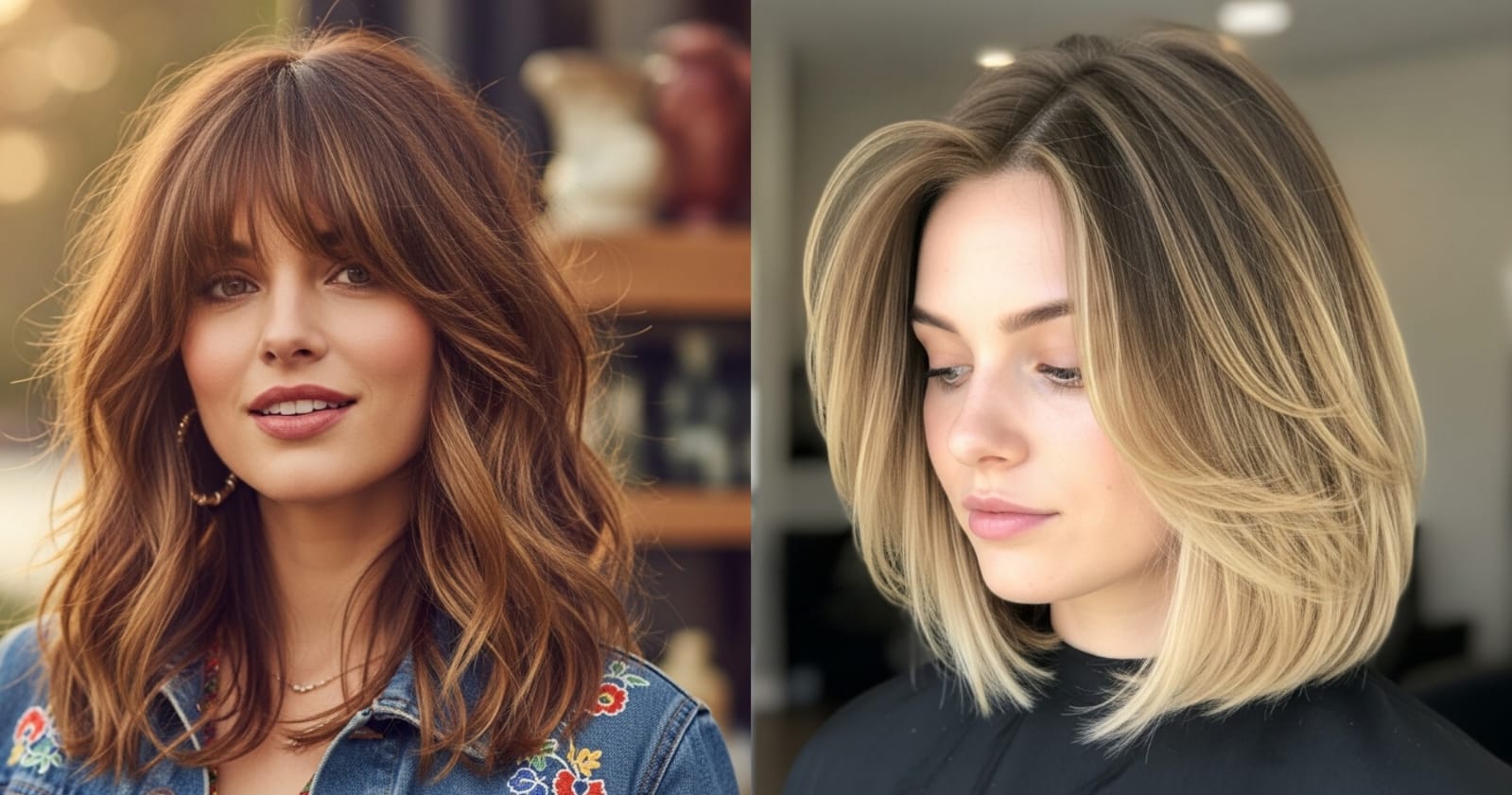
Cutting your hair shorter feels like a gamble. Go too short and you’re stuck growing it out for a year. Stay too long and you never actually change anything. The lob solves that problem by refusing to pick a side — it sits right at the point where “shorter” stops being risky and starts being obvious.
That in-between length is exactly why it works on almost anyone. Thick hair, fine hair, curly, straight — the lob adjusts to what you already have instead of fighting it. And on busy mornings, it asks for almost nothing: a few minutes, maybe a spritz of something, and you’re done.
The real decision isn’t whether to get a lob. It’s which version of it. Here are 17 to consider.
1. The Blunt Lob

Start here if you want something clean and no-nonsense. The stylist cuts straight across the bottom — no layers, no angles, just one even line. It sounds boring but it is not. That solid edge at the bottom makes your hair look thicker and more deliberate. Women with fine hair swear by this version because it finally gives their ends some weight.
Wear it straight for a sharp finish, or throw in some waves when you want it to feel more relaxed. Same haircut, two completely different moods. Use a smoothing serum to keep the edges crisp, and blow-dry straight down so the line stays clean.
2. The Wavy Lob

This is the one you get when you are tired of spending forty minutes on your hair every single morning.
A few layers are cut into the length — nothing extreme, just enough to help the hair move on its own. After washing, scrunch in some sea salt spray and leave it alone. That is genuinely it. The waves form by themselves and the whole thing looks like you tried, even though you really did not. Scrunch in a sea-salt spray on damp hair and let it air-dry. Skip the brush or you’ll lose the wave pattern.
3. The A-Line Lob

Slightly shorter at the back, longer at the front. That gradual angle creates a shape that follows the jaw and gives the cut a modern edge that a regular lob sometimes lacks.
If you have tried a standard lob before and felt like it was a little flat or plain, this version fixes that without doing anything dramatic. It just looks more thought-through. Curl the front pieces slightly inward with a round brush to highlight the jawline, keeping the back tighter.
4. Shaggy Lob with Curtain Bangs

Think about those old photos from the 1970s — the soft, layered, slightly-wild hair that somehow always looked cool. This cut takes that energy and makes it work today.
Heavy layers throughout add movement and a relaxed texture. The curtain bangs split in the middle and fall gently on either side of the face, drawing attention to your eyes and cheekbones without trying too hard. It is one of those haircuts that photographs really well, which is either a plus or totally irrelevant depending on who you are. Refresh the bangs daily with a light texturizing spray, curling them to the side with a round brush.
5. Deep Side Part Lob

Here is a trick a lot of people sleep on — moving your part. Just shifting it from the center to one side, and going deep with it, changes the whole feeling of a lob.
Everything sweeps to one side. The roots lift. The hair drapes differently. Suddenly it looks more intentional and polished, like you actually planned it. This is the version to try when you need your hair to look pulled together without doing a full blowout. Set the part while hair is wet, since it’s harder to shift later. Add volume spray on the heavier side.
6. Choppy Layered Lob

This one is specifically for people with thick, heavy hair that tends to sit like a helmet regardless of what you do to it.
Instead of cutting the ends in a clean line, the stylist uses a technique that breaks up the ends at different points — creating texture and removing bulk without taking away your length. The result looks deliberately cool rather than aggressively polished. If you have ever left a salon feeling like your hair was too perfect and stiff, a choppy lob is the opposite of that. Work texturizing paste between fingertips and separate the ends slightly. Don’t over-smooth — messiness is the point.
7. Soft Face-Framing Lob

Not everyone wants a bold haircut. Some people just want to look a little better than they did last week.
This version keeps things simple. Light layers are placed only around the face — starting near the chin and blending into the rest of the hair so gently that most people cannot even spot them. What they do notice is that your face looks slightly more framed, slightly softer. It is a quiet upgrade that works on almost every face shape without asking much of you. Curl the front strands lightly around the face and keep the rest of the hair straight and simple.
8. Asymmetrical Lob

One side longer than the other. It breaks the symmetry of the cut and creates a diagonal line that runs along the face — which, weirdly, makes round and square face shapes look slimmer and longer.
It sounds more extreme than it actually is. In most cases it is a subtle difference, not a dramatic one. But it gives a standard lob a personality that is hard to get any other way. Check the lengths at every trim to keep the asymmetry intact, and style one side a bit more to show the contrast.
9. The Balayage Lob

Balayage is a coloring method where highlights are painted onto the hair by hand so they fade gradually from dark at the roots to lighter at the ends. No obvious lines, no harsh regrowth every six weeks.
The lob is a perfect length for showing this off. The color has room to develop across the length of the hair, and the result adds a dimension that makes even a simple cut look rich and layered. It is one of those combinations that just makes both things better — the cut and the color. Use a purple or color-safe shampoo to maintain the tone, and get a gloss treatment every 6-8 weeks.
10. Side Sweep Lob

No sharp part here. The hair is just swept to one side in one large, soft movement. It creates volume at the crown and a full, flowing shape without any real effort.
A round brush during your blowout is usually enough to get this going. It looks romantic without being overdone — the kind of hair that works for a dinner out or just a regular Thursday when you feel like looking slightly more human than usual. Blow-dry in one consistent direction with the brush, and add root-lift spray at the crown.
11. Curly Natural Lob

People with naturally curly hair know the struggle of finding a length that actually cooperates. Too short and the curls puff outward like a triangle. Too long and the weight pulls everything down and flat.
The lob sits right in the middle. Long enough to calm the curls slightly and keep them from expanding sideways, short enough that the bounce and coil are still doing their thing. It is practical and genuinely pretty, and it does not require hours of product and effort to maintain. Apply curl-defining cream on wet hair without brushing it out. A diffuser helps keep the curl pattern defined.
12. The Glass Lob

Every strand smooth, every surface flat, the whole thing shining like it was just polished. That is the glass lob.
Getting there takes a proper blowout and a flat iron, so it is not the most low-effort style on this list. But if sleek and sophisticated is your thing, it is hard to beat. It is the kind of hair that makes people assume you went to the salon that morning, even when you did it yourself the night before. Always use heat protectant before flat-ironing, and work in small sections for consistent shine.
13. Wispy Fringe Lob

Full bangs are a whole commitment. These are not that.
A wispy fringe is light and see-through — just enough hair across the forehead to change the framing of the face without taking it over. It softens the forehead, adds a slightly younger quality to the look, and grows out without any of the painful in-between phases that come with heavier bangs. Low risk, decent reward. Curl the bangs lightly with a round brush for that wispy effect, and use dry shampoo if they get oily.
14. Messy Bedhead Lob

Some people want their hair to look effortless. This cut actually is effortless.
The ends are cut in an intentionally uneven way and the inside of the cut is lightly texturized so the hair has a natural, lived-in feel from the moment you wake up. No styling required. In fact, too much styling ruins it. Just leave it alone and it does its job. Just towel-dry and leave it alone — a light texturizing spray is all it needs.
15. Tapered Lob for Fine Hair

Fine hair and heavy ends are not a good combination. The weight drags everything flat and the whole cut ends up looking limp within an hour.
A tapered lob avoids this by very gently thinning the tips of the hair during the cut. The roots stay full, but the ends stay light — so the hair moves more freely and does not collapse against your head. It is a small technical detail that makes a surprisingly large difference in how the cut actually wears throughout the day. Use a root-boosting mousse for volume, and apply heavy conditioner only on the ends, not the roots. Lift the roots upward with a brush while blow-drying, and use volumizing powder at the crown for extra hold. Use a root-boosting mousse for volume, and apply heavy conditioner only on the ends, not the roots.
16. Root-Lifted Lob

This one is about height. Using a round brush and volumizing product at the roots during a blowout, the hair is lifted up and away from the scalp — creating a full, bouncy shape that lasts most of the day.
It has a slightly old-school glamour to it, like hair from a classic film. Not stiff or over-styled — just full and alive in a way that flat hair never quite manages. Once you get the blowout technique down, you can recreate it at home without much trouble. Lift the roots upward with a brush while blow-drying, and use volumizing powder at the crown for extra hold.
17. The Undercut Lob

This one hides something. A small section at the nape of the neck is shaved close, completely invisible when your hair is worn down. Pull it up into a bun or half-knot and it shows up — a small, cool detail that makes the cut feel like it belongs to you specifically.
It also serves a practical purpose for thick hair. Removing that weight at the back lets the rest of the layers fall more smoothly and keeps the back of the cut from looking bulky. Trim the undercut section every 4-6 weeks to maintain the shape, and tie hair into a bun or half-knot to show it off.
Quick Comparison: Which Lob Suits You?
| Haircut | Best For | Maintenance / Difficulty |
|---|---|---|
| Blunt Lob | Fine hair needing weight | Low — quick blow-dry, occasional trim |
| Wavy Lob | Low-effort mornings | Low — air-dry with salt spray |
| A-Line Lob | Softening a round/square jaw | Medium — needs shaping during blow-dry |
| Shaggy Lob with Curtain Bangs | Face-framing, retro vibe | Medium — bangs need daily styling |
| Deep Side Part Lob | Looking polished fast | Low — one styling step |
| Choppy Layered Lob | Thick, heavy hair | Medium — needs texturizing product |
| Soft Face-Framing Lob | Subtle, everyday upgrade | Low — minimal styling |
| Asymmetrical Lob | Round/square face shapes | Medium — needs regular trims to hold shape |
| Balayage Lob | Adding dimension/color | High — salon upkeep every 6-8 weeks |
| Side Sweep Lob | Romantic, soft occasions | Medium — round brush blowout |
| Curly Natural Lob | Naturally curly hair | Low — minimal product, no heat |
| Glass Lob | Sleek, polished events | High — flat iron + full blowout |
| Wispy Fringe Lob | Easing into bangs | Low — grows out easily |
| Messy Bedhead Lob | Effortless, no-fuss look | Very Low — no styling needed |
| Tapered Lob for Fine Hair | Fine hair that falls flat | Low — light mousse only |
| Root-Lifted Lob | Volume and old-school glam | High — blowout technique required |
| Undercut Lob | Thick hair, hidden detail | Medium — needs shave upkeep every 4-6 weeks |
FAQ
Q: Will a lob work if I have really thick hair?
A: Yes — thick hair actually does well with a lob, especially with layers or a choppy, texturized finish that removes some bulk without sacrificing length.
Q: How often do I need to trim a lob to keep its shape?
A: Most lobs need a trim every 6-8 weeks to keep the line clean and prevent the ends from looking uneven, especially with blunt or A-line versions.
Q: Can I still put a lob up in a ponytail or bun?
A: Yes, though it will sit higher and shorter than you’re used to. Textures like the undercut lob are actually made to be styled up, since the hidden detail shows once the hair is pulled back.
Q: Is a lob a high-maintenance haircut?
A: It depends on the version. Wavy or messy bedhead lobs need almost no daily effort, while glass lobs or root-lifted styles require more time with a blow-dryer or flat iron.
One Last Thing
The lob keeps coming back every few years because it keeps working. It is not a trend that burns bright for one season and disappears. Women come back to it because it is genuinely flattering, genuinely manageable, and genuinely adaptable to whatever their life looks like right now.
Find your version of it, and you will probably stop overthinking your hair for a good while.

