Most crochet hair breaks down the same way: it looks incredible on day one, decent by week two, and by week four you’re wondering what went wrong. You didn’t do anything wrong. Not all crochet installs are built the same way underneath, and the pattern you choose — not just the hair texture — decides how long your style actually survives.
Crochet hair works by looping extensions through cornrowed or braided tracks with a latch hook, which means the foundation braid pattern does most of the heavy lifting. A style can use gorgeous, high-quality hair and still unravel in ten days if the base braids are too loose or spaced wrong for that texture. That’s the part nobody tells you when you’re scrolling for inspiration.
This guide walks through 20 crochet styles worth trying, and explains the mechanics behind why certain ones outlast others, how your natural hair density changes which option works for you, and where people commonly go wrong with maintenance. By the end, you’ll pick a style based on how your hair actually behaves, not just how a photo looks.
Quick Takeaways
| What You Want | Best Pick |
|---|---|
| Longest-lasting install | Senegalese Twist Crochet or Island Twist Crochet |
| Most breathable in summer | Water Wave Crochet or Ocean Wave Crochet |
| Easiest for beginners to install at home | Crochet Box Braids |
| Lightest on tension-prone edges | Crochet Curly Bob or Crochet Pixie Curls |
| Best for special occasions | Honey Blonde Crochet Curls |
The 20 Styles
1. Bohemian Curly Crochet

This is the style most people picture when they hear “crochet hair” — loose, tumbling curls with visible movement. It suits anyone who wants volume without the weight of a full sew-in. The curls stay bouncy because the strands aren’t tightly coiled against each other, which lets air move through and keeps the pattern from matting. The downside is frizz around week two, especially without a satin wrap at night. A light leave-in mixed with water in a spray bottle each morning revives the curl fast. Compared to kinky curly crochet, bohemian curls are looser and read more natural on finer hair.
Best Hair Texture: Works especially well if your own hair is medium density — too fine and the tracks show, too thick and the curls get weighed down.
2. Passion Twist Crochet

Passion twists use pre-twisted crochet hair instead of curls, and that twisted structure is exactly why they last longer than curly styles. A twist holds its shape mechanically — there’s no curl pattern to fall — so humidity and friction have less to attack. They suit anyone who wants a low-maintenance protective style that still looks intentional. The tradeoff is they can feel heavier at the root for the first few days until your scalp adjusts. Retwist any loosened spots near the hairline rather than redoing the whole head.
Why It Lasts: The twisted fiber locks onto itself instead of relying on curl memory, so it survives sweat and pillow friction better than curly crochet.
3. Water Wave Crochet

Water wave hair has a looser, more undulating pattern than curly crochet, closer to what hair looks like fresh out of the ocean. It’s a strong match for anyone wanting movement without tight ringlets. Because the wave pattern is looser, it droops with humidity faster than tighter curls do — a case where a “prettier” pattern has a shorter shelf life in wet climates. In humid areas, plan on refreshing the wave with a diffuser every few days. It suits round and oval face shapes especially well when parted deep on one side.
Perfect For: Beach trips, vacation photos, or any setting where a slightly undone look actually works in your favor.
4. Kinky Curly Crochet

This texture mimics natural 4B/4C curl patterns more closely than bohemian curls do, making it the go-to for people who want their protective style to visually match their real hair. The tight coil pattern resists frizz better than looser curls because there’s less loose strand surface exposed to air. It suits anyone transitioning or growing out relaxed hair who wants a seamless blend. The downside: detangling at removal takes patience since the coils grip each other. Finger-detangle in sections with conditioner rather than pulling a brush straight through.
Works Best On: Coarser natural hair textures, where the crochet curl pattern won’t look out of place next to your own regrowth.
5. Crochet Faux Locs

Faux locs made through the crochet method go in faster than the wrapped version, since the locs are pre-made and just latched into cornrows. They suit people who want the loc aesthetic without committing to real locs. Structurally, locs last because there’s no loose curl or twist end to unravel — the whole thing is sealed. The catch is weight; a full head of locs pulls on the hairline more than twists do, so watch for tension the first few days. Distribute part sizes evenly to avoid overloading one section.
Stylist’s Tip: Ask for a looser cornrow base under locs, since the extra length adds pull tighter braids can’t absorb.
6. Spring Twist Crochet

Spring twists use a springy, coiled fiber that bounces back into shape after being stretched, which is exactly why they hold form through weeks of wear better than most twist styles. They suit anyone wanting texture with a lighter feel than passion twists, since the fiber is finer. The main complaint is they can look slightly synthetic-shiny straight out of the pack; a light matte mousse through the ends softens that within a day or two. A great option for anyone newer to crochet installs.
How to Make It Last: Avoid heat entirely — it kills the spring pattern permanently, unlike with human hair twists.
7. Butterfly Locs Crochet

Butterfly locs have a deliberately messy, distressed look with loose curly pieces wrapped around the loc — less structured than faux locs, and that’s the appeal. They suit people wanting a boho, festival-ready aesthetic. Because parts of the style are intentionally unraveled, they need less precision at install, but that looseness means the distressed sections shed fiber faster than a fully sealed loc. Keep ends sealed with a quick dip in hot water (following your hair’s instructions) to slow shedding. Compared to standard faux locs, they read more casual and less polished — often exactly the point.
Great Choice For: Music festivals, weekend trips, or anyone who wants texture without a rigid, “just installed” look.
8. Goddess Locs Crochet

Goddess locs pair the structure of faux locs with loose curly hair blended in at the ends, giving a softer finish than standard locs. They suit brides and event-goers who want something polished but not stiff. The dual-texture construction actually disguises regrowth better than single-texture styles, since the eye is drawn to the curl movement rather than the root line. The downside is cost and install time — one of the longer crochet styles to put in. Ask your stylist to stagger the curl lengths so the ends don’t look uniformly cut.
Ideal For: Weddings, engagement photos, or any event where you want the “done” look without an obviously fresh-install shine.
9. Crochet Box Braids

Crochet box braids install faster than hand-braided box braids because the braids are pre-made and simply looped through the base cornrows, cutting install time roughly in half. They suit anyone needing a protective style on a tight timeline. Braided styles generally outlast curly or twisted ones because the tight, interlocked structure has almost nothing to loosen — friction tightens a braid slightly rather than unraveling it. The tradeoff is scalp tension if the base cornrows are too small. Choose a medium cornrow size rather than tiny ones if your scalp is sensitive.
Why It Lasts: Braids distribute tension along the whole strand instead of concentrating it at one twist point.
10. Crochet Senegalese Twists

Senegalese twists made through the crochet method have a smoother, glossier finish than passion or spring twists because the extension hair is usually a silkier synthetic blend. They suit anyone wanting a sleeker, more “put-together” twist look for work. Because the fiber is smoother, it holds humidity worse than textured fibers like spring twist hair — smooth strands have less surface grip, so twists can slip loose sooner in wet weather. A light gel on the ends at install helps seal them longer.
Office-Ready Note: The sleek finish reads more formal than kinky twist styles, making this a solid pick if your workplace leans conservative.
11. Crochet Marley Twists

Marley twists use a coarser, more textured fiber that closely resembles natural 4C hair, and that texture is precisely why the twists grip each other so well and rarely slip. They suit people who want a natural-looking twist without a sleek synthetic sheen. The trade-off is the coarser fiber can feel drier, so an oil-based scalp treatment every few days keeps things comfortable. Compared to Senegalese twists, Marley twists look chunkier and more organic.
Hair Type Match: If your natural hair is already coarse or coily, this style blends almost seamlessly at the root.
12. Crochet Havana Twists

Havana twists are thicker and shorter than Marley or Senegalese twists, giving a bold silhouette. They suit anyone who wants fewer, chunkier twists rather than dozens of thin ones — which also means faster install time. Thicker twists tend to hold their shape longer since there’s more fiber mass resisting gravity, though they can look bulky on smaller head shapes. Balance twist thickness against your face shape rather than defaulting to the biggest available size.
Perfect If: You want a low-manipulation style that doesn’t require daily styling attention.
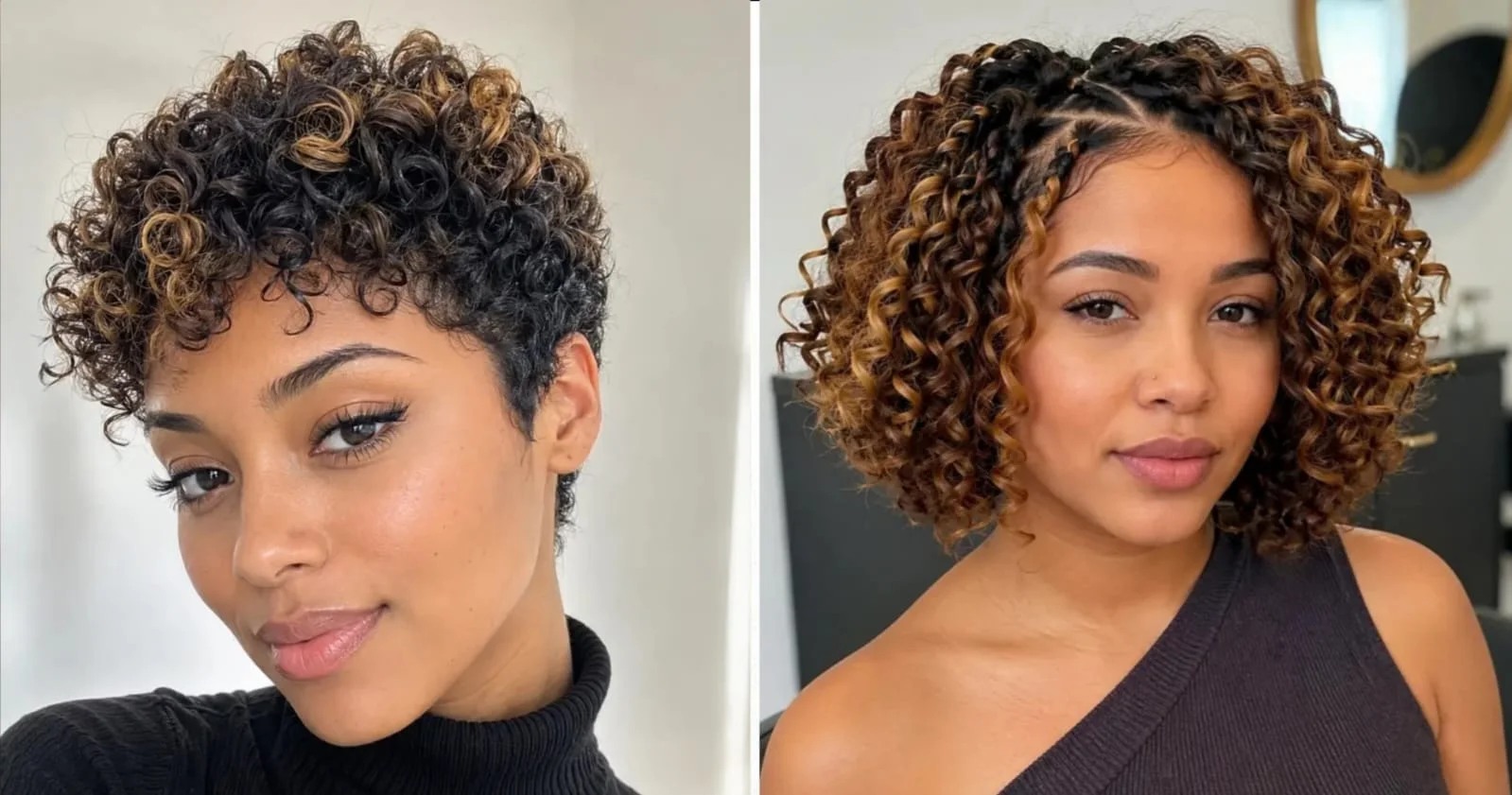
13. Crochet Curly Bob

A shoulder-length or shorter curly crochet bob is underrated because shorter styles almost always outlast longer ones — there’s less hair weight pulling on the base braids over time. It suits anyone wanting a lower-maintenance protective style that still has personality. The shorter length also means less tangling at the nape, a common trouble spot in longer curly installs. One downside: shorter curls show root shrinkage and new growth faster, so touch-ups come sooner.
Easy Styling Guide: A quick scrunch with a curl cream in the morning is usually all this style needs to look fresh.
14. Crochet Pixie Curls

A tightly coiled, close-to-the-head crochet pixie gives serious definition with barely any daily upkeep, since there’s minimal length for humidity or friction to disrupt. It suits people with round or square face shapes who want to highlight cheekbones and jawline. Structurally, it’s one of the most durable crochet styles simply because there’s so little hair mass for gravity to pull against the base. The downside: it’s a bold change, and it offers less versatility for updos later.
Who Will Love It: Anyone wanting a dramatic, low-effort style for summer heat.
15. Crochet Ponytail

A high crochet ponytail gathers all the curl or twist volume at the crown, shifting tension away from the hairline onto a wrap at the base — genuinely useful if your edges are fragile or thinning. It suits anyone wanting a sleek, event-ready look without covering the whole head in individual sections. Ponytails hold up well through dancing specifically because hair is secured at one central point rather than dozens of loose ends that can catch and pull. Wrap the base with actual hair or matching thread rather than just an elastic to avoid visible tension lines.
Prom Night Tip: Secure with bobby pins in a crisscross pattern underneath — that’s what survives hours of movement.
16. Crochet Updo With Curls

This style takes loose crochet curls and pins them into a twisted or piled updo, a smart move for formal events since pinned styles resist collapsing from dancing far better than hair left hanging loose. It suits anyone attending a wedding, prom, or gala who wants height and polish. Hair pinned close to the scalp has almost no lever arm for movement to act on, while long, loose curls swing and lose shape fast. The only real downside is undoing dozens of pins afterward. Use fewer, larger pins for both faster install and easier removal.
Photo Tip: Ask your stylist to leave a few face-framing curls loose — full pull-back styles can look severe in flash photography.
17. Crochet Mohawk

A crochet mohawk uses a strip of tighter cornrows down the center with the sides braided flat, suiting anyone wanting an editorial, statement look for a night out or performance. Because most of the hair is secured flat against the scalp with only the center strip built up, this style resists wind and humidity better than most — there’s simply less loose hair to be affected. The tradeoff: it’s a very specific look that doesn’t work for every setting, particularly conservative workplaces. Ask for the center strip in a slightly looser curl for a softer finish.
Great Choice For: Concerts, photoshoots, or any setting where a bold silhouette is the whole point.
18. Crochet Locs With Color

Adding color — honey blonde pieces, burgundy tips, or ombré — to a crochet loc install changes the visual weight of the whole style, since lighter colors draw attention to the ends and can make a style look longer than it is. It suits anyone wanting to experiment with color without chemical processing on their real hair. One genuine downside: lighter synthetic colors show product buildup more visibly, so a light rinse every week or so keeps things clean. Mixed-tone pieces also hide new growth longer than a solid-color install, since the eye isn’t scanning for one uniform shade.
Recommended Products: A lightweight, alcohol-free mousse works better than heavier creams on colored synthetic fiber.
19. Micro Crochet Braids

Micro crochet braids use very small sections for a fuller, denser look that mimics natural hair growth patterns more closely than larger braids can. They suit anyone with fuller natural hair density who wants a style that doesn’t look sparse at the part. Install time runs long — often the longest on this list — but the payoff is shape that holds exceptionally well, since tension spreads across many tiny points rather than a few large ones. Not a great match for finer natural hair, since tiny sections can pull noticeably at the scalp.
Best Match For: Thicker natural hair densities that can support the extra braid count without added scalp strain.
20. Two-Strand Crochet Twist-Out

This one’s a little different: crochet twists installed specifically to be taken down and picked into a twist-out texture rather than worn as twists. It suits anyone who prefers the look of a defined, natural curl-twist hybrid over sleek twists. Because you’re relying on the twist to hold curl memory rather than stay intact, this style has a shorter functional lifespan — usually best refreshed within a week or two before definition fades. It’s less about long-term wear and more about achieving a specific finished texture.
Avoid This Mistake: Untwisting before hair fully dries locks in frizz instead of definition — let twists air-dry first.
Why Some Crochet Styles Outlast Others
The pattern across all twenty styles comes down to mechanics, not luck or product quality.
Structure beats styling. Braided and twisted patterns survive longer than loose curly patterns because they’re mechanically locked — friction tightens them rather than loosening them. A curl is just hair temporarily held in shape by moisture and setting products, and every one of those factors works against it from day one.
Weight distribution matters more than most people realize. Styles that spread tension across many small sections, or secure hair at a single central point like a ponytail, put less strain on any one spot on your scalp. Styles with long, loose ends swinging freely put more repeated stress on the base braids every time you move — part of why they’re the first to show wear.
Dancing and movement test structure specifically, not just length. Any style with loose, hanging ends will loosen faster on a dance floor than one that’s braided flat or pinned up, regardless of length. If you’ll be moving a lot at an event, prioritize twisted, braided, or pinned styles over loose curls.
Humidity affects fiber texture differently. Smooth synthetic fibers hold up worse in humidity than textured ones, because texture gives the strands something to grip instead of sliding apart.
Your own hair density decides your ceiling. Thicker natural hair supports denser styles like micro braids without added tension. Finer natural hair does better with fewer, larger sections that don’t concentrate pull on isolated areas of the scalp.
Once you’re choosing based on these mechanics instead of just the photo, picking the right style gets a lot less like guesswork.
FAQ
Why does my crochet hair start frizzing after just a few days?
Frizz usually comes from moisture loss combined with friction from sleeping without protection. A satin bonnet plus a light water-and-leave-in spritz each morning slows this down considerably, especially on looser curl patterns.
How do I stop crochet braids from slipping out at the roots?
Root slippage is almost always a base-braid problem, not a crochet-hair problem. If your cornrows are too small or loose for the hair weight, pieces work themselves free within days. Ask for a slightly larger, tighter base braid next time.
Can I swim or work out heavily with crochet hair installed?
Yes, but braided and twisted styles handle sweat and chlorine far better than loose curly ones. If you’re regularly active, lean toward passion twists, box braids, or locs rather than bohemian or water wave curls.
Why does my crochet style look different than the salon photo within a week?
Salon photos are taken fresh, before the hair settles into how it behaves with your scalp’s natural oils and sleep habits. Some settling is completely normal — not a sign anything was installed wrong.
How often should I redo a crochet install?
Most crochet styles hold up four to eight weeks depending on the pattern, with braided and twisted styles lasting toward the longer end. Watch your hairline and base braids rather than going strictly by a calendar date.
Is crochet hair damaging to natural hair underneath?
Not inherently — the risk comes from base braids that are too tight, not the crochet method itself. Some tension at the hairline for a day or two is normal; ongoing tenderness after that means the install needs adjusting.
Final Thoughts
The style that photographs best isn’t always the one that survives your actual week — your commute, workouts, sleep habits, and climate all matter more than the picture you’re working from. Be honest about how much movement and moisture your hair deals with daily, then pick a structure that matches that reality: braided or twisted for durability, curly or wavy for softness over longevity, sized according to your natural hair’s own density rather than what looked good on someone else. Get that match right, and the style holds its shape far longer than luck would ever explain.

