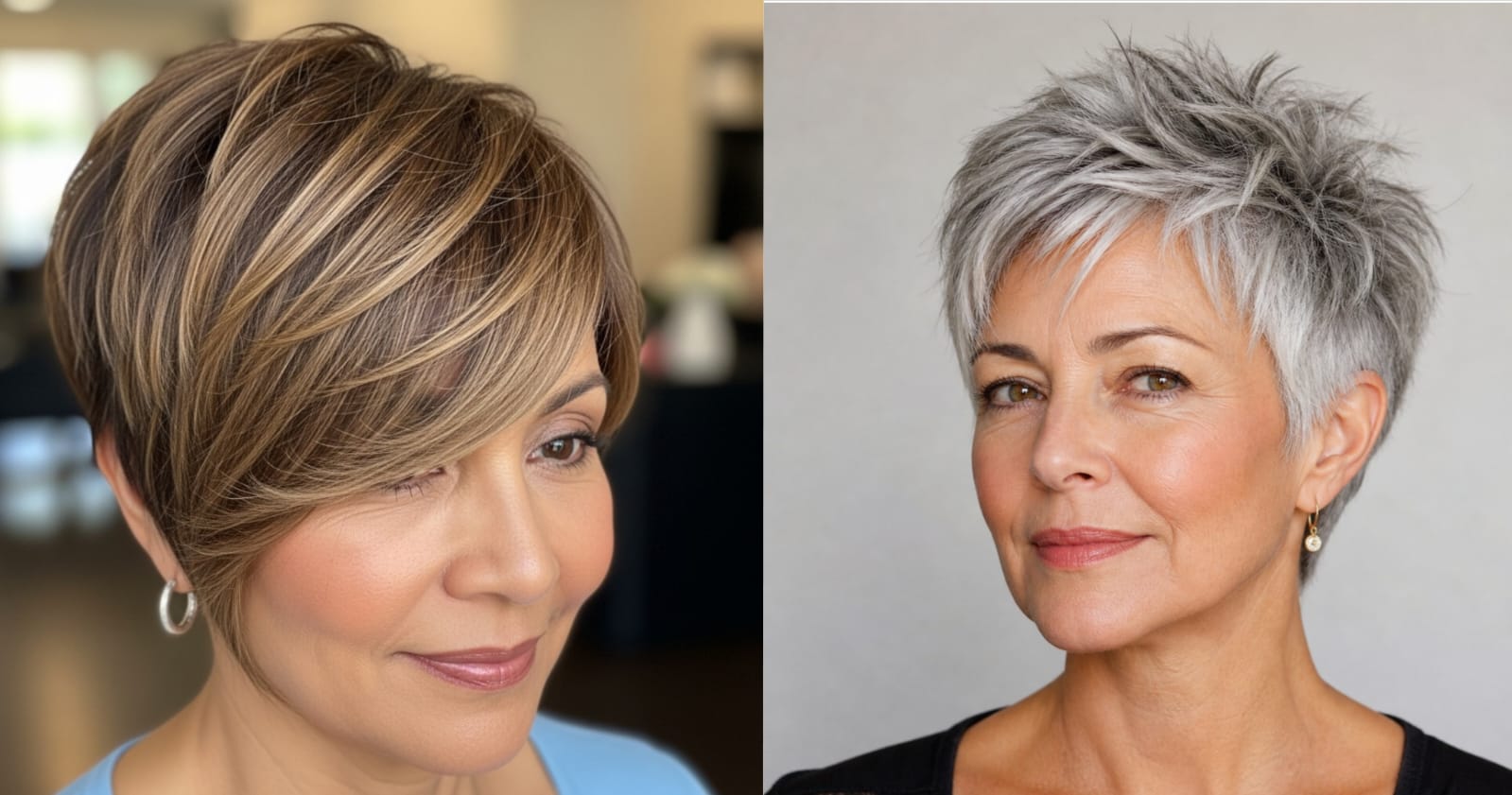
Women over 50 who finally go short almost always say the same thing afterward — “Why did I wait so long?The hesitation usually comes down to one thing — not knowing which style will actually work for your face and hair type. Because a pixie isn’t just one look. Some are soft and easy, some are sharp and bold, some need zero morning effort. Finding the right one changes everything.
Here are 15 styles with one honest tip each — so you walk into the salon knowing exactly what to ask for.
1. Classic Short Pixie with Soft Layers

Sides stay short, top has a little soft layered length, and the hair just settles into place on its own. Women with thin or fine hair love this one because the cut itself builds volume — no product does that job as well.
Tip: Tell your stylist “soft layers on top, close on the sides” and show a photo. A picture removes all guesswork.
2. Textured Pixie with Wispy Ends

A special cutting technique creates soft, feathery tips that give the whole style a natural, relaxed look. Works really well on wavy or fine hair. On silver hair, the wispy ends catch light in a way that genuinely looks beautiful.
Tip: Scrunch a little mousse into damp hair and let it air dry. Never brush it after drying — that kills the texture instantly.
3. The Pixie Bob

Longer than a full pixie, usually sitting around the cheekbone or just below the jaw. If going fully short feels scary, start here. It also grows out nicely so you’re not rushing back to the salon every few weeks.
Tip: Use this as your first step when moving from longer hair. Give yourself a few weeks, then decide if you want to go shorter.
4. Bold Undercut Pixie

Short sides, more length on top. The contrast looks sharp and deliberate. Also a smart practical choice if your hair has thinned around the temples — keeping those areas closely trimmed works with your hair rather than trying to hide it.
Tip: Ask for clipper guard size 2 or 3 on the sides. It grows out more softly and gives you flexibility between visits.
5. Silver Pixie with Side-Swept Bangs

One side sweeps softly across the forehead, the other stays close. The result is elegant and slightly vintage — in the best way. Natural gray and silver carry a depth that no dye can copy, and this style puts that quality front and center.
Tip: Warm a tiny bit of light pomade between your fingers and smooth through the bangs before sweeping. Keeps everything natural without any stiffness.
6. The Curly or Wavy Pixie

Anyone who told you to avoid short cuts because of curly hair gave you bad advice. Length adds weight, weight flattens curls. Remove the length and your curl bounces back to its real shape — full and lively in a way longer curly hair often isn’t.
One important detail — find a stylist who cuts curly hair dry, not wet. Cutting it wet gives a completely wrong picture of how it will actually look.
Tip: Ask the salon directly if they do dry curly cuts. Bring photos of curly pixies — not the blown-out versions.
7. Pixie with Long Top

Sides clipped short, three to four inches left on top. That extra length gives you real options every morning — slick it back, sweep it forward, scrunch product through it, or just leave it alone. Great for fine hair because all the volume ends up exactly where it shows most.
Tip: A little dry shampoo or volumizing powder at the roots gives instant lift with no heat. Takes about 20 seconds.
8. Low-Maintenance Tapered Pixie

Slightly longer at the crown, very close at the nape. Looks neat and intentional even when you’ve done absolutely nothing to it. Dries fast, product is optional. Women who switch to this cut often say they’re surprised by how much time their old routine was actually taking up.
Tip: Get a trim every five to six weeks and keep the neckline clean. Once the nape starts growing in, the whole shape starts looking unkempt.
9. Edgy Pixie with Face-Framing Pieces

Most of the hair stays short, but a few longer pieces are left near the cheeks and temples. Those small pieces soften the whole look, bring attention to the eyes, and make the cut feel more feminine. A great pick for women who want short hair but worry something very close might look too harsh.
Tip: Curl just those front pieces with a small curling iron. Thirty seconds and the whole cut shifts from sharp to soft.
10. Choppy Pixie

Deliberately uneven ends — it’s a technique, not a mistake. The result looks casually cool with natural texture built right in. Works well for thick hair because it removes bulk without feeling heavy. On fine hair, all that texture creates the impression of more fullness.
Tip: Use matte paste only. Shiny products on a choppy cut look greasy rather than textured — completely the wrong effect.
11. Elegant Side-Parted Pixie

A deep side part instantly makes a short cut look more polished and refined. One side sweeps softly across the forehead, the other lies flat and close. Classic and timeless, with a slight old-Hollywood quality. Best for women who want elegant rather than edgy.
Tip: Set the part with a fine comb and light pomade. Skip anything strong hold — on short hair it makes everything look stiff and outdated.
12. The Micro Pixie

The shortest cut on this list. Hair kept very close all over with clean shaping around the ears and neckline. Styling is basically zero — wash, dry, go. What makes this cut work is precision. With so little hair, every detail is visible. Done well, it’s genuinely one of the most striking looks here.
Tip: Put real thought into your earrings. When there’s no hair framing the face, jewelry does all the work. The right pair changes everything.
13. Feathered Pixie

Feathered styles get unfairly dismissed as outdated. A modern version is smooth and graceful — hair sweeps away from the face in soft arcs, not poofy or overdone. Suits women who want something light and feminine rather than sharp and bold.
Tip: Use a small round brush while blow-drying, section by section, directing the hair away from the face. The shape builds gradually — don’t rush it.
14. Pixie with Highlights or Balayage

Color hits differently on short hair because there’s less length to water it down. Even subtle highlights make the whole cut look richer. For women with gray growing in, warm caramel tones create contrast that looks intentional rather than in-between.
Tip: Never colored before? Start with just face-framing highlights. Smallest commitment possible — and it quickly tells you if you want more.
15. The Asymmetrical Pixie with Side Bangs

One side longer, one side shorter. Sounds dramatic but in person it just looks interesting — not extreme. The two different lengths give the cut a natural movement and energy that a symmetrical style simply doesn’t have. Works especially well if you have strong cheekbones or a defined jawline.
Tip: Keep the longer side looking intentional with a small amount of smoothing serum and a quick comb-through. Twenty seconds, noticeable difference.
What to Know Before You Book
Tell your stylist three things upfront — your hair texture, how much time you realistically spend styling each morning, and whether you want the cut to stay precise or grow out gracefully. Those three things shape everything.
Always bring a photo. Words are easy to misread. A picture isn’t.
Products you actually need: light pomade or matte paste, dry shampoo or volumizing spray, and smoothing serum if you have face-framing pieces. That’s genuinely it. More products on short hair makes things worse, not better.
If the idea of going short makes you nervous, say so. A good stylist will work with that. You can always go shorter later — growing it back overnight isn’t possible.
Signs This Might Be Right for You
- You’ve been thinking about it for months, not just on one bad hair day
- Your hair has thinned or changed and longer styles have stopped working
- You want less time and effort on your hair every morning
- You’re fine with a salon visit every five to eight weeks
- You want a change that actually feels like you
Common Questions
Will it make me look older? Most women find the opposite happens. A good pixie draws attention to your face, highlights your features, and makes your eyes stand out. Many say they looked noticeably younger after going short.
What about thinning hair? A pixie is often one of the smarter choices for thinning hair. Removing length removes the weight dragging fine hair flat. What’s left has more natural movement and body.
How often do I need trims? Every four to eight weeks depending on the style. Very short cuts like the micro pixie need trims closer to four weeks. The pixie bob can usually stretch to six or eight weeks.
What if I hate it? Hair grows back. Most pixies grow into a short bob within three to four months. Regret rates on this cut are genuinely lower than most people expect. Waiting too long is the more common regret.
I’m not sure what I want — what do I say? Bring a few photos of styles you like, even if you can’t explain why, and let your stylist work from there. That beats trying to describe a haircut in words every single time.

