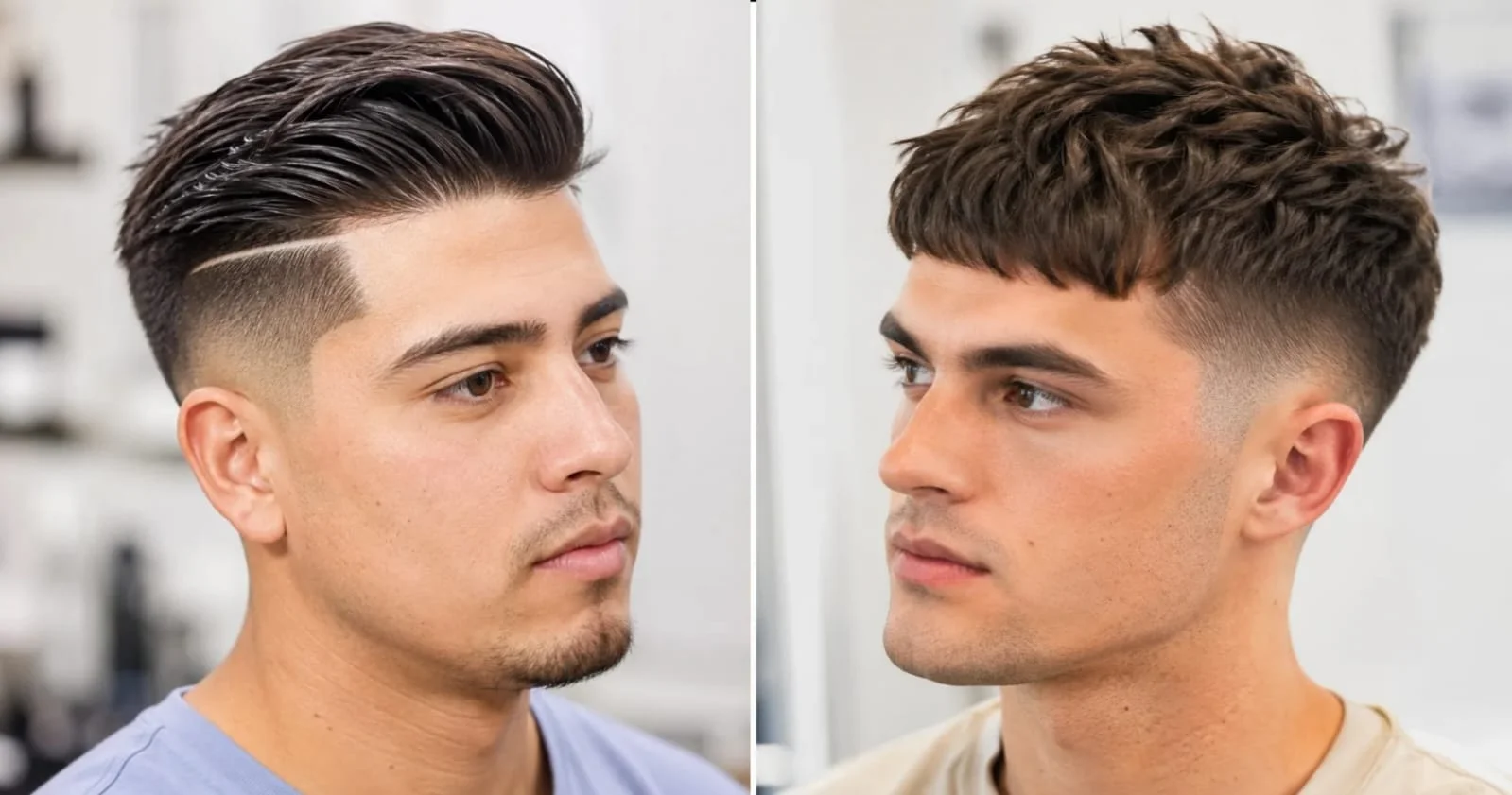
| Quick Answer A low fade haircut is a barbering technique where the hair on the sides and back blends gradually from short to long, starting about half an inch to one inch above the ear. It is the most subtle, lowest-contrast fade style, it suits nearly every hair type and face shape, it usually costs between $25 and $45 in the United States, and it needs a touch-up every two to four weeks to stay sharp. |
The low fade has become one of the most requested haircuts in barbershops across the country, and it is easy to see why. It is subtle enough for a boardroom, sharp enough for a night out, and forgiving enough that it still looks intentional as it grows out. This guide walks through what a low fade actually is, how it compares to every other fade type, which face shapes and hair textures it suits best, twenty of the best low fade haircuts to try in 2026, exactly how to ask a barber for one, and what it costs to maintain.
Whether you’re after something polished for the office or a laid-back everyday look, the low fade pairs well with almost any style on top. If you’re still weighing your options beyond the fade itself, this roundup of short haircuts for men is a good place to see what else is trending right now.
What Is a Low Fade Haircut?
A fade is not technically a haircut on its own. It is a cutting technique that can be added to almost any hairstyle, from a crew cut to a pompadour, to blend the hair smoothly from short to long. A low fade applies that technique starting low on the head, generally just above the ear and around the nape of the neck, then gradually transitions into longer hair on top.
Because the transition zone starts so close to the hairline, a low fade creates much less contrast than a mid fade or a high fade, which is why barbers often recommend it to clients who want a clean, modern look without a dramatic change. It is closely related to a taper fade, a term that describes a similar gradual blend but with an even slower, more subtle transition overall. According to L’Oreal Paris’s guide to fade haircuts, the shortest part of a low fade typically sits about half an inch above the ear, which is what gives the style its soft, gradual finish.
Fades have a long history in American barbering. The technique has roots in military-style haircuts, and it became a defining feature of Black barbershop culture from the 1980s and 1990s onward, where precise blending and sharp line-ups turned a simple haircut into a craft. Today the low fade sits at the center of that tradition while also being one of the most mainstream, versatile haircuts a man can ask for, regardless of hair type, age, or profession.
Low Fade vs. Every Other Fade Type
The word fade covers a whole family of related techniques, and knowing the differences helps a person walk into a barbershop with the right vocabulary. Here is how a low fade stacks up against its closest relatives.
| Fade Type | Where It Starts | Contrast Level | Best For |
|---|---|---|---|
| Low fade | Just above the ear, near the nape | Low | Office settings and first-time fade wearers |
| Mid fade | At the temple | Medium | Everyday versatility, balanced look |
| High fade | Above the temple, near the crown | High | Bold, statement-making styles |
| Skin (bald) fade | Fades all the way to bare scalp | Highest | Sharp, high-maintenance looks |
| Drop fade | Curves downward behind the ear | Low to medium | Curly or coily hair, rounded silhouettes |
| Burst fade | Circles around the ear | Medium | Mohawks, fringes, and disconnected tops |
| Temple fade | Concentrated at the temples only | Low | Subtle cleanup without a full fade |
| Taper fade | Gradual, all-over blend | Low to medium | A classic, barely-there fade look |
Of every option on that list, the low fade is generally considered the lowest-maintenance and most versatile choice, since the shorter transition zone grows out more naturally and the reduced contrast makes it appropriate for almost any workplace or occasion.
Is a Low Fade Right for You?
By Face Shape
- Round face: A low fade paired with added height on top, like a quiff or pompadour, helps elongate the face.
- Square face: A textured crop or a French crop softens strong jawlines without hiding them.
- Oval face: Almost every style on this list works well, since an oval face is naturally balanced.
- Long face: A low fade with more width and less height on top, such as a crew cut, keeps proportions balanced.
- Heart-shaped face: A side part or textured comb over softens a narrower chin and balances a wider forehead.
Your face shape only tells part of the story. Texture and density play just as big a role in how a haircut falls and moves — sometimes even more than the shape of your face does. Before locking in a new cut, it’s worth thinking about how these two factors work together.
By Hair Type and Texture
- Straight hair: Holds sharp lines well and works with almost any top style, from a side part to a slick back.
- Wavy hair: Adds natural texture to a textured crop or a French crop without much styling effort.
- Curly hair: Pairs beautifully with a drop fade, which curves around the ear to complement the natural curl pattern.
- Coily and 4C hair: A low fade defines the hairline while leaving room for an afro top, twists, or 360 waves.
Hair density matters too. Thicker hair can carry more length and volume on top without looking heavy, while fine or thin hair usually looks sharper with a shorter top and a slightly softer blend, since a low fade already keeps the contrast gentle.
20 Best Low Fade Haircuts for Men in 2026
Every style below uses the same low, subtle fade described above, but the way it is paired with the top changes the entire look. Bring a reference photo of any of these to a barber along with the guidance in the next section.
1. Classic Low Fade with Crew Cut

The crew cut is the original short-back-and-sides style, and a low fade gives it a cleaner, more contemporary edge. Best for straight or wavy hair and nearly every face shape, it takes about two minutes to style with a small amount of matte paste and holds its shape well between visits.
2. Low Fade Pompadour

Swept up and back off the face, the pompadour pairs a low fade with real height on top, which flatters round or long faces especially well. A blow-dryer and a strong-hold pomade help the front stand up, and the low fade keeps the overall look from feeling too formal.
3. Low Fade Quiff

The quiff sits between a pompadour and a textured crop, with a shorter, more casual lift at the front. Straight to wavy hair holds the shape best, and a matte clay worked through damp hair in the morning is usually all it needs.
4. Textured Crop with Low Fade

This is the low-maintenance favorite among barbers right now. Short, choppy layers on top pair with a low fade for a look that suits square and oval faces and works with straight, wavy, or curly hair alike, needing only a bit of texture powder to finish.
5. Low Fade French Crop

A close cousin of the textured crop, the French crop keeps the fringe blunt and slightly heavier at the front. It works particularly well for thick, straight hair and gives a clean, practical shape that needs minimal daily styling.
6. Low Fade Slick Back

For a sharper, more polished finish, the sides fade low while the top is combed straight back with a water-based pomade. This style suits thick to medium hair and reads as more formal, making it a strong choice for office environments.
7. Low Taper Fade with Side Part

A side part adds a classic, put-together feel to a low taper fade, and it works especially well on fine or medium hair that needs a defined line for structure. A light hold hairspray keeps the part crisp through the day.
8. Low Fade Comb Over

One of the most requested classic low fade styles, the comb over keeps length on top swept to one side over a clean, faded base. It flatters nearly every face shape and works for both casual and formal settings.
9. Low Fade with Hard Part

A hard part is a shaved line that disconnects the top from the fade, adding a sharp, graphic detail to an otherwise simple low fade. It suits younger clients who want more definition and is easy for a barber to maintain at each visit.
10. Low Fade Buzz Cut

For the lowest possible maintenance, a buzz cut on top paired with a low fade still delivers a defined, intentional shape rather than an all-over shave. It works for every hair type, including coarse and coily textures, and needs no daily styling at all.
11. Low Drop Fade

The drop fade curves gently downward behind the ear instead of staying level, which creates a rounder, more natural-looking transition. It is especially popular with curly and coily hair because the curve echoes the natural shape of the head.
12. Low Burst Fade

A burst fade circles around the ear rather than running in a straight line down the neck, which works particularly well underneath a mohawk, a fringe, or a disconnected top. It is a slightly more technical cut that rewards an experienced barber.
13. Low Fade with Curly Top

Leaving natural curls long on top while fading the sides low creates striking contrast and puts real texture on display. A curl-defining cream and minimal touching once it dries keeps the curls looking their best without frizz.
14. Low Fade for 4C and Afro Hair

A low fade cleans up the hairline and neckline while leaving the natural afro or coily pattern completely intact on top. Barbers typically use clipper guards zero through two around the ear to keep the blend smooth against denser, coilier textures.
15. Low Fade with 360 Waves

Popular in Black barbershop culture for decades, this pairs a low fade with brushed waves that spiral out from the crown. Regular brushing, a durag at night, and a wave-friendly pomade are what keep the pattern sharp between cuts.
16. Low Fade with Twists

Two-strand twists on top paired with a low fade give texture and length without sacrificing a clean, defined base. This style works well for coily hair that holds a twist pattern easily and wants a lower-maintenance alternative to locs.
17. Low Fade Mohawk

A modern mohawk keeps a strip of longer hair down the center while the sides fade low rather than shaving completely. It is bolder than most styles on this list, but the low fade keeps it wearable outside of purely casual settings.
18. Low Fade Disconnected Undercut

The top is left noticeably longer and completely disconnected from the faded sides, creating dramatic contrast in length rather than in fade intensity. It suits thicker hair that can hold enough volume to stand out against the short sides.
19. Low Fade with Beard

Continuing the fade down into the sideburns and blending it with a groomed beard creates one seamless, polished shape from the hairline to the jaw. This pairing is one of the most requested combinations at barbershops right now, since it looks deliberate rather than like two separate grooming choices.
20. Low Fade Man Bun

For hair long enough to tie back, a low fade on the sides keeps the look neat while the length on top stays gathered into a man bun. It is a practical choice for men who are growing their hair out but still want definition around the ears and neckline..
How to Ask Your Barber for a Low Fade
Poor communication between clients and barbers is one of the most common reasons a fade turns out wrong. Being specific about a few key details makes a huge difference, a point echoed by barber instructors such as those at the Institute of Beauty and Wellness, who teach students to confirm exact placement before ever picking up the clippers.
A clear script to use in the chair sounds something like this: “I would like a low fade, starting about half an inch above my ear and blending into the nape of my neck. Please use a guard two on the sides and blend it smoothly into the top, which I would like to keep at about this length.” From there, it helps to specify a few more details:
- Guard number: Clipper guards are numbered zero through eight, with lower numbers cutting shorter. Most low fades start around a guard one or two at the shortest point.
- Blend or gradient: Ask for a smooth blend or transition zone rather than a hard line, unless a disconnected or hard-part look is the goal.
- Neckline and line up: Decide in advance whether the neckline should look natural or be sharply defined with a line up, shape up, or edge up, since these terms are often used interchangeably.
- Reference photo: Bring a photo and point out specifically what is appealing about it, such as the low temple placement or the blurry blend, rather than just showing the picture and staying quiet.
- Beard blending: Mention if the fade should continue down into the sideburns and beard for one connected shape.
Low Fade Maintenance, Grow-Out Timeline and Cost
How Long Does a Low Fade Last?
A low fade typically looks sharp for two to four weeks before it needs a touch-up, which is longer than most high or skin fades because the shorter transition zone grows out more gradually. Here is roughly what to expect week by week.
- Week 1: The blend is crisp, the line up is sharp, and the cut looks exactly as it did leaving the barbershop.
- Week 2: Still clean, though the neckline and sideburns may start to look slightly less defined.
- Week 3: The transition zone begins to soften and the top starts gaining noticeable length, though the cut still reads as intentional.
- Week 4: Most men book a touch-up around this point, since the fade has grown out enough to lose its original shape.
How Much Does a Low Fade Cost?
Men’s haircut prices vary widely across the United States, but a low fade specifically tends to fall toward the lower end of the fade family since it takes less time to execute than a high or skin fade. According to industry pricing data compiled by Buzzcutting, a standard low fade typically costs between $25 and $35 at an independent barbershop in 2026, while national averages for a men’s haircut overall sit closer to $41. Chain salons tend to run cheaper, often between $20 and $28, while premium studios in major metro areas can charge $50 or more for the same cut.
Styling Products and Techniques for a Low Fade
The haircut itself is only half the result. The right product depends heavily on hair type and the amount of length left on top.
- Matte clay or paste: Builds texture and a natural, non-shiny finish, ideal for textured crops and French crops.
- Pomade: Water-based pomade gives shine and strong hold for slicked-back or comb-over styles, while oil-based versions offer longer wear.
- Texture powder: Adds grip and volume at the roots for a lift-and-separate finish on shorter tops.
- Sea salt spray: Creates natural-looking texture for wavy or slightly curly hair without weighing it down.
- Curl cream or leave-in conditioner: Defines natural curls and coils while controlling frizz on longer, textured tops.
Frizz control matters just as much for men with wavy or curly tops as it does for anyone else with textured hair, and many of the same core principles apply. For anyone working with a curlier top paired with a low fade, this breakdown of how to fix frizzy hair for every hair type covers hydration and product habits that translate directly to keeping a curly or wavy low fade looking defined rather than fluffy.
FAQ
What is a low fade haircut exactly?
A low fade haircut is a barbering technique where the hair gradually transitions from short to long, starting about half an inch to one inch above the ear rather than higher up near the temple or crown. It is the most subtle version of a fade and works with almost any hairstyle on top.
What is the difference between a low fade and a low taper fade?
The two terms are often used interchangeably, but there is a subtle difference. A low fade refers to where the fade sits on the head, while a taper fade describes how gradual the blend is. A low taper fade combines both, keeping the fade low and making the transition especially soft and gradual.
Is a low fade good for curly or thick hair?
Yes. A low fade works well with every hair type, including curly, coily, and thick hair. Barbers often recommend a drop fade or burst fade variation for curly and coily textures specifically, since the curved shape complements natural curl patterns better than a straight fade line.
What should I say to my barber for a low fade?
Ask for a low fade that starts about half an inch above the ear, specify a clipper guard number for the shortest point, and clarify whether the blend should be soft or the neckline should be sharply lined up. Bringing a reference photo and pointing out specific details, rather than just handing over the phone silently, leads to the most accurate result.
Can a low fade be paired with a beard?
Yes, and it is one of the most popular combinations in barbershops today. The fade can continue down into the sideburns and blend directly into a groomed beard, creating one connected, polished shape from the hairline to the jawline.
Is a low fade professional enough for the office?
Yes. Because a low fade has less contrast than a mid or high fade, it reads as more conservative and blends more naturally as it grows out, which is exactly why it remains one of the most requested styles for corporate and client-facing roles.
Can I get a low fade at home?
It is possible with clippers and guide combs, but a low fade is one of the more technical cuts to execute because of how gradual the blend needs to be. Most men get the first one or two done by a professional barber and only attempt touch-ups at home once they understand exactly how their own barber blends it.
Conclusion
The low fade earns its place as one of the most requested men’s haircuts year after year because it works with nearly any hair type, face shape, and lifestyle, all while staying easy to maintain between barbershop visits. Whether the goal is a sharp office-ready comb over, a textured crop for the weekend, or a bold burst fade under a mohawk, the twenty styles above cover the full range of what a low fade can do heading into 2026. The next step is simple: pick a favorite, use the script above to communicate it clearly, and book the appointment.

