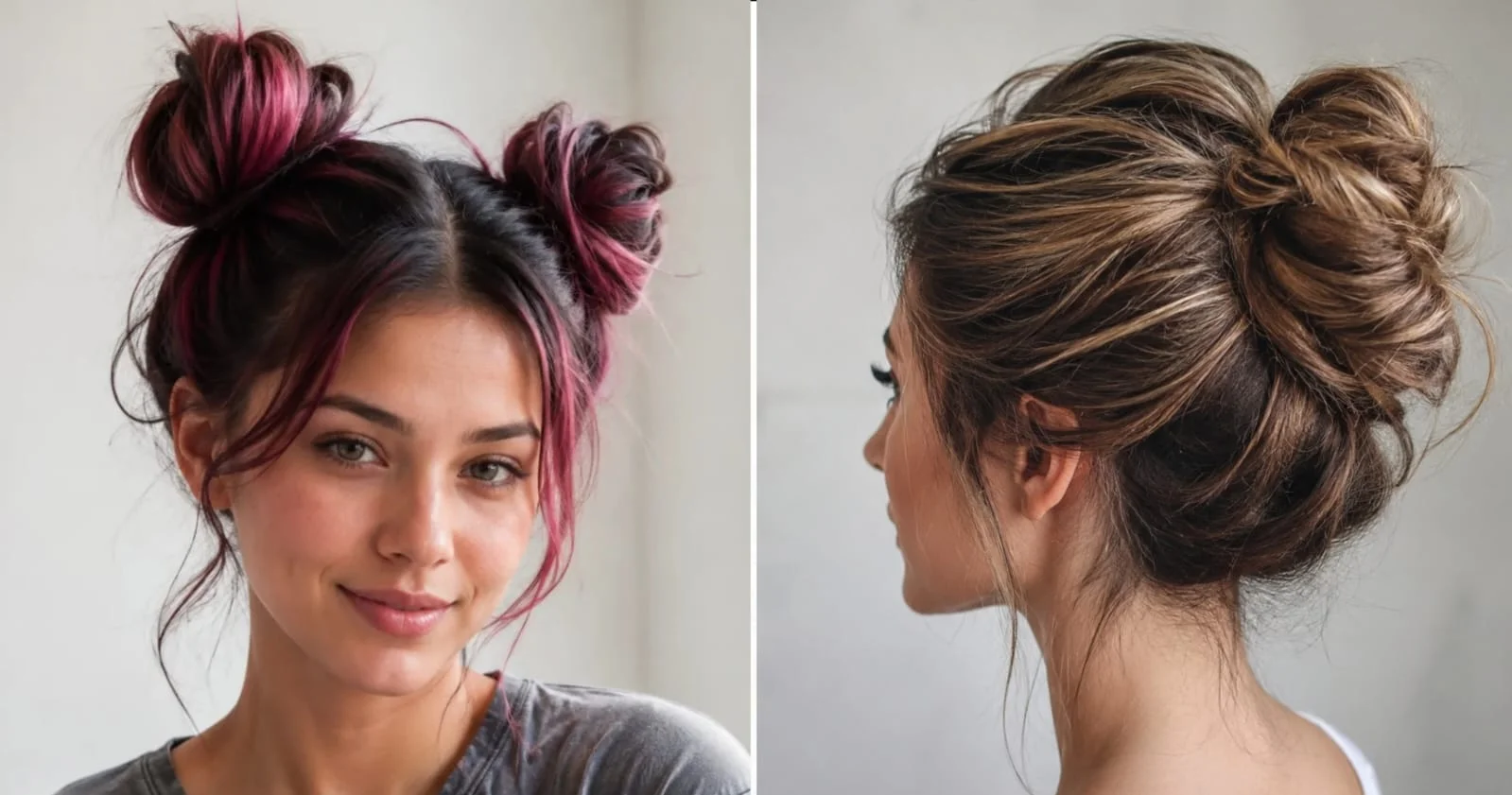
A messy bun works because it looks like you spent thirty seconds on it, even when you spent ten minutes getting the “undone” part exactly right. It’s the rare style that reads as polished and low-effort at the same time, which is why it shows up everywhere from grocery runs to weddings. The trick isn’t just twisting your hair up and calling it done — it’s knowing which version of the messy bun matches your hair type, your length, and how much time you actually have in the morning.
Below are 16 messy bun variations, what makes each one different, who it suits, and how to avoid the mistakes that turn “effortlessly undone” into “just undone.”
What Makes a Messy Bun Different From a Regular Bun
A regular bun is smooth, controlled, and held tightly against the head. A messy bun is built around intentional imperfection — loose face-framing strands, a slightly off-center shape, and volume that isn’t flattened down with product. The texture is the point. Hair that’s been curled, braided, or left a day unwashed usually holds a messy bun better than freshly washed, silky-smooth hair, because grip and texture are what keep the “undone” pieces in place instead of sliding out.
How to Choose the Right Messy Bun for Your Hair Type and Length
Fine hair needs backcombing or a small amount of dry shampoo at the crown to fake volume, since a messy bun on flat, thin hair can look sparse instead of textured. Thick hair usually needs the opposite — sectioning before twisting up, so the bun doesn’t end up heavy and lopsided. Curly and coily hair holds a messy bun with very little product, since the natural texture does most of the work. Hair shorter than shoulder length will need bobby pins and possibly a few clip-in pieces or a small hair donut, since there isn’t always enough length to wrap and secure on its own.
1. The Classic Undone Messy Bun

This is the version most people picture when they hear “messy bun,” and it’s the most forgiving to start with if you’re new to the style. It’s a loose, low-to-mid bun with pieces pulled out around the face and a slightly lopsided twist instead of a perfectly wrapped one — the bun sits a little off-center on purpose, and instead of smoothing every strand, you leave a few pieces loose around the temples and hairline.
To style it, gather hair into a low ponytail, twist it loosely rather than tightly, and wrap it around the base without tucking every end in. Pull a few strands out afterward for that undone finish. It works best on medium to long hair with second- or third-day texture, which is exactly what makes it so good for casual daytime looks — it holds through a full day without touch-ups once your hair already has some grip to it.
The one thing to watch for is freshly washed, very fine hair, which can go flat within a couple of hours without a texturizing spray first.
2. Low Messy Bun

A relaxed bun positioned at the nape of the neck instead of higher up, this version works best when you want something that reads as more grown-up or office-appropriate than a top-knot, while still keeping the undone texture. It sits close to the collar, which makes it a practical choice if you’ll be wearing scarves, collared jackets, or anything that would compete with a higher bun.
To style it, gather hair low, secure with a soft elastic, then gently pull the crown section to create a small amount of lift so it doesn’t look pancaked against your head. It suits work settings, dinners out, and anyone who wants a softer, less youthful take on the style, and it needs very few touch-ups since gravity naturally keeps it in place.
The main thing to remember is the crown-lifting step — skip it and the top can look flat, especially on fine hair.
3. High Messy Bun

Positioned at the crown or slightly above, with volume built in before twisting, this version reads more energetic and is the one most associated with workouts, festivals, and warm-weather days when hair needs to be off the neck. Because it sits higher, any texture or volume you add is more visible, which makes it a good showcase for curled or backcombed hair.
To style it, flip your head forward when gathering hair so you get natural lift at the root before securing everything at the crown. It’s the go-to for warm weather, workouts, and festival or brunch looks, though it tends to loosen faster than a low bun because of gravity and movement, so don’t be surprised if it needs re-securing by midday.
One thing to watch for is the elastic size — if it’s too small, it can pull tightly at the hairline and contribute to tension over time.
4. Messy Bun With Face-Framing Pieces

This is less a standalone style and more a technique you can add to almost any bun on this list — any messy bun with a few curled or straightened strands deliberately left out around the face. The face-framing pieces soften the overall look and draw attention toward the cheekbones and jawline instead of pulling everything back tightly.
The best approach is to curl the face-framing pieces with a wand after the bun is finished, not before, so you can control exactly how much curl shows. It suits anyone who wants a bun to look softer or more dressed-up, and it’s especially flattering if you want to soften a strong jawline. The curled pieces may need a light touch-up with a curling wand later in the day to keep their shape.
In humid weather, keep in mind that these loose curled pieces tend to frizz faster than the rest of the bun.
5. Braided Messy Bun

A loose braid, or a few small braids, gathered and pinned into a bun, with the braid texture left visible instead of smoothed out. Braiding before bunning adds a woven texture that photographs well and holds up longer than a plain twist, since the braid itself keeps hair from sliding loose as easily — it’s a good option when you want something that looks a little more intentional without moving into full updo territory.
Braid loosely rather than tight, since a tight braid will look neat instead of undone, and pull slightly on the braid sections after pinning to loosen everything up. This one is great for special occasions and longer hair, and it holds significantly longer than a plain twisted bun, often lasting through an entire day of activity without extra product.
The trade-off is time — it takes longer to create than a basic bun, and short layers around the face may not braid in cleanly.
6. Messy Bun With a Scarf or Bandana

A messy bun wrapped with a silk scarf, bandana, or fabric headband at the base. Adding fabric turns a basic bun into something that looks styled on purpose, and it’s an easy way to hide roots, cover a bad hair day underneath, or add a splash of color to an outfit — it also works well for stretching time between washes, since the scarf disguises oil at the roots.
To style it, wrap the scarf around the base of the bun and tie it in a small bow or knot, tucking the ends in or letting them hang depending on the look you want. It’s especially handy for stretching hair between washes or adding a style element without reaching for more hair product, and once it’s tied it’s very low maintenance since the scarf itself helps hold the bun in place.
The one catch is that silk scarves can slip out of very fine or freshly washed hair over the course of a day.
7. Double-Twist Messy Bun

Two twisted sections combined into one bun instead of a single twist, creating a slightly more sculpted, sectioned look. This version has more visible structure than a single-twist bun, which makes it read a little more polished while still keeping the loose, undone quality — a good middle ground between the classic messy bun and a more formal twisted updo.
Split hair into two sections at the crown, twist each one separately, then twist them together before wrapping into the bun. It works well on second-day hair and medium to long lengths, and it’s a good pick if you want more definition without going for a fully sleek finish. Because the tension is distributed more evenly, the double-twist structure also tends to hold its shape longer than a single twist.
Keep in mind it needs a bit more hair length than a single-twist bun to look proportional.
8. Messy Bun for Curly Hair

A bun that works with your natural curl pattern instead of smoothing it down, letting curls frame the bun itself. Curly hair actually holds a messy bun with very little effort because the natural texture provides its own grip — the goal here isn’t to create texture, it’s to protect the curl pattern while still getting hair up and off the face.
Gather curls with your fingers instead of a brush to avoid disrupting the curl pattern, and reach for a lightweight curl cream rather than gel for a softer, undone finish. This style suits type 2C through 4C curl patterns particularly well, holds up in humid climates, and is a good choice for low-manipulation styling days. When it starts to look tired, it can be refreshed with a spray bottle and a little more curl cream instead of restyling from scratch.
One thing worth watching is tension — very tight, small buns worn repeatedly in the same spot can stress the hairline over time, so it helps to alternate bun placement day to day.
9. Messy Bun for Fine Hair

A bun built with backcombing or texturizing spray first, so the finished shape doesn’t look thin or flat. Fine hair is the type most likely to make a messy bun look accidentally sparse rather than intentionally undone, and the fix isn’t more product all over — it’s targeted volume at the crown and a smaller elastic that won’t slip.
Backcomb the crown section lightly before gathering hair, and use a thin elastic rather than a thick one, since a thick band can create visible bumps under fine strands. This approach works best for fine, thin, or straight hair that struggles to hold texture on its own, and applying a texturizing spray before styling helps the bun hold shape through the day without needing constant readjustment.
Skip the added texture and the bun tends to look thin and slide loose faster than it would on thicker hair.
10. Messy Bun for Thick Hair

A sectioned bun that distributes thick hair’s weight evenly instead of trying to twist it all at once. Thick hair often has the opposite problem of fine hair — there’s already enough volume, but the sheer amount of hair can make a single twist feel bulky or uneven, so splitting it into two or three sections before combining them into the bun keeps the shape rounder and more balanced.
Use two elastics: one to secure the initial ponytail, and a second, sturdier one to wrap the twisted bun itself, since thick hair puts more strain on the hold than finer hair does. This works especially well for thick, dense hair that tends to fight a single ponytail elastic, and once it’s secured, thick hair buns tend to hold their shape exceptionally well without much readjustment through the day.
Just be careful not to pull it too tight — thick hair buns can create noticeable tension headaches, so it’s worth keeping the base looser than it feels like it should be.
11. Side Messy Bun

A bun positioned off to one side rather than centered, sitting near one ear. This version leans more romantic and works well for occasions where a centered bun would feel too casual, without going all the way to a formal updo, and it tends to show off the neck and shoulders more than a centered style.
Gather hair at a diagonal angle toward one side before twisting, rather than pulling straight back, so the bun naturally lands off-center. It’s a good fit for date nights, dressier casual events, and hair that already has soft waves in it, and it holds for about as long as a low bun since the side placement doesn’t add any extra strain.
The one thing to be careful of is smoothing the rest of the hair toward that side first — skip that step and it can look unintentional rather than styled.
12. Messy Bun With Bangs

Any messy bun paired with curtain bangs, wispy bangs, or a fringe left down. Bangs change how a bun reads on the face, softening the forehead and adding a focal point that balances out the pulled-back sides, and this combination works particularly well for people who want their bun to feel more styled without adding curls or braiding.
Style the bangs first — curled, straightened, or piece-y with a bit of texture paste — before pulling the rest of the hair up, so they don’t get flattened in the process. This is an easy option for anyone who already has bangs and wants a simple way to wear them with an updo, though the bangs typically need a quick touch-up midday if heat or humidity has softened their shape.
Very short, blunt bangs can look a little disconnected from a very loose, undone bun, so a wispier bang shape usually blends in more naturally.
13. Sleek-to-Messy Bun

A style with a smooth, polished front section that transitions into a loose, textured bun at the back. It’s one of the more editorial takes on the messy bun, keeping the front of the hair controlled and glossy while letting the actual bun stay undone — a strong option when you want something that photographs as intentional rather than casual.
Smooth the front and crown with a boar-bristle brush and a light gel before gathering, then let the ends stay loose and undone once you reach the bun itself. It works well for professional settings, evening events, and anyone who wants a more elevated version of the trend, though the sleek front section does need occasional smoothing throughout the day, especially in humidity.
Because of the extra prep on the front section, it needs more product and more time than a fully undone bun, so it’s not the fastest option on this list.
14. Messy Space Buns

Two smaller messy buns positioned symmetrically at the crown instead of one. Space buns bring a younger, more playful energy to the messy bun trend, and they tend to hold up well through movement since the weight is split between two sections instead of one — they work particularly well on medium-length hair that isn’t quite long enough for one large, secure bun.
Part hair evenly down the middle before securing each side, so the two buns end up symmetrical rather than lopsided. This variation suits festivals, casual outings, and anyone wanting a more playful look, and because the hair is split into two smaller sections, each bun tends to hold its shape well even during activity.
The most common mistake is uneven parting, so it’s worth taking the extra thirty seconds to part precisely — otherwise the asymmetry will be obvious.
15. Messy Bun for Short Hair

A small, textured bun created with the help of bobby pins, texturizing spray, and sometimes a small hair donut, for hair that’s too short to wrap fully. Short hair — generally chin-length to just past the shoulders — can still work into a messy bun, but it usually needs more product and pins than longer hair does, since there’s less length to anchor the twist; the result ends up smaller and closer to the head than a bun on longer hair, but the undone texture reads the same.
Use a small foam hair donut to add shape and bulk, then wrap the remaining hair around it and secure with several bobby pins placed in different directions for hold. This approach works especially well for bobs, lobs, and shoulder-length cuts that are growing out, though it does need more pins than longer hair to stay secure — it’s worth keeping a few spares on hand for touch-ups.
Face-framing layers can sometimes be too short to stay tucked in, which means fighting the odd flyaway throughout the day.
16. Messy Bun for Weddings and Formal Occasions

A pinned messy bun is a polished version of the classic messy bun, created with soft curls, layered sections, and secure pinning for a fuller, elegant look. Small accessories like floral pins or decorative clips can add a refined finishing touch.
It’s a great choice for weddings, formal events, and photoshoots because it stays in place for hours. Curl your hair first, let it cool completely, then pin the bun section by section instead of styling it all at once for better hold and volume.
With strong-hold hairspray and proper pinning, this style can last all day. Since it requires a bit of skill, doing a practice run or booking a professional stylist is recommended before an important event.
Common Mistakes to Avoid With a Messy Bun
- Pulling it too tight. Tension at the hairline, especially repeated daily tension, can contribute to hair breakage and, over time, thinning near the temples. A bun should feel secure, not strained.
- Using an elastic that’s too thin for thick hair or too thick for fine hair. The wrong elastic either won’t hold or will create visible dents and bumps.
- Skipping texture prep on freshly washed hair. Silky-clean hair slides out of a bun far more easily than hair with some texture or dry shampoo already in it.
- Placing the bun in the same spot every day. Repeated tension in one location is one of the more overlooked causes of hairline stress over time — alternating between high, low, and side placements gives your hairline a break.
- Over-brushing before styling. Brushing out every bit of texture before creating the bun removes the grip your hair needs to hold the “undone” shape.
Products and Tools That Help
A texturizing or sea-salt spray applied to dry hair before styling gives fine or freshly washed hair the grip it needs to hold a bun’s shape. A small amount of dry shampoo at the roots does double duty, adding volume while also absorbing oil if you’re stretching a wash day. For anyone with short hair, a foam hair donut in a shade close to your hair color makes it much easier to build volume without needing extension-level length. Bobby pins in a color matching your hair, rather than metallic ones, tend to disappear into the style instead of standing out.
FAQ
Does a messy bun work on second- or third-day hair better than freshly washed hair?
Yes. Hair that’s a day or two past washing holds a bun’s shape more easily because natural oils and existing texture give it grip. Freshly washed hair usually needs a texturizing spray or dry shampoo to compensate.
Can a messy bun damage your hair if you wear it every day?
Wearing any bun in the exact same spot daily, with the same amount of tension, can contribute to stress at the hairline over time. Alternating the bun’s placement and keeping it loose rather than tight reduces that risk significantly.
Is a messy bun appropriate for a job interview or professional setting?
The sleek-to-messy version or a low messy bun generally reads as more polished and appropriate for professional settings than a very high, loose version, which tends to feel more casual.
How do you keep a messy bun from falling out during a workout?
A high messy bun secured with a strong elastic, plus a few bobby pins placed in an X pattern at the base, holds up best through movement. Braided or double-twist versions also tend to stay secure longer during activity.
What’s the easiest messy bun for a beginner to try first?
The classic undone messy bun is the most forgiving starting point — it doesn’t require braiding, sectioning, or precise technique, and small imperfections actually work in its favor.
Final Recommendation
There isn’t one “correct” messy bun — the right version depends entirely on your hair type, how much time you have, and where you’re wearing it. If you’re short on time and have some texture to work with, the classic undone bun or a low messy bun will get you out the door fastest. If you’re working with fine or freshly washed hair, spend the extra minute on texturizing spray and backcombing before you twist, since that’s the step that makes the difference between “effortless” and “flat.” And if you’re building toward a wedding or formal event, treat it like any other formal style — practice it once before the day it actually matters.

